UDM in 5G Explained
The UDM (Unified Data Management) is a core function in the 5G Core (5GC) responsible for managing subscriber data, authentication data, and other service-related information that helps the network deliver secure and personalized behavior.
In practical 5G architecture, the UDM is the data-side anchor behind several other control functions. AUSF relies on it for authentication support, AMF relies on it for subscriber and access-side context, and SMF can rely on it for session-related subscriber data.
Quick facts
| Full name | Unified Data Management. |
|---|---|
| Main role | Stores and serves subscriber, authentication, and service-related data inside the 5G Core. |
| Works with | AUSF for authentication support, AMF for access and mobility-related subscriber context, and SMF for session-related data use. |
| Closest LTE comparison | Closest to HSS, but designed as a more modular and service-based 5GC data function. |
| Why it matters | If the UDM is wrong, registration, authentication, slicing, session behavior, and subscriber consistency can all break in different ways. |
| Key reference points | N8 toward AMF, N13 toward AUSF, and N10 toward SMF where relevant. |
UDM in the 5G Core architecture
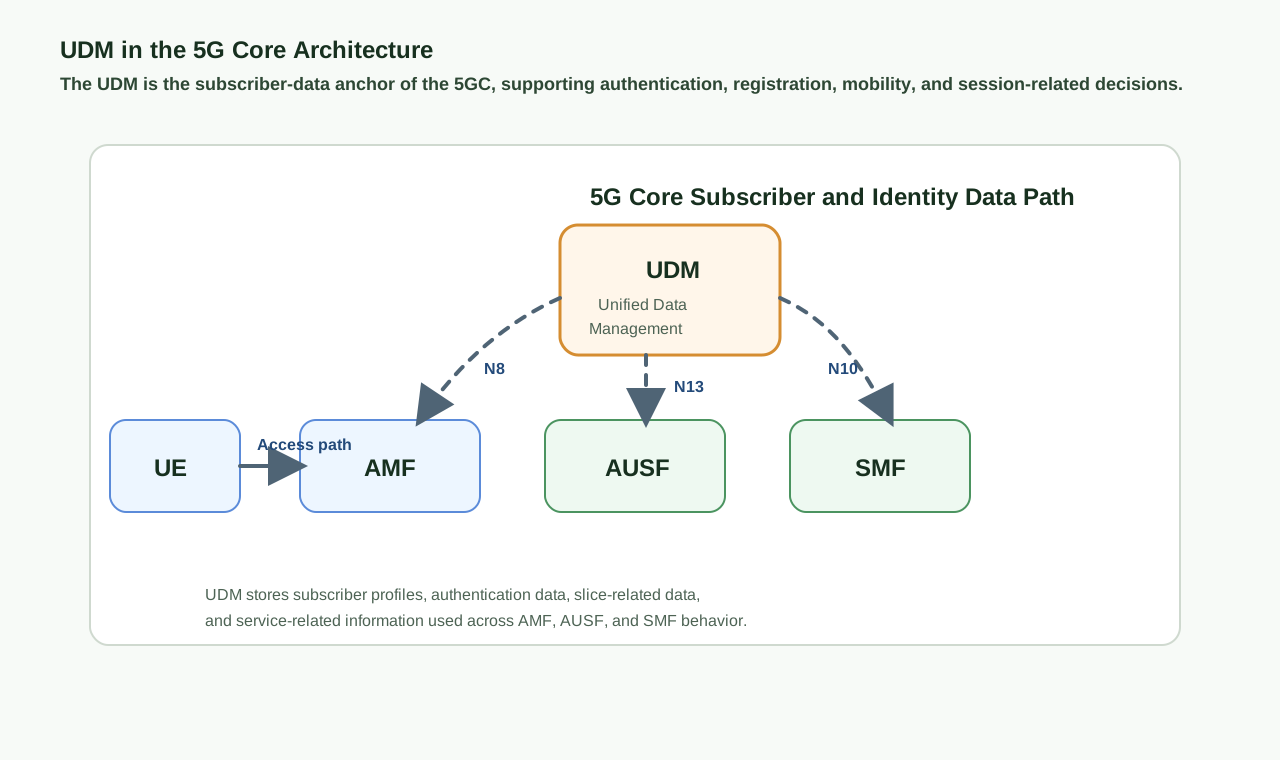
The UDM is not a user-plane function and it is not simply a single-purpose security box. It is a central subscriber-data function whose information supports several control-plane branches across the 5GC.
What does the UDM do?
A simple way to think about the UDM is this: the UDM is the subscriber-data authority of the 5G Core. It stores and serves the information other functions need in order to authenticate the UE, understand its subscription, and apply the right service behavior.
- Stores subscriber data.
- Provides authentication credentials and related support data.
- Supports subscription-aware access, mobility, and session behavior.
- Provides service and slice-related entitlement information where relevant.
- Helps maintain consistency across the 5GC control plane.
Types of data managed by UDM
| Data type | Main role |
|---|---|
| Subscription data | User profile, allowed services, and slice-related subscription context. |
| Authentication data | Credentials, keys, and authentication-support information used by the security branch. |
| Mobility-related data | Information used to support access-side continuity and registration-related handling. |
| Session-related data | Subscriber-side information relevant to session establishment and treatment. |
UDM and authentication
The UDM works closely with the AUSF in the authentication branch of the 5GC. AUSF performs the authentication logic, but the UDM provides or supports the subscriber-side data that makes that possible.
- AUSF requests authentication data.
- UDM provides authentication-support information.
- AUSF performs authentication based on that subscriber-side context.
UDM and AMF interaction
The AMF interacts with the UDM for subscriber and access-related context. This helps the network understand who the UE is, what the UE is allowed to do, and how registration-related handling should proceed.
- Subscriber profile retrieval.
- Registration-related support.
- Mobility and slice-aware context support.
UDM and SMF interaction
The SMF may use UDM-provided data for session-related decisions. This is one reason UDM matters beyond security. It is not only about authentication; it also helps session logic stay aligned with subscriber entitlements and service behavior.
UDM and network slicing
The UDM stores slice subscription data that helps the 5GC understand which services or slices a subscriber is entitled to use. That makes UDM part of the broader slice-aware control picture, not just a static database.
UDM interfaces
| Interface | Connects | Main role |
|---|---|---|
| N8 | UDM to AMF | Subscription and access-related data support. |
| N13 | UDM to AUSF | Authentication-support data path. |
| N10 | UDM to SMF | Session-related subscriber data where relevant. |
UDM in Service-Based Architecture
The UDM is a service-based function inside the 5GC. That matters because it reflects one of the biggest 5G architecture shifts: subscriber and identity data are exposed through a more modular control framework instead of only through older, more rigid node relationships.
UDM vs LTE HSS
| Feature | LTE HSS | 5G UDM |
|---|---|---|
| Role | Subscriber database in the EPC era. | Unified data-management function in the 5GC. |
| Architecture | More monolithic. | Service-based and more modular. |
| Flexibility | More limited. | Higher, especially in the wider 5GC control ecosystem. |
UDM and security
The UDM is critical for secure authentication, credential support, and broader identity-related handling in the 5GS. Even though AUSF executes the authentication logic, the security branch depends heavily on the quality and consistency of UDM data.
Common UDM issues
- Incorrect or inconsistent subscriber data.
- Authentication failures caused by data mismatch.
- Synchronization issues between data consumers and subscriber state.
- Slice subscription misconfiguration.
- Session behavior that does not match the subscriber profile.
FAQ
What is UDM in 5G?
The UDM is the Unified Data Management function in the 5G Core. It stores and serves subscriber, authentication, and service-related data.
Does UDM store authentication data?
Yes. UDM is one of the key 5GC functions associated with subscriber authentication data and related credentials.
How is UDM different from HSS?
UDM is the 5GC-era service-based data function, while HSS belongs to a more monolithic LTE EPC model.
Does UDM interact with SMF?
Yes. SMF may use UDM-provided subscriber and session-related information where relevant to session handling.
Why is UDM important?
Because subscriber consistency, authentication support, service entitlement, and slice-related data all depend on it.
Key takeaways
- The UDM stores subscriber and authentication-related data in the 5G Core.
- It works closely with AUSF for authentication support and with AMF and SMF for access and session-related subscriber context.
- Understanding UDM is essential for diagnosing authentication, registration, slice entitlement, and subscriber consistency issues.
References
- 3GPP TS 23.501 - System architecture for the 5G System Primary 5GS architecture reference for UDM, data handling roles, reference points, and 5GC function separation.
- 3GPP TS 23.502 - Procedures for the 5G System Procedure reference for registration, authentication, and subscriber-related control flows.
- 3GPP TS 33.501 - Security architecture and procedures for 5G System 5GS security reference relevant to authentication data, credentials, and security support around UDM usage.
- 3GPP TS 29.503 - Unified Data Management services Service specification for UDM interactions in the service-based 5GC.