AUSF in 5G Explained
The AUSF (Authentication Server Function) is a core function in the 5G Core (5GC) responsible for authentication procedures in the 5G System. It is one of the main functions that protects access to the network by validating the UE through the 5GS security architecture.
In practical terms, the split is clean: AMF carries access-side signaling, AUSF handles authentication logic, and UDM provides the subscriber-side authentication data that supports the decision.
Quick facts
| Full name | Authentication Server Function. |
|---|---|
| Main role | Handles UE authentication logic in the 5G Core and returns authentication results toward the access side. |
| Works with | AMF for access-side signaling and UDM for subscriber authentication data. |
| Key reference points | N12 between AMF and AUSF, and N13 between AUSF and UDM. |
| Authentication methods | Commonly associated with 5G AKA and EAP-AKA' within the 5GS security framework. |
| Does not do | It does not store subscriber data itself. That data comes from the UDM side. |
AUSF in the 5G Core architecture
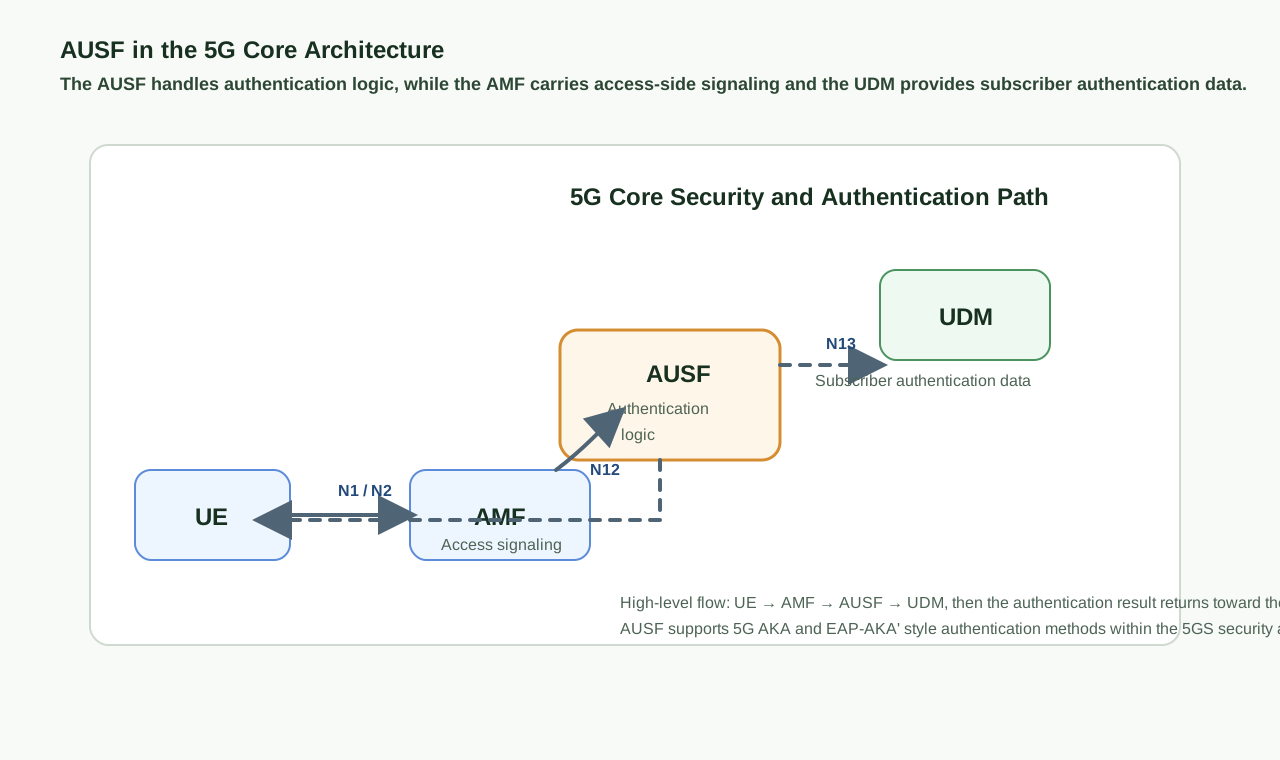
The AUSF does not sit in the radio path or the user-plane path. It sits in the security branch of the 5GC, where it validates authentication and helps establish trusted access to the system.
What the AUSF does in 5G
A simple way to think about the AUSF is this: the AUSF is the authentication engine of the 5G Core. It handles authentication logic, validates requests, and returns authentication outcomes that help determine whether the UE should be allowed to proceed.
- UE authentication handling.
- Validation of authentication exchanges.
- Coordination of authentication procedures with other 5GC functions.
- Support for multiple authentication methods.
- Enforcement of secure network access through the 5GS security framework.
AUSF and 5G authentication
5G introduces stronger and more flexible authentication handling than older systems. The AUSF is one of the functions most closely associated with that change.
| Method | Main idea |
|---|---|
| 5G AKA | Main 5GS authentication method, evolved from earlier AKA approaches with stronger 5GS integration. |
| EAP-AKA' | EAP-based authentication method, especially relevant for non-3GPP access and flexible authentication contexts. |
Authentication flow in 5G
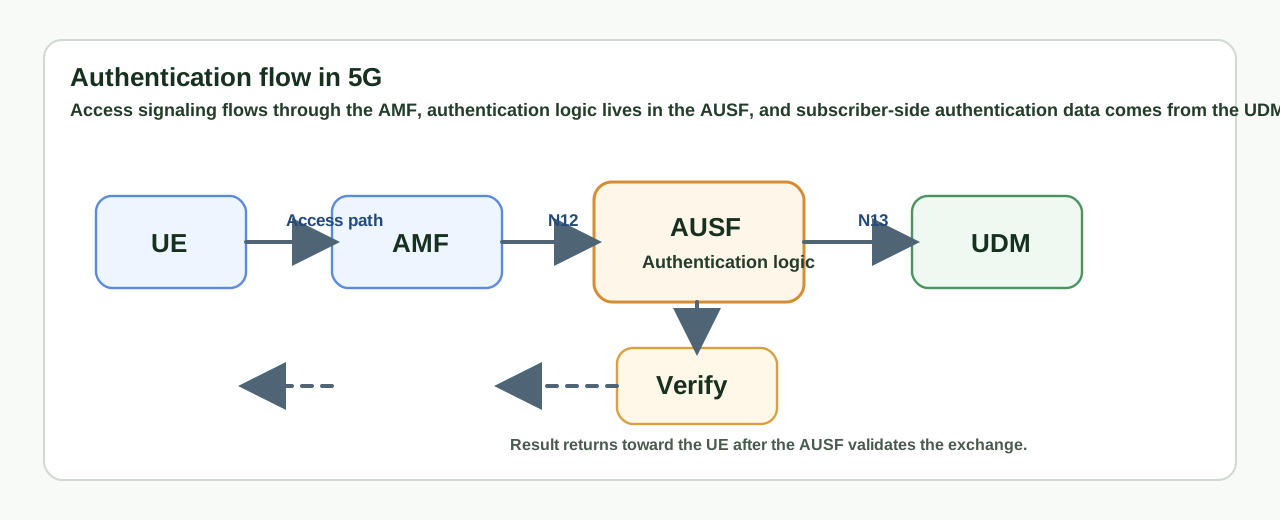
- The UE begins the access and registration path.
- The AMF forwards the authentication branch toward the AUSF.
- The AUSF retrieves or checks the required subscriber authentication context from the UDM side.
- The AUSF validates the exchange and returns the result.
- The authentication outcome is carried back toward the UE through the access-side path.
AUSF and UDM interaction
The UDM provides the subscriber-side data needed for authentication, while the AUSF consumes that data to make the authentication logic work.
- UDM stores subscriber credentials and authentication-related context.
- AUSF retrieves and uses authentication data rather than storing it locally as the main source of truth.
AUSF and AMF interaction
The AMF is the access-side entry point for the UE, while the AUSF handles the authentication logic behind that path. This is a good example of how 5G separates access control from specialized security handling.
- AMF receives and forwards access-side authentication signaling.
- AUSF processes the authentication branch and returns the result.
AUSF and security architecture
The AUSF is part of the broader 5G security architecture, which includes mutual authentication, key hierarchy, integrity protection, and confidentiality support. One of the big 5G design goals is stronger, more flexible security than earlier mobile-core models.
That is why AUSF is more than just “the place where authentication happens.” It is part of the architecture that keeps the whole access system trustworthy.
AUSF interfaces
| Interface | Connects | Main role |
|---|---|---|
| N12 | AMF to AUSF | Authentication signaling path between access control and authentication logic. |
| N13 | AUSF to UDM | Authentication-data path toward subscriber-side support. |
AUSF in Service-Based Architecture
The AUSF operates as a service-based function inside the 5GC. That means it fits naturally into the SBA control model rather than being treated only as a fixed node on a rigid point-to-point core interface.
AUSF and non-3GPP access
For non-3GPP access scenarios, the AUSF can support EAP-based authentication such as EAP-AKA'. This is one of the reasons 5G authentication architecture feels more flexible and more modular than older access-security models.
AUSF vs LTE HSS
| Feature | LTE HSS | 5G AUSF |
|---|---|---|
| Role | More combined subscriber and authentication responsibilities. | Dedicated authentication function in a modular 5GC design. |
| Architecture | More monolithic EPC-era model. | Modular and service-based security role. |
| Flexibility | More limited. | Higher, especially when combined with UDM and SBA interactions. |
Common AUSF issues
- Authentication failure during registration.
- Connectivity issues toward the UDM side.
- Incorrect credentials or subscriber-side mismatch.
- Synchronization problems in authentication context.
- EAP-AKA' or non-3GPP authentication-specific failures.
FAQ
What is AUSF in 5G?
The AUSF is the Authentication Server Function in the 5G Core. It handles UE authentication logic and returns authentication results toward the access side.
Does AUSF store subscriber data?
No. The subscriber authentication data comes from the UDM side rather than being stored in AUSF as the main source of truth.
What is 5G AKA?
5G AKA is one of the main authentication methods used in the 5G System for secure UE authentication and key establishment.
What is EAP-AKA'?
EAP-AKA' is an EAP-based authentication method used especially in non-3GPP access and flexible authentication contexts.
Why is AUSF important?
Because it is one of the key 5GC functions that protects access to the network by validating UE authentication within the 5GS security architecture.
Key takeaways
- The AUSF handles authentication logic in the 5G Core.
- It works closely with AMF and the UDM side.
- It supports authentication methods such as 5G AKA and EAP-AKA'.
- Understanding AUSF is essential for diagnosing authentication, registration, and 5GS security issues.
References
- 3GPP TS 23.501 - System architecture for the 5G System Primary 5GS architecture reference for AUSF, UDM, authentication handling, and security-related function roles.
- 3GPP TS 23.502 - Procedures for the 5G System Procedure reference for registration, authentication, and access-security flows involving AMF and AUSF.
- 3GPP TS 33.501 - Security architecture and procedures for 5G System Primary 5GS security reference covering authentication methods, key hierarchy, and security procedures.
- 3GPP TS 29.509 - AUSF services Service specification for AUSF interactions in the service-based 5GC.