First Full 5G Release
3GPP Release 15
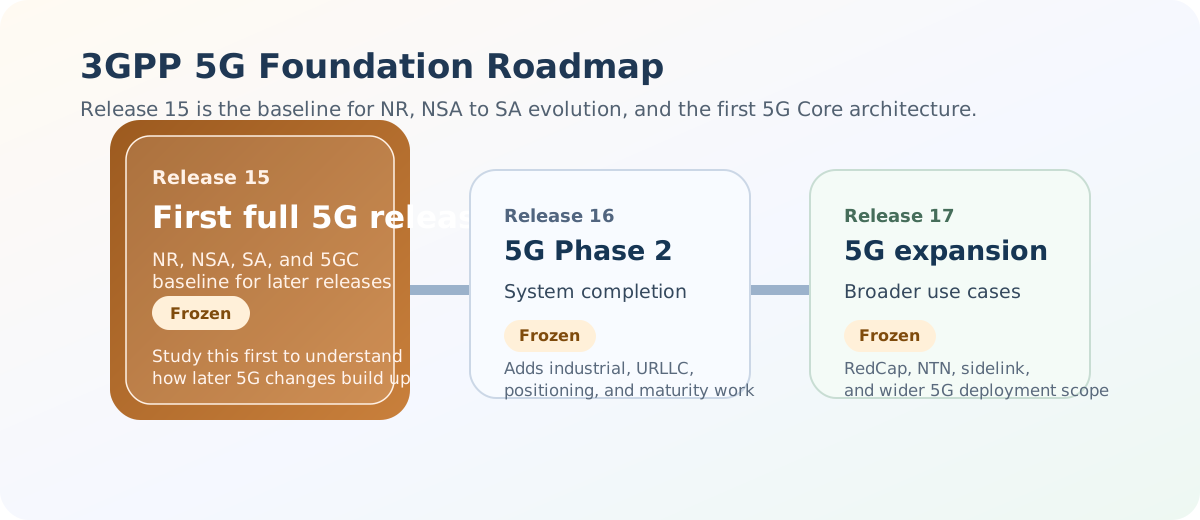
3GPP Release 15 is the first full 5G release and the foundation of the modern 5G system. It introduced the initial 5G NR framework, expanded from early non-standalone deployment toward standalone 5G, and paired the new radio system with the next-generation 5G Core.
Quick facts
| Release | Rel-15 |
|---|---|
| Status | Frozen |
| Start date | 2016-06-01 |
| End date | SA#84, 2019-06-07 |
| Position in roadmap | First full 5G release |
| Editorial framing | Foundation release for NR, NSA, SA, and 5GC |
What is Release 15?
Release 15 sits in the 3GPP roadmap as the first full 5G release. Late 2017 brought the initial NSA NR delivery, but Release 15 as a whole became the first complete 5G standards package rather than only an early radio waypoint.
That difference matters. The early NSA work enabled non-standalone 5G radio systems integrated into LTE networks, while the full Release 15 scope expanded to cover standalone 5G, a new radio system complemented by a next-generation core network, plus LTE and EPC enhancements that mattered for migration.
For engineers, Release 15 is the page you read when you want first principles. It explains why NSA and SA differ, why 5GC matters, and why every later 5G release should be read as an expansion of the architecture and procedures first established here.
Key Features in Release 15
First full 5G standards
Release 15 is the first full set of 5G standards and the point where 5G becomes a complete standards package rather than only an initial radio milestone.
NSA to SA evolution
Release 15 begins with early NSA NR delivery and expands into standalone 5G, which makes NSA and SA one of the most important ways to understand the release.
New Radio baseline
Rel-15 establishes the initial NR framework that later releases extend, optimize, and broaden into more advanced deployment and feature scenarios.
5G Core introduction
Release 15 pairs the new radio system with the next-generation 5G Core, creating the baseline for later NAS, service, and control-plane evolution.
LTE and EPC enhancement for migration
Release 15 should not be read as NR only: it also includes LTE and EPC enhancement as part of the migration path toward early 5G deployment.
First commercial 5G deployment foundation
The release gives vendors and operators the stability needed for first-wave commercial implementation, chip design, and early network rollout.
Initial protocol and signaling framework
Release 15 establishes the first 5G-era procedure and signaling baseline for later releases to extend rather than replacing an existing 5G system.
Bridge from LTE-era architecture to full 5G system
Release 15 is the architectural turning point that moves the industry from LTE-first thinking toward a true 5G system with its own radio and core baseline.
Release 15 by technical domain
NR and radio foundation
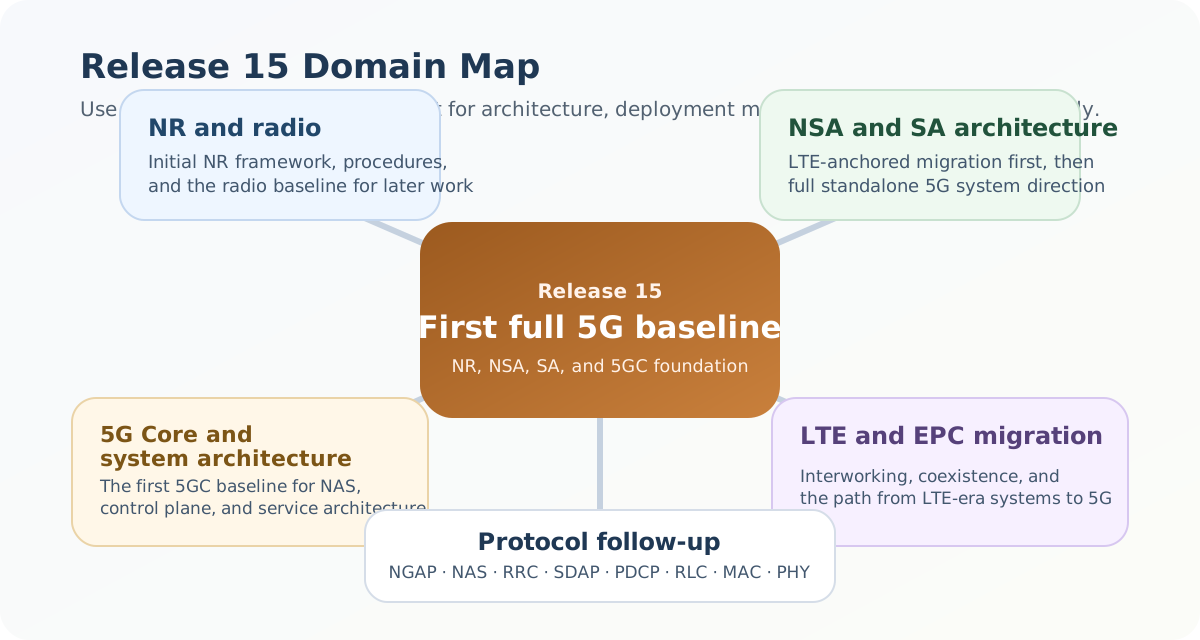
Release 15 introduces the initial NR framework and therefore becomes the radio foundation for everything that follows in later NR protocol pages. If you want to understand later beam, mobility, scheduling, or configuration evolution, the baseline starts here.
This is why Release 15 matters even when later releases are richer: they still build on the original NR architecture and procedure model first established in this release.
NSA and SA architecture
One of the most important things Release 15 teaches is the difference between NSA and SA. NSA matters because it enabled early 5G deployment with LTE as an anchor, while SA matters because it introduced the cleaner 5G system direction built around NR plus 5GC.
For engineers, this directly affects how signaling flows are read. Many early 5G deployment questions are really questions about whether a network is using LTE-anchored migration or the full standalone model.
5G Core and system architecture
Release 15 introduces the 5G Core and makes the next-generation core architecture part of the 5G story from the beginning. This is one of the clearest signs that Release 15 should not be read as just a radio release.
Rel-15 establishes the baseline for later NAS procedures, control-plane functions, service-based architecture, and the entire family of 5GC procedures and interactions that later releases expand.
LTE and EPC evolution alongside 5G
Release 15 also embraces LTE enhancement and, implicitly, EPC evolution. That matters because the release is not about replacing LTE overnight. It is about creating a migration path from LTE-era systems toward full 5G.
This is why Release 15 should not be read as NR only. It is a transition release as well as a foundation release, and that migration context matters for deployment and troubleshooting reading.
First-wave deployment and implementation relevance
3GPP explicitly notes that this Release 15 waypoint enabled rapid chip design and initial network implementation during 2019. That gives the release strong historical importance beyond standards text alone.
In practice, this means Release 15 is the right place to start when learning why the first commercial 5G deployments looked the way they did and why early vendor implementation choices were so closely tied to NSA, SA, and migration timing.
Major Release 15 feature areas
Initial NSA NR delivery
Full Release 15 5G completion
Standalone 5G support
NR baseline architecture
5G Core introduction
LTE and EPC enhancements
Early commercial deployment foundation
Baseline signaling and procedures for 5G
Protocol and signaling impact
This section is intentionally navigational rather than exhaustive. Use it to jump from Release 15 baseline concepts into the protocol, message, and troubleshooting areas that are most likely to surface real impact.
NGAP
Release 15 establishes the first N2 signaling baseline for the modern 5G system, making NGAP one of the core follow-up protocols for SA architecture reading.
NAS
Release 15 establishes the first 5G NAS baseline for registration, mobility, session handling, and 5GC interaction, making it the starting point for later changes.
RRC
RRC is one of the most important Release 15 follow-up layers because it contains the initial NR radio-control baseline that later releases expand and optimize.
SDAP
SDAP becomes relevant in Release 15 because the first full 5G system needs a baseline way to think about QoS-flow handling in the NR user plane.
PDCP
PDCP matters in Release 15 because it sits inside the first practical 5G user-plane stack and becomes part of the baseline later releases build on.
RLC
RLC is part of the foundational NR protocol path in Release 15 and helps explain how later radio behavior still rests on the original stack introduced here.
MAC
MAC is central to Release 15 because it is part of the first NR radio baseline, including the baseline scheduling and control behavior later releases evolve.
PHY
PHY is foundational in Release 15 because this release introduces the first NR radio system that every later NR feature still depends on.
5GC architecture
Release 15 introduces the 5G Core and therefore creates the baseline architecture for AMF, SMF, UPF, SBA, and later 5GC service evolution.
NSA and SA deployment procedures
Release 15 matters because engineers need to understand how LTE-anchored NSA and full SA affect architecture, signaling flows, and migration reading from day one.
What changed compared with LTE-era systems?
| Area | LTE-era systems | Release 15 direction |
|---|---|---|
| Migration path | LTE remains central | NSA enables early 5G while still using LTE support |
| Standalone system model | No full 5G standalone model | SA introduces a clean 5G system direction |
| Core architecture | EPC-centered evolution | 5GC creates the baseline for the modern 5G system |
| Radio system | LTE radio baseline | NR becomes the new radio baseline for 5G |
| Deployment framing | LTE-first architecture | Architectural turning point from LTE-first toward true 5G system design |
| Operational reading | Legacy migration assumptions | Mixed LTE and 5G coexistence with a clearer long-term 5G target |
What should you study in Release 15?
For beginners
- Start here before reading any later release.
- Learn the difference between NSA and SA.
- Understand NR and 5GC basics before moving into later feature growth.
For intermediate engineers
- Map Release 15 architecture to the main protocol layers.
- Connect SA signaling to core procedures and control-plane roles.
- Study how LTE and 5G coexist in first-wave deployments.
For advanced engineers
- Use Release 15 as the baseline for later release comparisons.
- Map foundation procedures to NGAP, NAS, and RRC reading.
- Connect architecture choices to interoperability and troubleshooting behavior.
Related specs and official references
Release 15 FAQs
What is 3GPP Release 15?
Release 15 is the first full 5G release and the foundation of the modern 5G system.
Is Release 15 the first full 5G release?
Yes. 3GPP explicitly describes Release 15 as the first full set of 5G standards.
What is the difference between NSA and SA in Release 15?
In Release 15, NSA refers to the earlier LTE-anchored 5G radio deployment model, while SA expands the scope to full standalone 5G with NR complemented by the next-generation 5G Core.
Did Release 15 include 5G Core?
Yes. 3GPP says Release 15 expanded to cover standalone 5G with a new radio system complemented by a next-generation core network.
How is Release 15 different from Release 16?
Release 15 establishes the first 5G baseline, while Release 16 completes the initial full 5G system as 5G Phase 2 and deepens radio, low-latency, industrial, and positioning support.
Does Release 15 affect NGAP, NAS, and RRC?
Yes. Release 15 creates the first 5G-era protocol and signaling baseline for NGAP, NAS, RRC, and related architecture and procedures.
Why is Release 15 important for learning 5G?
Release 15 is important because all later 5G releases build on the architecture, protocols, deployment models, and procedures first established here.