5G Phase 2 Release
3GPP Release 16
3GPP Release 16 is the 5G Phase 2 release that completed the initial full 3GPP 5G system and expanded 5G into more advanced radio, core, industrial, positioning, and transport use cases. This page explains the main feature areas, protocol impact, and the best next topics to study.
Quick facts
| Release | Rel-16 |
|---|---|
| Status | Frozen |
| Start date | 2017-03-22 |
| End date | 2020-07-03 (SA#88-e) |
| Position in roadmap | 5G Phase 2 |
| Editorial framing | Completes the initial full 3GPP 5G system |
What is Release 16?
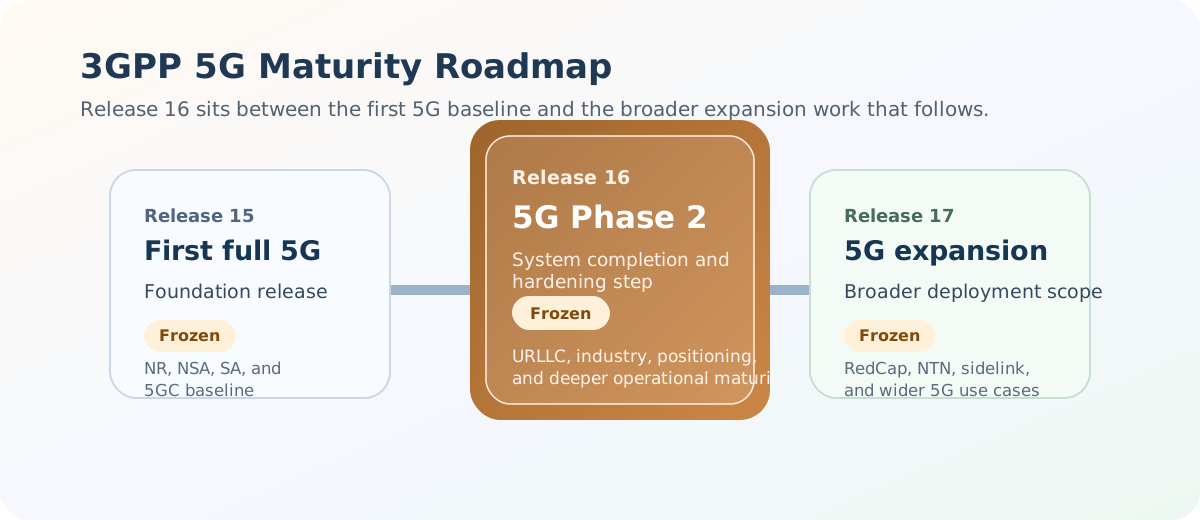
Release 16 sits in the 3GPP roadmap as the major follow-on to Release 15. Where Release 15 established the first 5G baseline, Release 16 deepens it into what 3GPP calls the initial full 3GPP 5G system. That is why it is so often treated as 5G Phase 2.
The reason Release 16 matters is that it makes 5G more deployment-grade. Official 3GPP material frames it around full-system completion, while related technical summaries highlight URLLC, industrial support, positioning, V2X, power saving, data collection, and more advanced NR radio handling such as beam management, CSI feedback refinement, and multi-TRP support.
For engineers, Release 16 is the page that explains how 5G moved from its first baseline toward harder, more reliable, and more operationally mature behavior before Release 17 broadened the scope further.
Key Features in Release 16
5G Phase 2 completion
Release 16 completes the initial full 3GPP 5G system and is widely treated as the 5G Phase 2 release after the first Release 15 baseline.
URLLC and industrial 5G
Rel-16 is strongly associated with ultra-reliable low-latency support, industrial automation, and the move toward more deployment-grade 5G behavior.
Positioning and location services
Positioning becomes more important in Release 16 as requirements and radio support expand for more advanced service and vertical use cases.
V2X and mobility support
Vehicle-related evolution and more advanced mobility-oriented service handling help push 5G beyond the first-wave consumer baseline.
Radio performance and robustness improvements
Beam handling, CSI feedback, multi-TRP support, and broader radio robustness make Release 16 feel more deployment-ready than Release 15.
Core network and service evolution
Release 16 matures the 5GC and service side to support low-latency and more advanced traffic, QoS, and service continuity demands.
Automation, data collection, and power saving
Power saving, data collection, SON or MDT themes, and broader operational support give Release 16 stronger optimization value.
Foundation for wider vertical use cases
Release 16 is a foundation release for industrial, transport, positioning, and other vertical-domain scenarios that broaden later releases.
Release 16 by technical domain
RAN and radio evolution
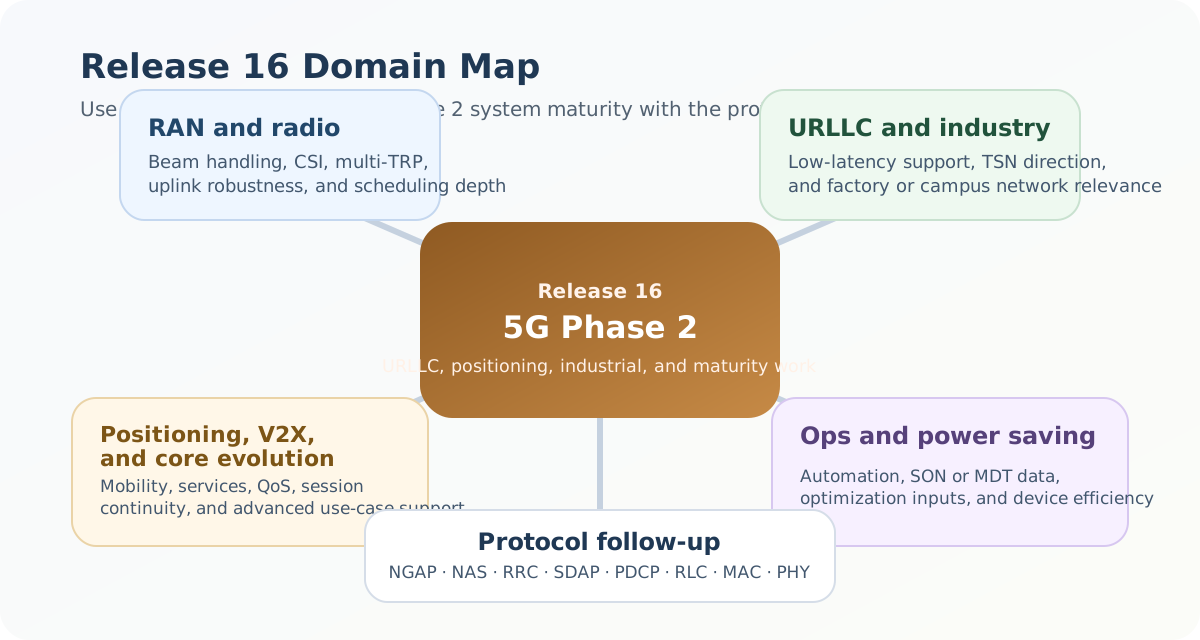
Release 16 is an important radio hardening release. Technical summaries of NR evolution point to enhanced beam handling, CSI feedback improvements, multi-TRP support, uplink robustness improvements, and broader radio changes that improve throughput, robustness, and scheduling behavior.
That makes Release 16 important for readers moving from high-level release context into PHY, MAC, RRC, mobility, measurements, and radio-robustness questions. It is a major part of why Rel-16 feels more deployment-ready than Rel-15.
URLLC and industrial evolution
Release 16 is strongly associated with ultra-reliable low-latency support and industrial automation use cases. This is the part of the release that makes 5G relevant to factory and campus-network discussions rather than only first-wave mobile broadband thinking.
Time-Sensitive Networking relevance and industrial-support framing make Release 16 one of the most important study anchors for engineers who need to understand why 5G became credible for deterministic and industrial environments.
Positioning, V2X, and mobility-related evolution
Positioning and V2X become more important in Release 16. Requirements material and technical summaries point to stronger positioning support, advanced mobility-related expectations, and the kinds of reliability and latency needs that matter for more advanced transport and vertical use cases.
This is one of the reasons Release 16 should lead readers naturally into mobility, measurements, RRC, and radio-control reading rather than being treated as only a core-network release.
Core network and service evolution
Release 16 also matters on the system side because the 5GC matures to support low-latency and advanced services more effectively. Technical summaries point to improvements in QoS handling, session behavior, and service continuity needed to support a more complete 5G system.
For site navigation, that means Release 16 should naturally lead into 5GC, SBA, NAS, NGAP, and service-oriented reading when questions move from feature names into architecture and procedure implications.
Power saving, automation, and data collection
Release 16 is also important for operational readiness. 3GPP presentation material points to smartphone and network power saving, plus data collection, SON, and MDT-oriented improvements that support optimization and better operational visibility.
This makes Rel-16 useful not only for protocol specialists but also for engineers interested in optimization, analytics, and the operational groundwork that later automation themes build on.
Security and deployment relevance
Release 16 includes more mature 5GS security specifications and contributes to stronger operational confidence for broader deployments. This matters because system completion is not only about adding features, but about making the whole 5G stack more trustworthy and usable in real networks.
In practice, that means operators, vendors, and field engineers should read Rel-16 as the point where 5G becomes meaningfully harder, more complete, and more deployment-grade than the original Release 15 baseline.
Major Release 16 feature areas
URLLC enhancements
Industrial IoT and TSN support
Enhanced beam management
CSI feedback improvements
Multi-TRP support
Positioning enhancements
V2X evolution
Power saving improvements
Data collection and SON/MDT
5GC maturity
Security maturity
Foundation for broader verticals
Protocol and signaling impact
This section is intentionally navigational rather than exhaustive. Use it to jump from Release 16 feature families into the protocol, message, and troubleshooting areas that are most likely to surface real impact.
NGAP
Release 16 deepens the feature and procedure context around NGAP as the 5G system matures for industrial, low-latency, and broader service scenarios.
NAS
NAS becomes more important in Release 16 where session behavior, mobility handling, service continuity, and broader 5GC maturity affect real deployment behavior.
RRC
RRC is a key follow-up layer for Release 16 because radio behavior expands around measurements, beam management, CSI reporting, multi-TRP support, positioning, and low-latency feature handling.
SDAP
SDAP matters when Release 16 QoS maturity and low-latency service handling change how engineers interpret user-plane treatment and flow mapping.
PDCP
PDCP becomes more relevant when Release 16 radio and service maturity affect duplication, delivery, reliability, and user-plane continuity assumptions.
RLC
RLC becomes part of the detailed follow-up path when Release 16 radio hardening changes expectations around buffering, segmentation, reassembly, or reliability behavior.
MAC
MAC is important when Release 16 changes touch scheduling, robustness, control signaling, radio-resource handling, and the behavior needed for more reliable low-latency operation.
PHY
PHY is central to Release 16 because many headline items sit in radio robustness, beam handling, CSI behavior, multi-TRP support, positioning, and broader radio maturity.
Positioning procedures
Positioning gains more practical importance in Release 16, so positioning-related procedure reading becomes more useful for both architecture study and troubleshooting.
URLLC and QoS-related procedures
URLLC and low-latency service direction in Release 16 make QoS-aware procedures more important to understand at both protocol and deployment level.
What changed compared with Release 15?
| Area | Release 15 | Release 16 direction |
|---|---|---|
| Roadmap role | First 5G baseline | 5G Phase 2 and initial full 5G system completion |
| Radio maturity | Foundational NR baseline | Stronger beam handling, CSI refinement, robustness, and multi-TRP support |
| Low-latency support | Early baseline support | Stronger URLLC and industrial-use-case focus |
| Industrial support | Limited first-wave scope | More serious industrial and TSN-oriented relevance |
| Positioning and mobility | Foundational support | More advanced positioning, V2X, and mobility-related evolution |
| Operational maturity | Initial deployable baseline | More power-saving, data-collection, security, and deployment-grade maturity |
What should you study in Release 16?
For beginners
- Review Release 15 first if you still need baseline 5G architecture and procedure context.
- Learn the core 5G architecture and protocol stack before reading detailed feature language.
- Use Release 16 as the page that explains how 5G becomes a fuller Phase 2 system.
For intermediate engineers
- Focus on URLLC, industrial IoT, positioning, radio robustness, and 5GC maturity.
- Connect these themes to protocol and QoS behavior through the linked protocol pages.
- Study how Release 16 deepens real deployment readiness before moving to Release 17.
For advanced engineers
- Map Release 16 feature families into likely protocol and implementation implications.
- Compare Release 16 with Release 17 to see how system completion turns into wider 5G expansion.
- Connect low-latency and industrial features to troubleshooting, optimization, and operations workflows.
Related specs and official references
Release 16 FAQs
What is 3GPP Release 16?
Release 16 is the 5G Phase 2 release that completed the initial full 3GPP 5G system after the first Release 15 baseline.
Is Release 16 complete?
As checked on April 23, 2026, the 3GPP portal listed Release 16 as Frozen.
Is Release 16 the same as 5G Phase 2?
Yes. 3GPP describes Release 16 as 5G phase 2 and as the release that completed the initial full 3GPP 5G system.
What are the main features of Release 16?
Major Release 16 themes include URLLC, industrial support, positioning, V2X, enhanced beam handling, CSI feedback improvement, multi-TRP support, power saving, data collection, and broader 5GC maturity.
How is Release 16 different from Release 15?
Release 15 established the first 5G baseline, while Release 16 completed the initial full 5G system and added stronger industrial, low-latency, positioning, V2X, and advanced radio support.
Does Release 16 affect NGAP, NAS, and RRC?
Yes. Release 16 changes the feature and procedure context in which NGAP, NAS, and RRC are interpreted and extended.
Why is Release 16 important for industrial 5G?
Release 16 is important for industrial 5G because it is closely tied to URLLC, Time-Sensitive Networking relevance, and more deployment-grade support for advanced industrial use cases.