First 5G-Advanced Release
3GPP Release 18 Explained
3GPP Release 18 is the first release of 5G-Advanced and marks the next major step in 5G evolution. This page explains the main Release 18 feature areas, protocol and architecture impact, and the best follow-up topics to study across RAN, core, signaling, security, and operations.
Quick facts
| Release | Rel-18 |
|---|---|
| Status | Frozen |
| Start date | 2019-09-16 |
| Freeze milestone | SA#104, 2024-06-21 |
| Position in roadmap | First 5G-Advanced release |
| Editorial framing | Baseline release for 5G-Advanced evolution |
What is Release 18?
Release 18 sits in the 3GPP roadmap as the first formal 5G-Advanced release. It follows Release 17, which had already expanded 5G into areas such as NTN and RedCap, but Release 18 is where 3GPP explicitly frames the next phase of 5G evolution under the 5G-Advanced label.
The reason Release 18 is called 5G-Advanced is that it does more than add isolated features. Official 3GPP material presents it as a broader capability step covering RAN enhancement, AI/ML direction, RedCap evolution, NTN, positioning, security, management, orchestration, and operational support for more advanced 5G use cases.
For engineers, Release 18 matters because it becomes the baseline reference for later 5G-Advanced work. If you want to understand where Release 19 and later 5G evolution came from, Release 18 is the right first page.
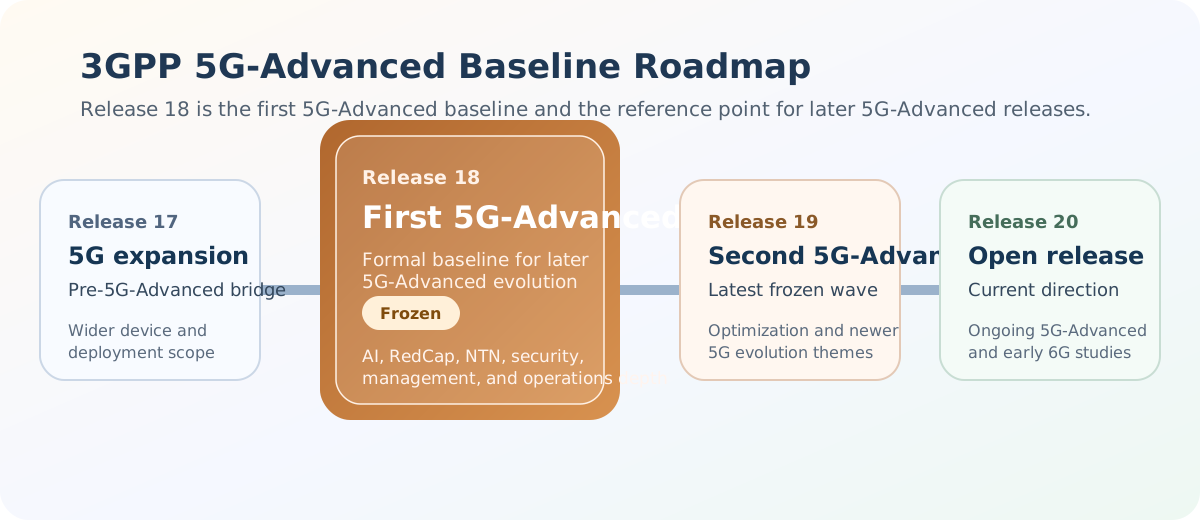
Key Features in Release 18
5G-Advanced baseline
Release 18 is the first formal 5G-Advanced release and becomes the baseline from which later 5G-Advanced work grows.
RAN enhancement and radio evolution
RAN work expands radio performance, efficiency, positioning, MIMO, sidelink, duplex evolution, and other advanced NR capabilities.
AI/ML in the network and air interface
Release 18 is the first release where AI/ML becomes a visible standards topic for NR air-interface studies and broader system support.
RedCap evolution
Reduced-capability NR evolves further with complexity and cost reduction aimed at broader practical device support.
NTN and expanded connectivity
Release 18 deepens NTN support for NR and IoT-related access scenarios, extending 5G into wider coverage models.
Positioning improvements
Positioning grows into a more visible Release 18 feature area, including improved accuracy and broader usage scenarios.
Security and privacy enhancements
Security and privacy become explicit 5G-Advanced priorities, with SA3 describing Release 18 as a major step forward.
Management, orchestration, and charging
Release 18 management work supports new features, measurements, KPIs, orchestration, and multi-vendor operational readiness.
Release 18 by technical domain
RAN and radio evolution
Release 18 RAN work is one of the clearest reasons the release feels like a major milestone. 3GPP RAN1 material highlights MIMO evolution, AI/ML for the NR air interface, expanded and improved NR positioning, sidelink evolution, duplex evolution, and broader radio efficiency or performance improvements.
This means Release 18 should lead readers naturally into PHY, MAC, RRC, mobility, measurements, and radio bearer pages whenever they want to turn release-level statements into radio behavior and practical signaling understanding.
Reduced-capability and device evolution
RedCap is not just a side topic in Release 18. Official feature summaries explicitly describe further NR RedCap UE complexity and cost reduction work, which matters for device categories that need lower complexity and more practical economics than full flagship NR capability.
In practice, this gives Release 18 real importance for engineers working with simpler 5G devices, industrial endpoints, and deployment scenarios where cost, power, and capability balance are central design questions.
NTN, IoT, and expanded access scenarios
Release 18 continues and deepens NTN evolution for both NR and IoT-related access scenarios. Official 3GPP release summaries explicitly call out further satellite integration into the 5G System and support for IoT and machine-type communication, including by satellite coverage.
That makes Release 18 especially useful for readers interested in wider coverage, new access models, and the way 5G expands beyond conventional terrestrial assumptions.
Core network and service evolution
The system side of Release 18 matters alongside the radio side. 3GPP SA2 material describes study and standards progress around system support for AI/ML-based services and broader system-level enhancement beyond the Release 17 5GS baseline.
For readers of this site, that means Release 18 should lead into core network, service-based architecture, NAS, and NGAP pages when questions move from feature names to architecture and procedure consequences.
Security and privacy
Release 18 is a major security and privacy milestone for 5G-Advanced. 3GPP SA3 explicitly describes it as a big step forward in security and privacy and groups the work into five key enhancement areas, covering topics such as vertical security, application and API security, zero trust studies, privacy-sensitive service support, and security for broader feature growth.
That makes Release 18 important not just for feature readers but for engineers responsible for trust, identity, access control, privacy handling, and the security implications of new 5G-Advanced capabilities.
Management, orchestration, and charging
Official SA5 Release 18 material emphasizes management support for new network features in multi-vendor scenarios, including measurements, KPIs, UE-level measurement support, QoE data, trace collection, orchestration maturity, and operational support for new capabilities.
This makes Release 18 relevant to operations teams as well as protocol specialists. It is one of the places where 5G-Advanced becomes a real operations story instead of only a radio feature story.
Deployment and commercial relevance
This part is an editorial synthesis of the official release material: when a release becomes the first 5G-Advanced baseline and combines RAN, core, NTN, RedCap, security, and management advancement, it becomes highly relevant to commercial planning and multi-vendor implementation.
In practice, that means operators, vendors, planners, and field engineers should watch Release 18 for what changes feature assumptions, configuration depth, performance expectations, measurements, orchestration, and the protocol areas most likely to need updated reading.
Major Release 18 feature areas
AI/ML for NR air interface
NR positioning enhancements
Further NR RedCap reduction
NTN evolution for NR
NTN evolution for IoT
NR sidelink evolution
MIMO evolution
Security and privacy enhancements
QoE and SON/MDT enhancements
NPN management enhancements
Protocol and signaling impact
This section is intentionally navigational rather than exhaustive. Use it to jump from Release 18 feature families into the protocol, message, and troubleshooting areas that are most likely to surface real impact.
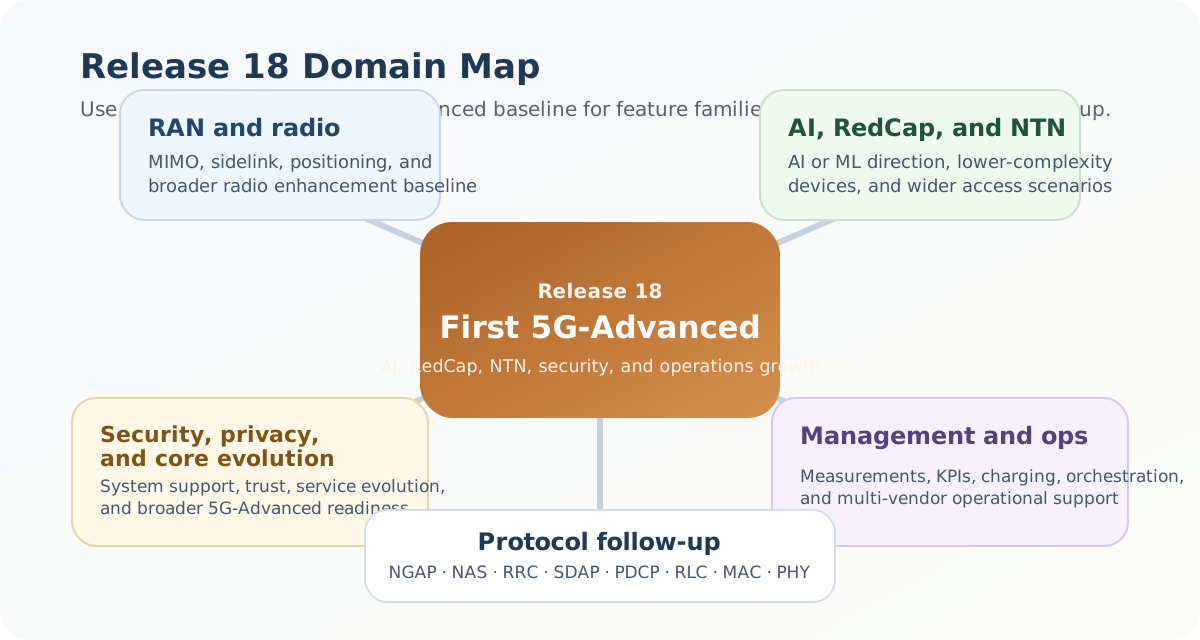
NGAP
Release 18 changes the broader feature and procedure context around N2 signaling, especially where newer 5G-Advanced capabilities need signaling support.
NAS
NAS matters when Release 18 features influence registration, mobility, service continuity, session handling, and broader 5GS evolution.
RRC
RRC is one of the key follow-up layers for Release 18 because radio evolution affects measurements, mobility, capability exchange, positioning, and configuration behavior.
SDAP
SDAP becomes more important when feature growth needs to be mapped into practical QoS-flow handling and user-plane treatment.
PDCP
PDCP matters when Release 18 radio and user-plane evolution affects duplication, delivery, reliability, and advanced data handling behavior.
RLC
RLC is part of the detailed follow-up path when Release 18 radio evolution changes expectations around segmentation, buffering, or reliability handling.
MAC
Study MAC when Release 18 changes touch scheduling, control signaling, efficiency, sidelink, small data, or radio resource coordination below RRC.
PHY
PHY is central to Release 18 because many of its headline improvements sit in radio performance, positioning, air-interface AI/ML, and efficiency work.
Security procedures
Release 18 is significant from a security and privacy perspective, so security-focused readers should follow the release into authentication, privacy, and trust-related areas.
Management interfaces
Management and service-oriented interfaces become more relevant in Release 18 as orchestration, measurements, QoE data, and multi-vendor support expand.
What changed compared with Release 17?
| Area | Release 17 | Release 18 direction |
|---|---|---|
| Roadmap position | Expansion release | First formal 5G-Advanced release |
| System maturity | Broader 5G scope | 5G-Advanced baseline |
| Radio evolution | Expanded 5G into areas such as NTN and RedCap | Deepens advanced radio, positioning, AI/ML, efficiency, and feature breadth |
| Advanced use cases | Broader deployment scope | More explicit support for advanced connectivity and richer system capabilities |
| AI/ML and automation | Early context | Visible standards-level feature and study direction |
| Security and operations | Strong baseline | More explicit 5G-Advanced security, management, and orchestration focus |
What should you study in Release 18?
For beginners
- Start with what 5G-Advanced means and why Release 18 matters.
- Review Release 17 first if you need context for NTN, RedCap, and broader 5G expansion.
- Learn the core 5G protocol stack before reading work-item language in detail.
For intermediate engineers
- Focus on RAN enhancement, RedCap, NTN, positioning, security, and management themes.
- Follow the protocol and message links to convert feature summaries into concrete signaling study.
- Use Release 18 as the baseline before moving to Release 19.
For advanced engineers
- Map work-item-level domains into protocol and implementation implications.
- Compare Release 18 with Release 19 to see how 5G-Advanced matures.
- Connect feature themes to deployment, automation, security, and troubleshooting workflows.
Related specs and official references
Release 18 FAQs
What is 3GPP Release 18?
Release 18 is the first formal 5G-Advanced release and the baseline from which later 5G-Advanced work grows.
Is Release 18 the first 5G-Advanced release?
Yes. 3GPP explicitly frames Release 18 as the first release of 5G-Advanced.
Is Release 18 complete?
As checked on April 23, 2026, the 3GPP portal listed Release 18 as Frozen.
What are the main Release 18 feature areas?
Release 18 covers 5G-Advanced baseline work across RAN enhancement, AI/ML, RedCap evolution, NTN, positioning, security and privacy, management, orchestration, and broader operational readiness.
How is Release 18 different from Release 17?
Release 17 broadened 5G into more deployment areas, while Release 18 becomes the first formal 5G-Advanced release and deepens advanced radio, AI/ML, management, security, and operational capabilities.
Does Release 18 affect NGAP, NAS, and RRC?
Yes. Release 18 does not replace protocol specifications, but it changes the feature and procedure context in which NGAP, NAS, and RRC are interpreted and extended.
Why is Release 18 important for operators and engineers?
Release 18 matters because it establishes the first 5G-Advanced baseline across radio, core, security, management, and operations, making it a major reference point for planning and implementation.