N2 Interface in 5G Explained
The N2 interface is the control-plane reference point between the NG-RAN and the AMF in the 5G System. In practical engineering terms, it is the main access-to-core control path used by the gNB to exchange signaling with the AMF.
N2 matters because it carries the signaling needed for UE registration support, NAS transport, UE context management, paging, handover coordination, and access-side session-resource control. If you are analyzing 5G control-plane behavior, N2 is one of the first interfaces you want in view.
Quick facts
| What it is | N2 is the control-plane reference point between the NG-RAN and the AMF. |
|---|---|
| Main protocol | N2 mainly uses NGAP on the gNB-to-AMF control path. |
| What it carries | UE-associated NAS transport, UE context signaling, paging support, handover coordination, and access-side session-resource control. |
| How it relates to NG | N2 is the 5GS control-plane view of the NG-C side of the NG interface. |
| Best companion pages | Pair N2 with N1, NG, AMF, and initial registration or N2 handover procedures. |
| Specification baseline | 3GPP TS 23.501, TS 23.502, and TS 38.413. |
Why N2 matters
N2 is where a huge amount of access-to-core control coordination becomes visible. A UE may appear to the user as “stuck on registration,” “not paging,” or “failing handover,” but the real issue may sit in the signaling relationship between the gNB and the AMF.
That makes N2 one of the most useful interfaces for practical fault isolation. It sits between the radio side and the core control side, so it often explains why the UE looks healthy from one direction but broken from another.
N2 interface in the 5G architecture
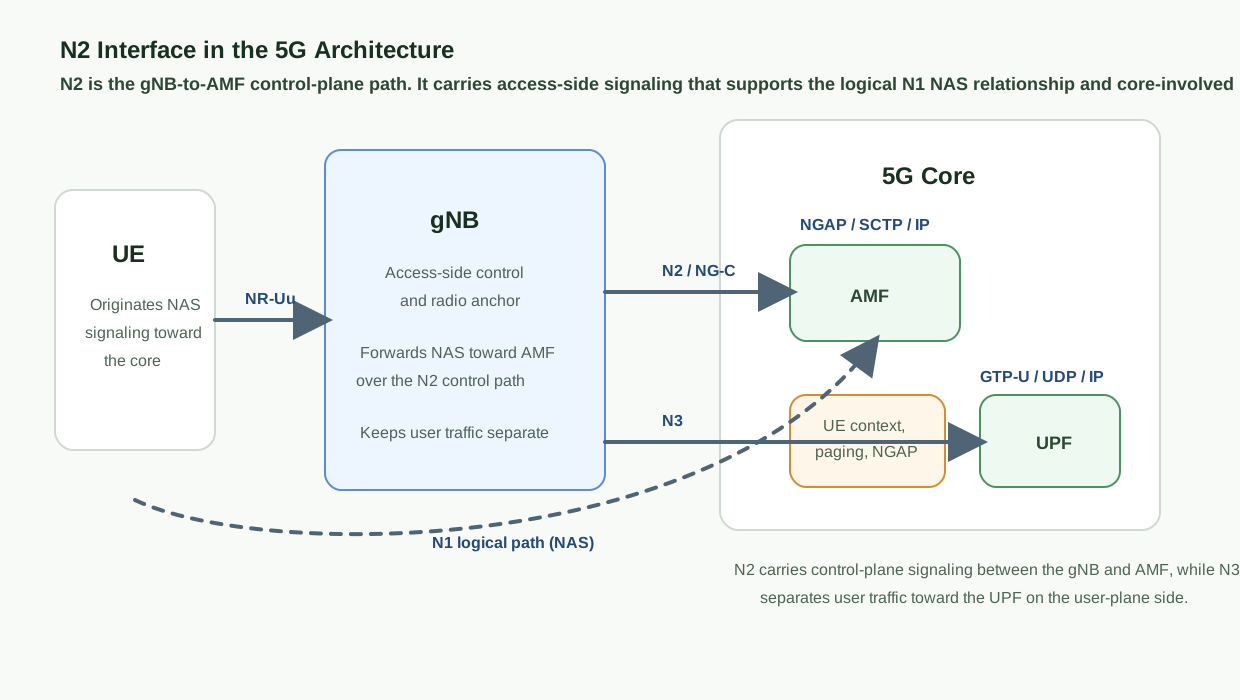
What the N2 interface is used for
- Transport of UE-associated NAS messages toward the AMF.
- Initial access and registration-related control signaling.
- UE context setup, update, and release between the gNB and AMF.
- Paging coordination between core reachability logic and the access network.
- Handover and mobility signaling when the core participates directly.
- Access-side signaling tied to PDU session resource coordination.
The shortest useful summary is that N2 is the main access-to-core control-plane interface between the gNB and the AMF.
N2 is the control-plane side of NG
In 5G architecture, the broader NG interface is split into NG-C for the control plane and NG-U for the user plane. N2 is the 5GS control-plane view of that access-to-core relationship, while N3 is the user-plane companion toward the UPF.
| Interface | Connects | Plane | Main role |
|---|---|---|---|
| N2 / NG-C | gNB and AMF | Control plane | Signaling, NAS transport, UE context handling, paging, and mobility-related control. |
| N3 / NG-U | gNB and UPF | User plane | User data transport. |
NGAP: the main protocol on N2
The main signaling protocol on the N2 interface is NGAP. NGAP is the application-layer protocol used between the gNB and the AMF for NG control-plane procedures.
| What NGAP handles | Why it matters on N2 |
|---|---|
| NG setup | Establishes and maintains the control-plane relationship between the gNB and the AMF. |
| UE-associated signaling | Tracks per-UE control procedures such as NAS transport, context setup, and context release. |
| Paging and mobility | Supports reachability and handover-related signaling when the AMF must coordinate with the RAN. |
| PDU session resources | Supports access-side control signaling tied to session-resource setup or change. |
N2 and NAS transport
One of the most important things to understand about N2 is that it helps transport NAS signaling between the UE and the AMF. The NAS protocol itself is the logical N1 relationship, but on the access side the gNB carries and forwards that signaling toward the AMF over N2 using NGAP.
| Layer or interface | Role |
|---|---|
| N1 | Logical UE-to-AMF NAS relationship. |
| N2 | gNB-to-AMF control-plane interface that transports and coordinates the access-side signaling path. |
| NGAP | Application-layer signaling protocol used on N2 for NAS transport and control procedures. |
That is why registration and authentication problems often depend on both NAS correctness and N2 transport health.
N2 and registration procedure
The 5G Initial Registration path depends heavily on N2. The UE starts with NAS signaling, the gNB forwards it toward the AMF over the access-to-core control path, and the AMF returns control signaling through the same relationship.
- The UE sends the first NAS message toward the network.
- The gNB forwards that signaling toward the AMF over N2.
- The AMF processes the request and coordinates authentication, subscriber, and policy context as needed.
- The response returns through the same access-side control path.
This is why a visible “registration failure” can really be a NAS problem, a gNB-to-AMF N2 problem, or an AMF-side control problem.
N2 and UE context management
N2 is one of the key interfaces for UE context management between the gNB and the AMF. This shared control-plane understanding of the UE matters for initial access, ongoing signaling, paging, and mobility.
| Context area | Why N2 matters |
|---|---|
| Initial access | Creates the first shared control state between the gNB and AMF for a UE. |
| Connected handling | Lets the access network and core keep a synchronized view of UE-associated signaling state. |
| Release and cleanup | Ensures both sides understand when access-side control state is being released or changed. |
N2 and paging
Paging in 5G brings together AMF-side reachability logic and NG-RAN execution. When the core needs to reach a UE through the access network, that coordination appears on the N2 control path.
This is why paging failures are not always “just radio issues.” Sometimes the radio side is fine, but the N2 or NGAP coordination path between the gNB and the AMF is where the real problem lives.
N2 and mobility / handover
N2 is important for mobility whenever the AMF needs to participate more directly in the handover or context-transfer story. Some mobility can stay more local to the RAN side through Xn, but N2 handover and related procedures rely on the control-plane path between the gNB and the AMF.
- Core-involved handover signaling.
- UE context coordination at the core-facing edge.
- Access-side mobility control that cannot stay entirely inside Xn.
N2 and PDU session resource procedures
Even though the SMF is the main session-control function and the UPF is the main user-plane function, N2 still matters for PDU session resource coordination between the access network and the core. Access-side resource changes tied to session behavior show up through N2-side control procedures.
That is one reason a PDU session issue may need you to inspect N1, N2, N11, and N3 rather than assuming the problem belongs to only one interface.
N2 protocol stack
| Layer | Role on N2 |
|---|---|
| NGAP | Main application-layer control protocol. |
| SCTP | Transport association used by the control-plane signaling path. |
| IP | Network-layer transport between gNB and AMF. |
| Transport network | Underlying path that must still be healthy for signaling to work. |
This layered view matters because an N2 problem may actually be an NGAP failure, SCTP association issue, IP reachability problem, or a lower transport fault.
N2 vs N1
| Interface | Endpoints | Main protocol | Main role |
|---|---|---|---|
| N1 | UE and AMF | NAS | Logical UE-to-core signaling relationship. |
| N2 | gNB and AMF | NGAP | Access-network control-plane transport and coordination. |
A good rule of thumb is that N1 is the logical UE-to-AMF conversation, while N2 is the gNB-to-AMF control-plane interface that helps carry and coordinate it.
N2 vs N3
| Interface | Plane | Connects | Used for |
|---|---|---|---|
| N2 | Control plane | gNB and AMF | Signaling, UE context, NAS transport, paging, and mobility coordination. |
| N3 | User plane | gNB and UPF | User data transport. |
This makes N2 the control-plane companion to the N3 user-plane path.
Common troubleshooting angles for N2
| Symptom | What to check on N2 |
|---|---|
| NG setup failure | Check whether the gNB and AMF successfully established the N2 control-plane relationship. |
| NAS messages not reaching the AMF | Check NGAP transport, UE-associated signaling flow, and whether the gNB forwarded the NAS correctly. |
| Registration failure | Check both NAS content and the N2 path that carries the signaling toward the AMF. |
| Paging failure | Check AMF-to-gNB control-plane coordination and whether paging signaling was delivered correctly over N2. |
| Handover failure | Check whether the mobility case required AMF-side coordination and whether the N2 signaling succeeded. |
| SCTP or transport instability | Check the signaling stack below NGAP, not just the application-layer procedure result. |
FAQ
What is the N2 interface in 5G?
The N2 interface is the control-plane reference point between the NG-RAN and the AMF in the 5G System.
What protocol runs on N2?
The main protocol on N2 is NGAP.
Is N2 the same as N1?
No. N1 is the logical UE to AMF NAS interface, while N2 is the gNB to AMF control-plane interface that transports and coordinates access-side signaling.
What is N2 used for?
N2 is used for control-plane signaling between gNB and AMF, including NAS transport, UE context management, paging, handover-related signaling, and access-side session-resource coordination.
What is the difference between N2 and N3?
N2 is the control-plane interface between gNB and AMF, while N3 is the user-plane interface between gNB and UPF.
Key takeaways
- N2 is the control-plane reference point between NG-RAN and AMF.
- The main signaling protocol on N2 is NGAP.
- N2 carries the access-side control signaling needed for registration, NAS transport, UE context management, paging, and mobility coordination.
- N2 is distinct from N1 and N3: N1 is logical UE-to-AMF NAS signaling, while N3 is user-plane transport to the UPF.
- Understanding N2 is essential for diagnosing registration failures, NGAP issues, AMF reachability, and control-plane handover problems.