What is 6G?
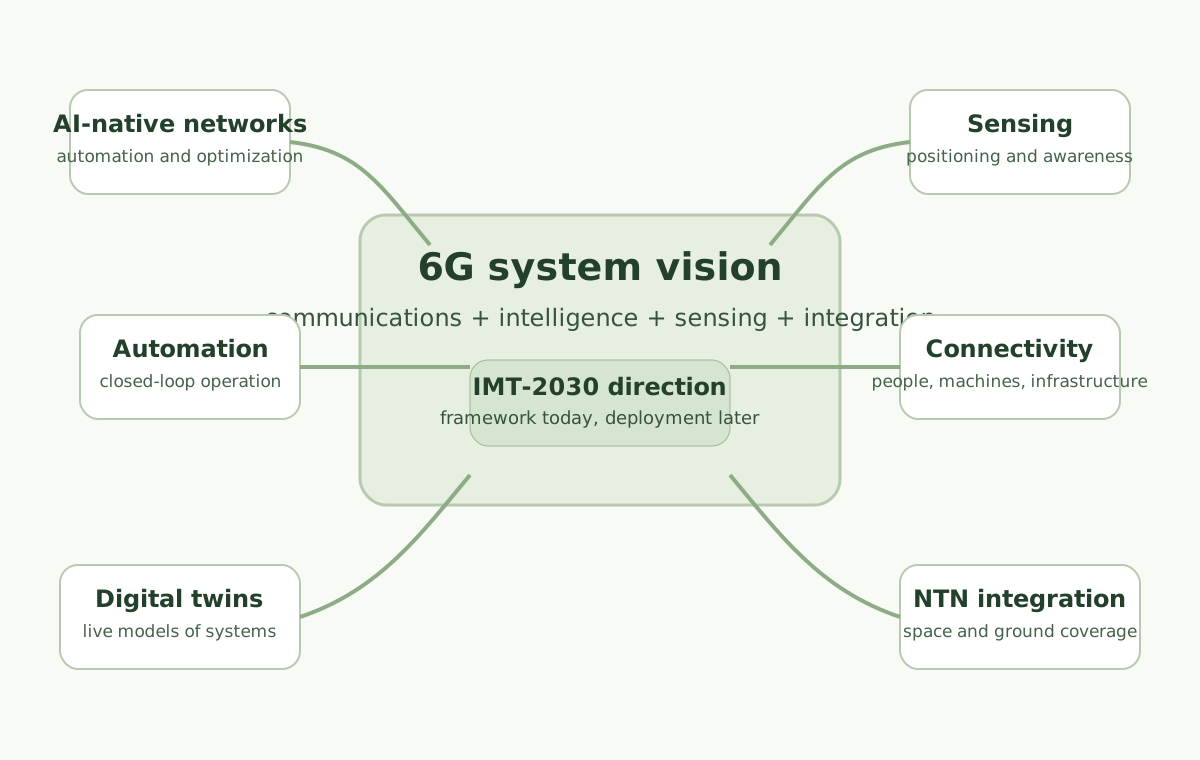
6G is the name commonly used for the next stage of mobile-network development beyond 5G and 5G-Advanced. It describes the future direction of wireless systems that may combine faster communications with deeper automation, more built-in intelligence, improved sensing, and broader connectivity across ground, air, and space. What matters most today is that 6G is not yet a finalized deployed standard. It is still being shaped through framework work, research programs, and early standards studies.
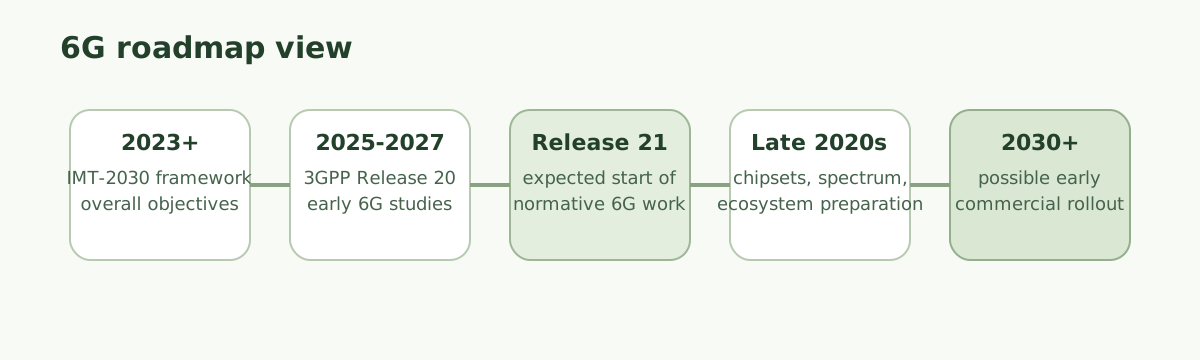
The most credible way to understand 6G today is as a developing roadmap. ITU-R frames that roadmap through IMT-2030, while 3GPP is moving through early 6G study work in Release 20, with Release 21 expected to start normative 6G development. That means this page should be read as a practical reference on where 6G is heading, not as a description of a completed protocol system. If you want the current deployed baseline first, start with the 5G hub.
Quick facts
| Maturity today | Framework, research, and study phase; not a finalized deployed standard |
|---|---|
| Global framework | ITU-R IMT-2030 |
| Detailed telecom specs | 3GPP early 6G studies in Release 20; Release 21 is expected to begin normative work |
| Main themes | AI-native networking, sensing, broader connectivity, automation, resilience, and sustainability |
| Coverage direction | Closer integration of terrestrial and non-terrestrial networks |
Contents
6G in simple terms
- 6G is expected to be the next major mobile-generation step after 5G and 5G-Advanced.
- It is not available today as a finalized, globally deployed standard.
- Current 6G work is about framework goals, research results, and early standards studies.
- Its vision goes beyond speed and includes AI, sensing, automation, resilience, and broader connectivity.
- ITU-R IMT-2030 and 3GPP are the main standards paths to watch.
If someone asks what 6G is in one sentence, the safest answer is this: 6G is the mobile industry’s name for the next long-term generation of wireless systems that is still being defined. It may eventually improve not only data performance, but also how networks sense their environment, automate decisions, support AI-driven services, and connect users and machines across more types of access networks.
Why 6G matters
6G is being discussed because wireless systems are expected to support more than smartphone broadband. Future networks may need to coordinate machines, assist digital twins, support richer real-time interaction, improve positioning and sensing, and keep services available across both dense urban zones and hard-to-reach areas.
This is why the 6G conversation is not simply “more speed after 5G.” The broader goal is a network that is more intelligent, more adaptive, more context-aware, and better integrated with compute and automation. That could mean smoother immersive services, better infrastructure monitoring, and wider connectivity, while also pushing network design further toward tighter links between radio, software, cloud, AI, and operations.
Key takeaway
Think of 6G as an effort to make wireless networks smarter, more aware of their surroundings, and more useful in places where communication, sensing, and automation need to work together. In standards terms, IMT-2030 describes that direction through usage scenarios, capability goals, and design principles such as integrated sensing, AI and communication, hyper-reliable low-latency behavior, ubiquitous connectivity, and sustainability. This is still a framework-level view, not a finalized protocol stack.
6G use cases
The most useful way to read 6G use cases is to ask what problem they are trying to solve. The current vision focuses on applications that need stronger coordination between communication performance, intelligence, sensing, timing, and reliability.
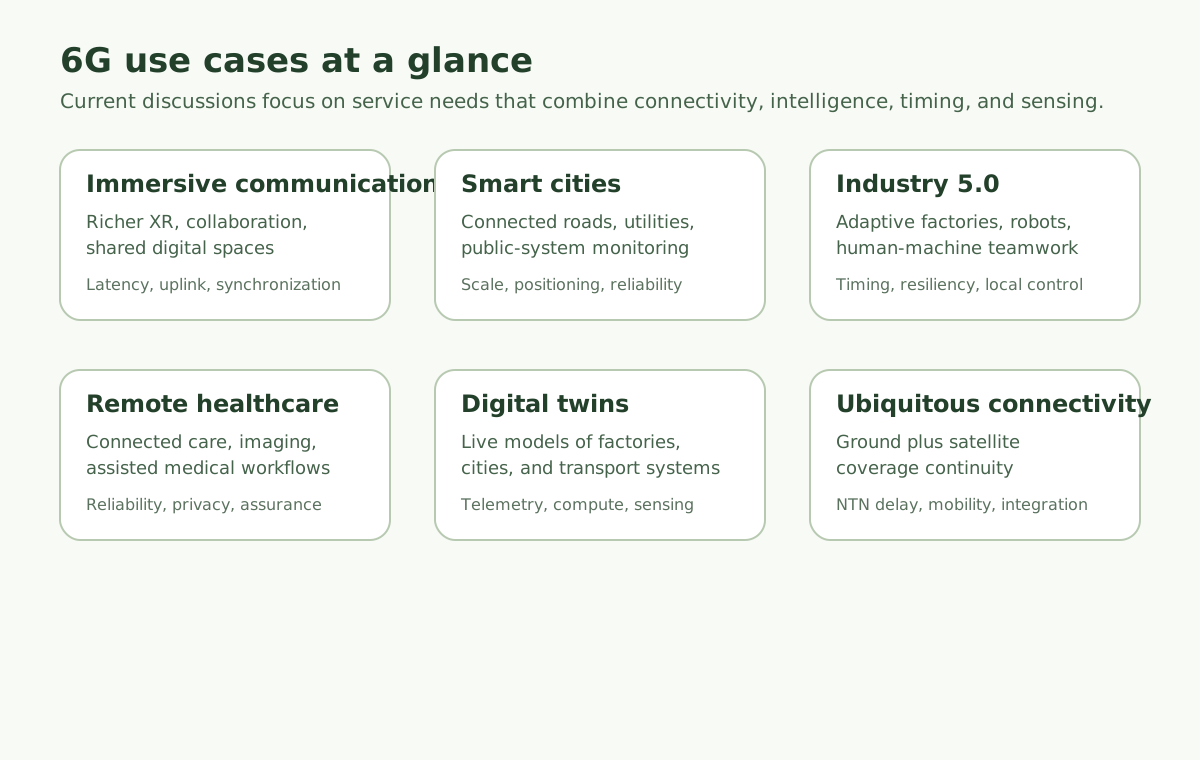
Immersive communication
This includes richer extended reality, highly interactive remote collaboration, and shared digital spaces that feel more natural and responsive.
Why it matters: Better interaction quality can improve education, design review, training, and remote teamwork.
What matters technically: Uplink performance, latency stability, synchronization, edge compute, and session continuity all matter.
Smart cities and infrastructure
Networks may help roads, utilities, public systems, and safety platforms collect and act on data more quickly and with more context.
Why it matters: Better monitoring can improve traffic flow, safety response, and infrastructure efficiency.
What matters technically: Scale, positioning, sensing accuracy, and reliable machine connectivity become important.
Industrial automation and Industry 5.0
6G discussions often include factories where machines, robots, and humans work together with more adaptive automation.
Why it matters: Production systems benefit from lower error rates, better coordination, and faster adaptation.
What matters technically: Deterministic behavior, local compute, resiliency, and precise timing remain central.
Remote healthcare
Future networks may support richer remote diagnostics, connected care, and better-assisted medical collaboration.
Why it matters: Healthcare systems can extend expertise further when the network is trustworthy and predictable.
What matters technically: Privacy, reliability, latency control, and service assurance are more important than headline peak speed.
Digital twins
A digital twin is a virtual model of a physical system that is updated using real-world data from sensors, machines, and networks.
Why it matters: Operators can test, predict, optimize, and troubleshoot physical systems more effectively.
What matters technically: Telemetry quality, sensing inputs, positioning, timing, and compute orchestration shape usefulness.
Ubiquitous connectivity
6G may aim for service continuity across more environments by integrating terrestrial networks with non-terrestrial links such as satellites.
Why it matters: Coverage can improve for remote regions, transport corridors, maritime zones, and disaster scenarios.
What matters technically: NTN integration adds new delay, mobility, link-budget, and interoperability questions.
6G vs 5G
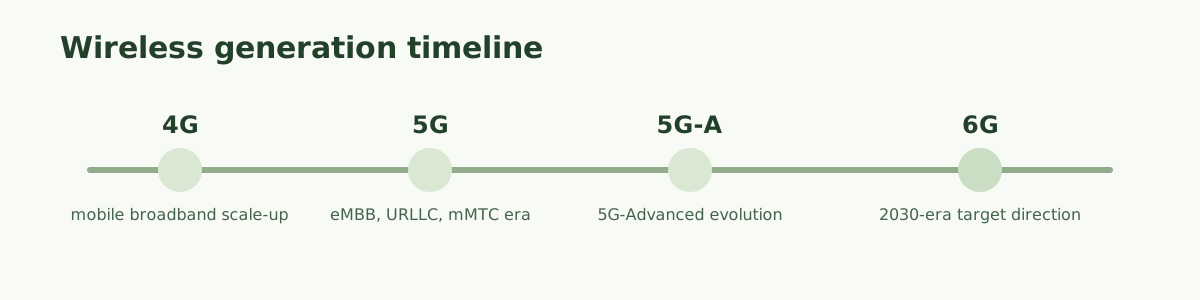
The safest comparison is to treat 5G and 6G as being at very different maturity levels. 5G is a real deployed system with commercial devices, radio networks, and evolving 5G-Advanced features. 6G, by contrast, is still being framed and studied. The comparison below shows direction, not a finalized scorecard.
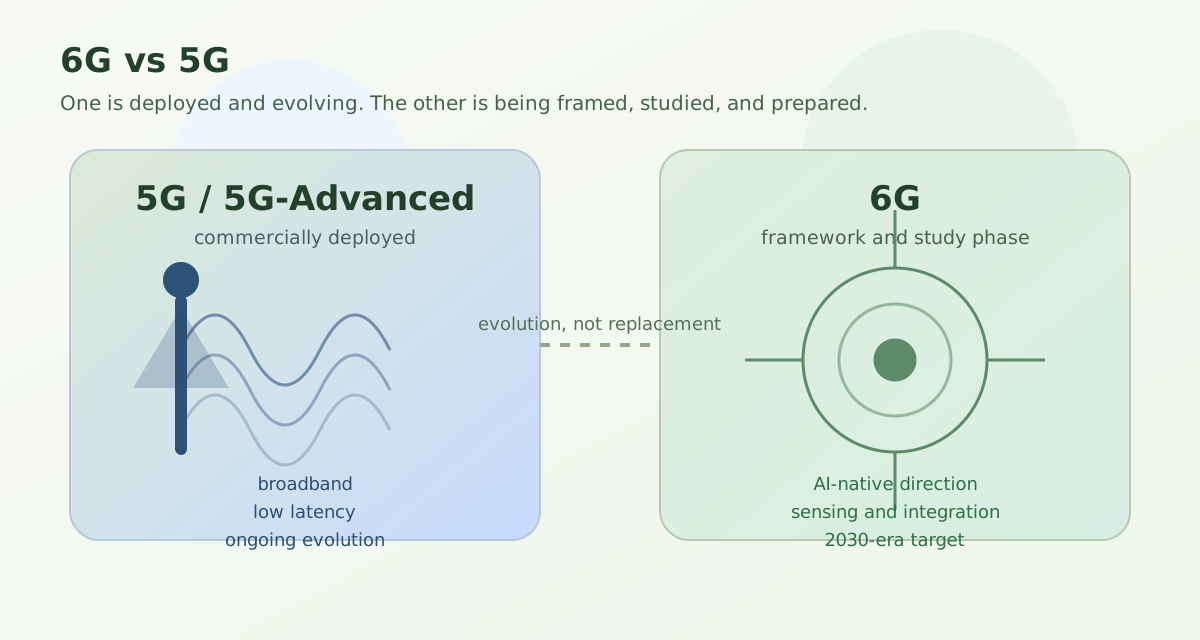
| Category | 5G / 5G-Advanced today | Current 6G direction |
|---|---|---|
| Network intelligence | AI-assisted optimization is growing across operations and RAN features. | AI-native operation is a major study theme and may become more deeply built into system behavior. |
| Sensing | Mostly separate from communications, with some early integration efforts. | Integrated sensing and communication is explicitly highlighted in IMT-2030 discussions. |
| Spectrum direction | Sub-6 GHz and mmWave are the main deployed ranges today. | Research includes sub-THz and bands above 100 GHz, though feasibility remains challenging. |
| Automation | Higher automation is being added gradually. | More autonomous, closed-loop, data-driven operation is expected to be a stronger design goal. |
| Coverage model | Primarily terrestrial, with growing NTN support. | Deeper terrestrial and non-terrestrial integration is widely discussed. |
| Expected capabilities | Broadband, low latency, massive IoT, slicing, and 5G-Advanced evolution. | Communication combined with sensing, intelligence, context awareness, resilience, and broader service integration. |
Key technologies shaping 6G
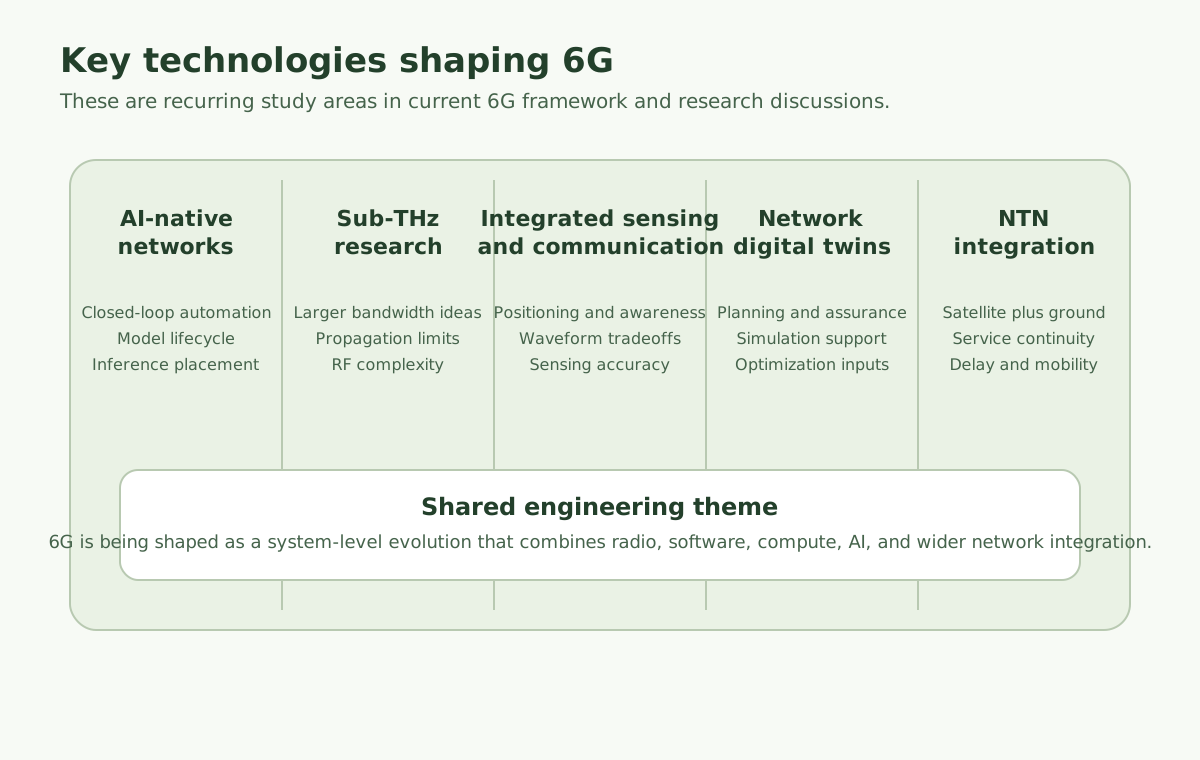
AI-native networks
AI-native networks are meant to do more than follow fixed rules. The idea is that the network may learn from conditions and help optimize performance, operations, and service quality in real time. In practice, that pushes the discussion beyond dashboards into closed-loop control, model training and inference placement, telemetry quality, and the trust and governance needed when AI influences RAN and service operations.
Sub-THz and higher-frequency research
Researchers are exploring whether much higher radio frequencies could provide much larger bandwidths for some future services. That makes this area attractive, but also difficult, because propagation loss, blockage, beam alignment complexity, RF front-end constraints, and power-efficiency limits all become more severe. ITU-R has explicitly studied feasibility above 100 GHz, which is why this topic gets so much attention in 6G discussions.
Integrated sensing and communication
This is the idea that the network may both communicate and understand aspects of its surroundings, such as movement or location. The challenge is doing both well at the same time, because shared radio resources create tradeoffs in waveform design, estimation accuracy, positioning quality, overhead, and system complexity.
Network digital twins
A digital twin is a software model of a real system that can help predict behavior before changes are made. In a network context, digital twins may support planning, assurance, AI training, troubleshooting, and performance optimization, but only if the input data, timing model, and environmental assumptions are credible enough to reflect real behavior.
NTN and satellite-terrestrial integration
NTN stands for non-terrestrial networks, such as satellite-based links. The goal is to make different coverage layers work together more smoothly, but that immediately brings in mobility, timing, propagation delay, orbit-related dynamics, service continuity, and radio-resource assumptions. It is one of the clearest examples of 6G being about broader system integration, not only faster radio links.
Is 6G available today?
Short answer: no. There is no finalized commercial 6G standard deployed at scale today. What exists now are framework documents, research papers, industry demonstrations, and early standards studies.
This distinction matters. A research demo can show that an idea is technically interesting. A framework document can define goals and usage scenarios. A study item can examine design options. But commercial deployment requires much more: stable specifications, interoperable devices, spectrum decisions, infrastructure readiness, and a workable business case.
Who is defining 6G?
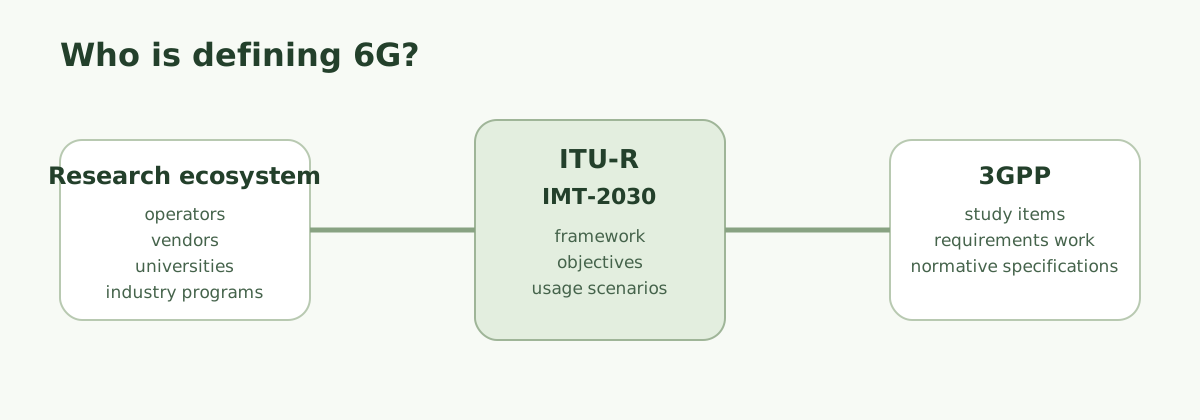
6G is not being defined by a single company or lab. It is taking shape through a wider standards and research ecosystem, with different groups handling different layers of the work.
ITU-R and IMT-2030
ITU-R sets the global framework and overall objectives for the next generation of IMT, known as IMT-2030. This includes usage scenarios, capability thinking, and the broader direction of development toward 2030 and beyond.
3GPP
3GPP is the organization expected to translate that direction into detailed telecom specifications. Current 3GPP Release 20 work includes early 6G studies, while Release 21 is expected to begin normative 6G work.
Research programs, operators, vendors, universities, and industry alliances also play an important role. They help test ideas, build consensus, and generate technical evidence before details are standardized.
When will 6G arrive?
Most industry discussions place 6G in the 2030 timeframe, but that should be read as a broad target window rather than a guaranteed launch date. Rollout timing depends on standards completion, spectrum policy, chipset maturity, infrastructure cost, and whether operators see a strong enough business case.
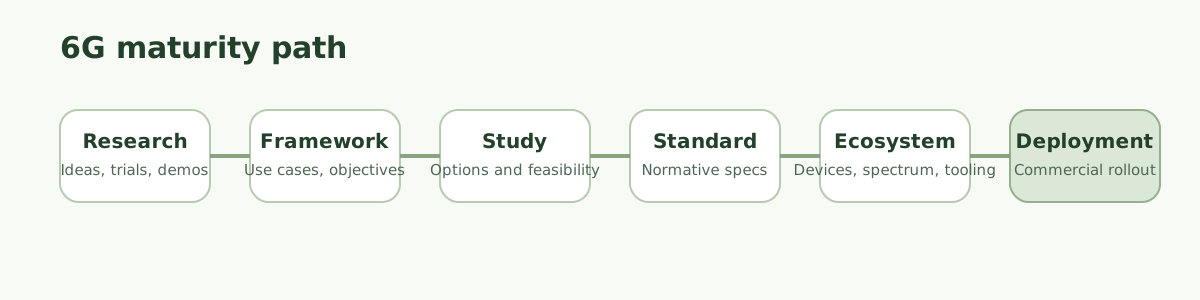
A useful mental model is to separate the path into stages: framework work, technical studies, detailed standardization, ecosystem readiness, and then deployment. Different regions and vendors may move at different speeds even after standards stabilize.
Challenges and open questions
Balanced 6G writing should always include the hard parts. Ambitious capability goals are only useful if they can be delivered with practical hardware, sustainable power use, trustworthy automation, and a deployment model that operators can actually justify.
| Challenge | Why it matters |
|---|---|
| Hardware complexity | Higher-frequency operation, tighter integration, and more advanced radios can increase implementation difficulty and cost. |
| Power consumption | Advanced signal processing, AI workloads, and wider bandwidth ambitions can increase energy demands across devices and networks. |
| AI trust and reliability | Autonomous or semi-autonomous network decisions must be explainable, safe, and operationally dependable. |
| Security and privacy | More sensing, more data, and broader system integration increase attack surface and governance complexity. |
| Cost and business case | New technology only scales if operators, vendors, and enterprise users can justify deployment and upgrade costs. |
| Standardization maturity | Until requirements and specifications settle, expectations should remain cautious and flexible. |
What to watch next
Watchlist
- Progress on IMT-2030 requirements, capability framing, and evaluation milestones.
- 3GPP Release 20 study outcomes and how they narrow the early 6G design space.
- Release 21 normative work as the first clearer signal of detailed 6G specification direction.
- AI-native RAN and operations work, especially where automation and trust are treated together.
- Sensing, positioning, and higher-frequency feasibility studies.
- NTN evolution and how terrestrial and non-terrestrial integration matures.
It is not necessary to chase every claim around 6G. The most useful signals are the conservative ones: formal framework documents, study conclusions, requirement documents, and the first normative work items that show what is actually becoming standardizable.
FAQ
What is 6G in simple terms?
6G is the name commonly used for the next generation of wireless systems after 5G and 5G-Advanced. Today it is best understood as a future direction and study area, not a finished commercial network.
Is 6G available now?
No. There is no finalized, globally deployed 6G standard in everyday commercial use. Current work is mainly in framework definition, research, and early standards studies.
How is 6G different from 5G?
The present 6G vision places more emphasis on AI-native operation, integrated sensing, automation, and broader terrestrial plus non-terrestrial connectivity. 5G is already deployed, while 6G is still being shaped.
What are the main 6G use cases?
Commonly discussed use cases include immersive communication, smart infrastructure, industrial automation, remote healthcare, digital twins, and ubiquitous connectivity.
Who is developing 6G?
ITU-R guides the IMT-2030 framework, 3GPP is expected to produce detailed specifications, and a broad mix of operators, vendors, research institutions, and industry groups contribute ideas and technical evidence.
When will 6G launch?
Many discussions align 6G with the 2030 timeframe, but exact launch timing depends on standards maturity, spectrum, devices, and deployment economics.
Final thoughts
The best way to understand 6G today is as a developing technical direction rather than a finished network standard. It is being framed through IMT-2030, explored in research programs, and studied in early 3GPP work. That makes careful language important. Credible 6G writing should describe capability goals, study directions, and practical challenges without pretending that the protocol details are already fixed.
If 5G introduced a more flexible and software-driven mobile era, 6G is expected to push further into intelligence, sensing, automation, and broader system integration. The real story is not simply a faster radio. It is how future wireless networks may become more aware, more adaptive, and more deeply connected to the digital and physical systems around them.