6G Standardization Status
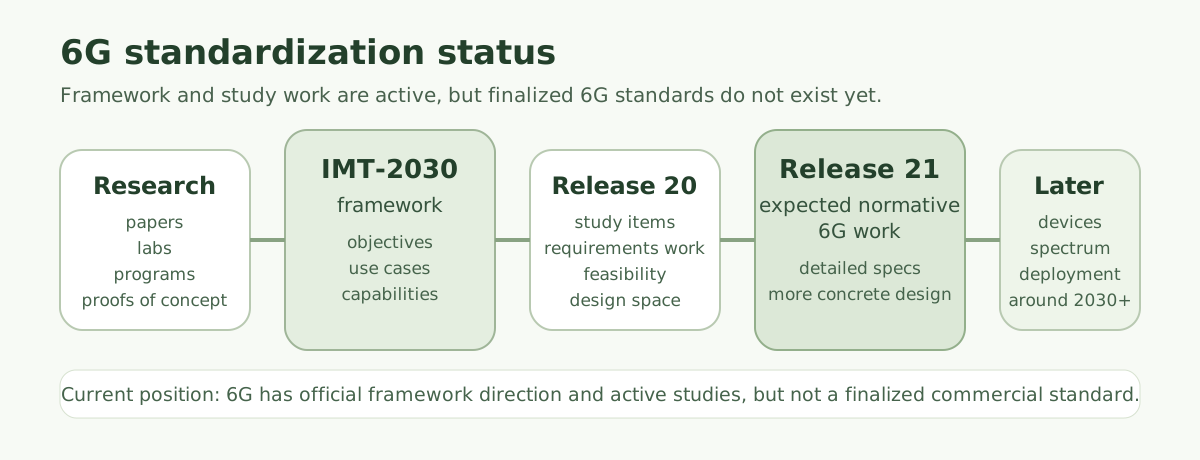
6G is not standardized yet. It is in the research, framework, technical requirements, and early study phase. It is not a finalized commercial mobile system, and it does not yet have the kind of complete protocol-level definition that people associate with a deployed generation such as 5G.
This matters because “standardization status” tells you how close a technology is to becoming real and interoperable. In the 6G case, the framework is being led by ITU-R through IMT-2030, while 3GPP is using Release 20 for early 6G studies and is widely expected to start normative 6G work in Release 21. That means the global process is moving forward, but it has not reached the stage where anyone can honestly claim that 6G is already a finished standard.
If you need the broad background first, start with What is 6G?. If you want the framework context behind this page, use IMT-2030 Explained. For the current deployed baseline, the right reference point is still the 5G hub.
Quick facts
| Overall maturity | 6G is not standardized yet and is not a deployed commercial generation today |
|---|---|
| Global framework | ITU-R IMT-2030 in Recommendation ITU-R M.2160 |
| 3GPP position | Release 20 contains early 6G studies; Release 21 is expected to begin normative 6G work |
| Best description today | Research, framework, technical requirements work, and early study activity |
| What does not exist yet | No finalized 6G protocol stack, no final RRC or NAS definitions, and no finalized end-to-end architecture |
Contents
6G status in simple terms
- 6G is not ready as a finalized mobile standard today.
- ITU-R has defined the IMT-2030 framework, which sets the overall direction for the 6G era.
- 3GPP is still in the early 6G study phase through Release 20.
- Release 21 is expected to be the first release with normative 6G work.
- Many timelines point toward the 2030 period, but actual rollout depends on standards, spectrum, devices, and cost.
- So the honest status is: 6G is moving forward, but it is not a finished or commercially deployed generation.
In everyday language, 6G is at the stage where the world knows the direction, but not the full final design. The industry has a framework, clear goals, and active studies, but it does not yet have the complete set of rules needed for interoperable equipment and commercial network launches.
That distinction is the key to reading any 6G claim correctly. A research demo can be real research without meaning that 6G is standardized. A framework document can be official without meaning that protocol work is finished. This page is meant to keep those lines clear.
How telecom standardization works
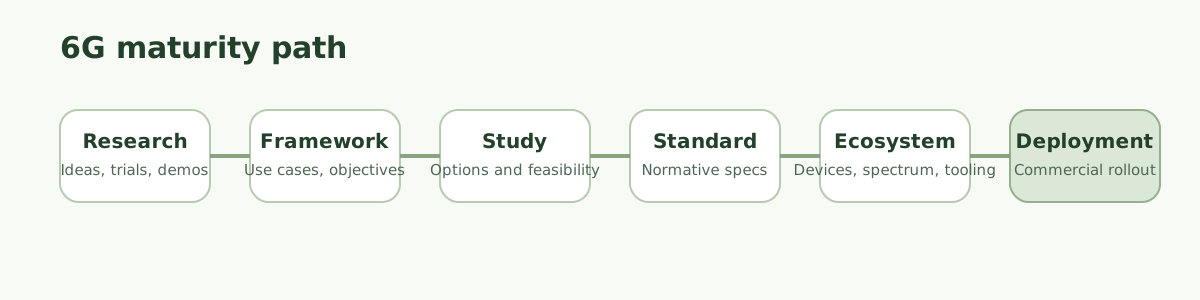
Mobile generations do not appear all at once. They usually move through a sequence of stages. The first stage is research, where universities, vendors, operators, and public programs test ideas and publish results. The second stage is the framework, where a body such as ITU-R defines the overall goals, usage scenarios, and performance direction. The third stage is study work, where standards groups explore options, identify gaps, and narrow the design space.
After that comes normative standardization. This is the point where specifications stop asking “what could work?” and start saying “this is how compliant systems shall work.” Only after that can a real ecosystem form around chipsets, devices, test tools, deployments, and spectrum assignments. Deployment is the last step, not the first.
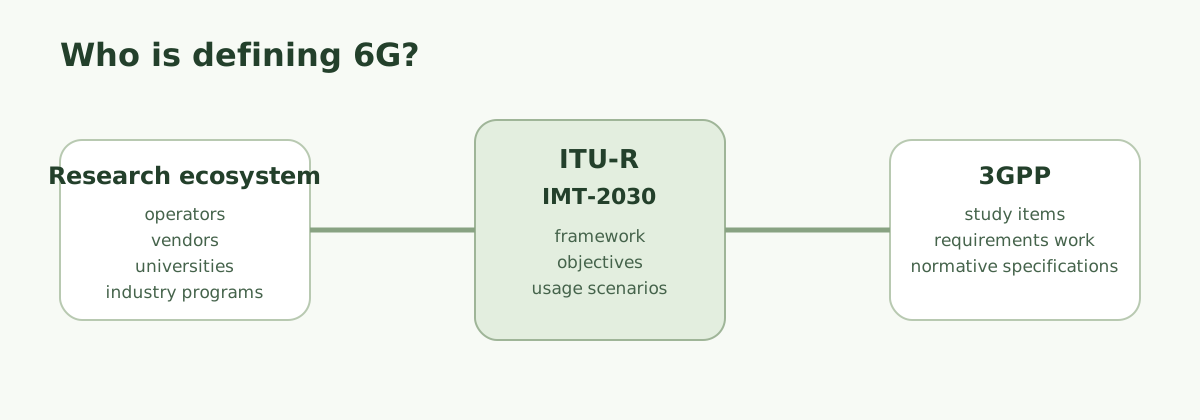
Two organizations matter most in this process. ITU-R defines the international framework and evaluation path for IMT systems. 3GPP develops the detailed mobile-system specifications that vendors and operators later implement. A simple way to think about the split is this: ITU-R defines the destination, while 3GPP works out much of the practical route.
IMT-2030 framework
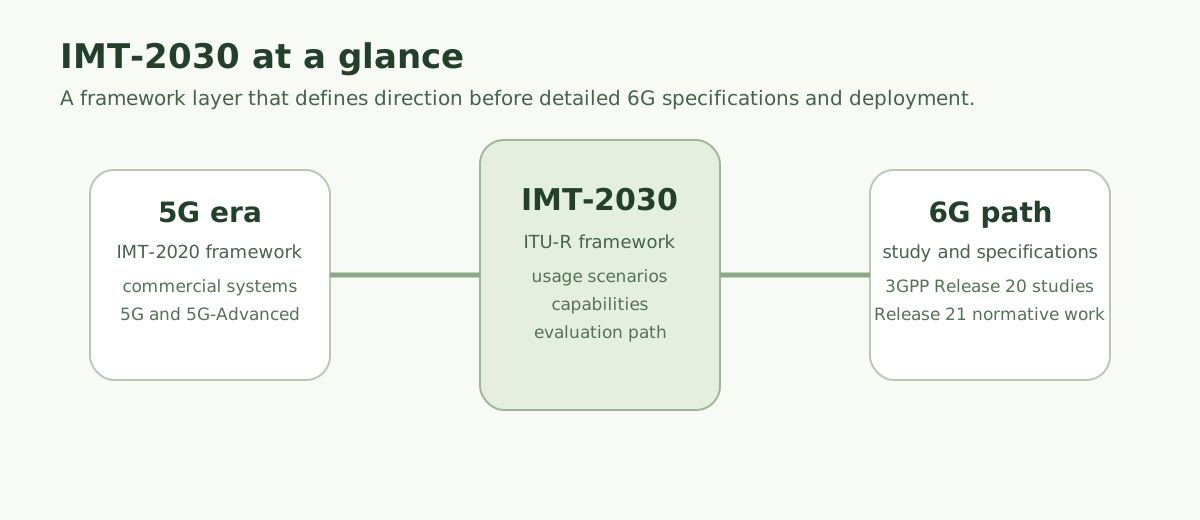
The single most important completed step in 6G standardization so far is the approval of Recommendation ITU-R M.2160 in late 2023. That document defines the IMT-2030 framework, which is the global reference point for mobile systems around 2030 and beyond. It does not define a finished 6G radio interface or end-to-end network architecture. Instead, it defines what future systems are expected to aim for.
In practical terms, IMT-2030 does three important things. First, it defines the overall objectives of the next generation, including broader connectivity, more built-in intelligence, stronger resilience, sustainability, and sensing integration. Second, it identifies the main usage scenarios that future systems may need to support. Third, it frames the capability direction that later technical requirements and candidate technologies will be measured against.
This matters because the framework keeps 6G discussion grounded. When people say “6G,” the most defensible global reference is not a vendor demo or a headline claim. It is the IMT-2030 framework and the follow-on work it triggered. If you want a deeper framework-only walkthrough, the best companion page is IMT-2030 Explained.
3GPP and 6G development
If ITU-R defines the high-level framework, 3GPP is where detailed cellular specifications are developed. That is why people watch 3GPP releases so closely when they ask about 6G status. A release is a coordinated package of technical work across radio, core, services, and other areas. Each release can include both exploratory work and normative specifications.
For 6G, the key point today is that Release 20 is the early study phase. Public 3GPP material describes Release 20 as a split track that continues 5G-Advanced evolution while also starting early 6G studies. That means Release 20 is about understanding options, use cases, service requirements, and feasibility. It does not mean that Release 20 delivers a fully specified 6G system.
The next important term is normative work. A study item usually captures analysis, options, gaps, and conclusions, often in a Technical Report. Normative work is the next stage, where the standard starts defining mandatory behavior and detailed specification text, typically in Technical Specifications. For 6G, Release 21 is widely expected to be the first normative 6G release, which is why it is treated as a major milestone.
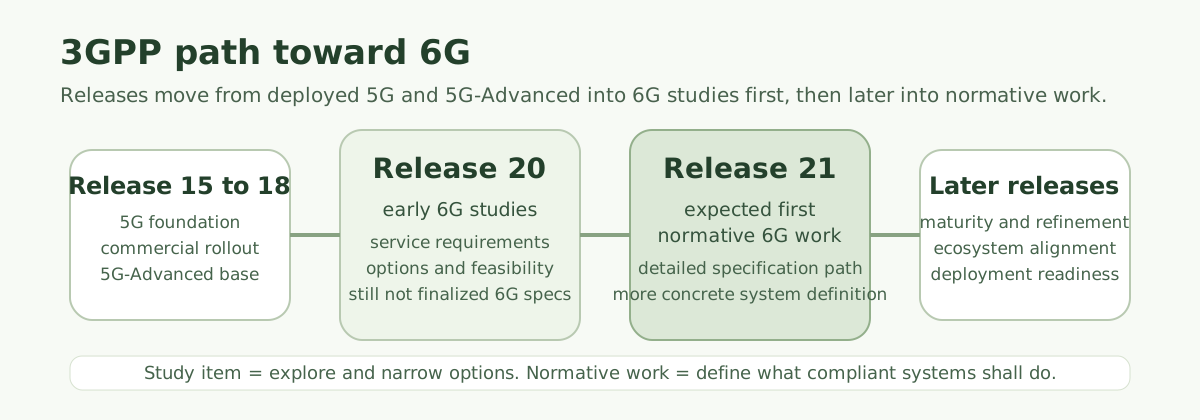
| 3GPP phase | What it means | Why it matters for 6G status |
|---|---|---|
| Release 15 to Release 18 | Initial 5G and 5G-Advanced foundation work | This is the deployed baseline that future 6G work will build on rather than replace overnight. |
| Release 20 | Early 6G study work alongside continued 5G-Advanced evolution | This is the current stage where 3GPP is shaping the problem space, not publishing a completed 6G system. |
| Release 21 | Expected first release with normative 6G work | This is the point where the standards discussion becomes much more concrete and implementation-oriented. |
Current 6G development phase
6G sits in a mixed phase where different parts of the process are at different maturity levels. The framework stage is real and complete enough to anchor the global discussion through IMT-2030. The technical requirements stage is moving forward in ITU-R Working Party 5D. The study stage is active in 3GPP Release 20. What is not complete yet is the full normative standards stage.
This is also the reason 6G articles often feel inconsistent. Some describe early research. Some describe the IMT-2030 framework. Some describe 3GPP studies. Those are all real pieces of progress, but they are not the same thing. The safest status summary is: the direction is clearer than before, but the finished system is not defined.
You may also see references to TR-level work. In 3GPP language, Technical Reports usually capture study findings, assumptions, and alternatives. They help narrow the design space, but they are not yet the final rules that equipment must implement. That is why requirement studies and Technical Reports are useful signals, but they should not be confused with finished standards.
| Area | Status today | What that means in practice |
|---|---|---|
| Research | Very active globally | Many technologies are being tested, published, and debated, but research results alone do not define the standard. |
| IMT-2030 framework | Established | The high-level goals, usage scenarios, and capability direction are available and usable as reference points. |
| ITU-R requirements and evaluation work | Ongoing | The industry is moving from broad vision toward measurable requirements and candidate evaluation steps. |
| 3GPP study phase | Active in Release 20 | Use cases, service requirements, and design options are being narrowed before formal specifications are written. |
| Normative 6G specifications | Not finalized yet | No one can honestly point to a complete standardized 6G protocol system today. |
Global 6G initiatives
Standardization does not happen in isolation. Before ideas reach ITU-R or 3GPP, they are often shaped by large research programs, industry alliances, and public-private collaborations. These initiatives do not define the final standard by themselves, but they strongly influence which ideas gain momentum, which technical tradeoffs get studied, and which deployment goals look realistic.
Well-known examples include Hexa-X and related European work, the Next G Alliance, and a broad set of national and regional 6G programs across Asia, Europe, and North America. Their role is usually to explore technology options, produce white papers, align industry thinking, test candidate concepts, and feed evidence into the standards ecosystem.
This is why 6G status should always be read in layers. Research alliances can tell you where attention is moving. ITU-R tells you what the official framework looks like. 3GPP tells you when detailed cellular specification work becomes real. All three layers matter, but they are not interchangeable.
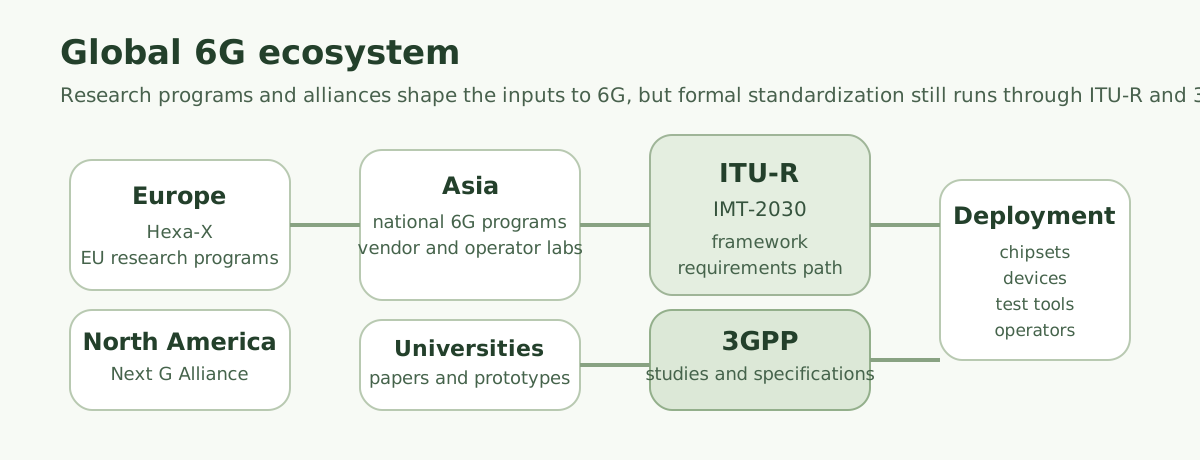
6G standardization timeline
The timeline most people use for 6G is better understood as a staged process than as a launch promise. The early 2020s were dominated by research and future-technology exploration. The middle of the decade is focused on the IMT-2030 framework, technical requirements, and early 3GPP studies. The second half of the decade is expected to bring candidate evaluation, deeper technology validation, and the first normative 6G specifications. Commercial deployment, if the ecosystem is ready, is widely associated with the around-2030 period.
The important caution is that a roadmap is not the same as a guarantee. Spectrum decisions, hardware readiness, energy efficiency, cost, and business demand can all affect how fast the timeline moves. That is why the most responsible wording is “expected around 2030,” not “certainly launched in 2030.”
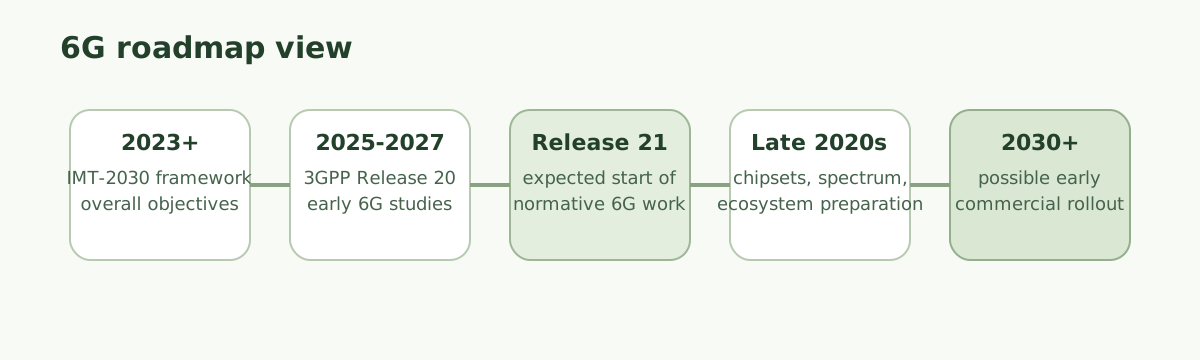
| Period | Main activity | Status meaning |
|---|---|---|
| 2020 to 2023 | Research and long-range vision building | The industry explored candidate technologies and began framing the next generation. |
| 2023 to 2026 | Framework and requirements phase | IMT-2030 was established and follow-on technical requirement work continued. |
| 2025 to 2028 | Study work and technology validation | 3GPP Release 20 studies and wider ecosystem validation narrow the design space. |
| 2027 to 2029 | Candidate evaluation and deeper specification activity | The process is expected to move from broad studies into more concrete standardization and candidate comparison. |
| Around 2030 and beyond | Possible early deployment | Rollout depends on standards completion, spectrum, devices, and operator business case. |
What is not defined yet
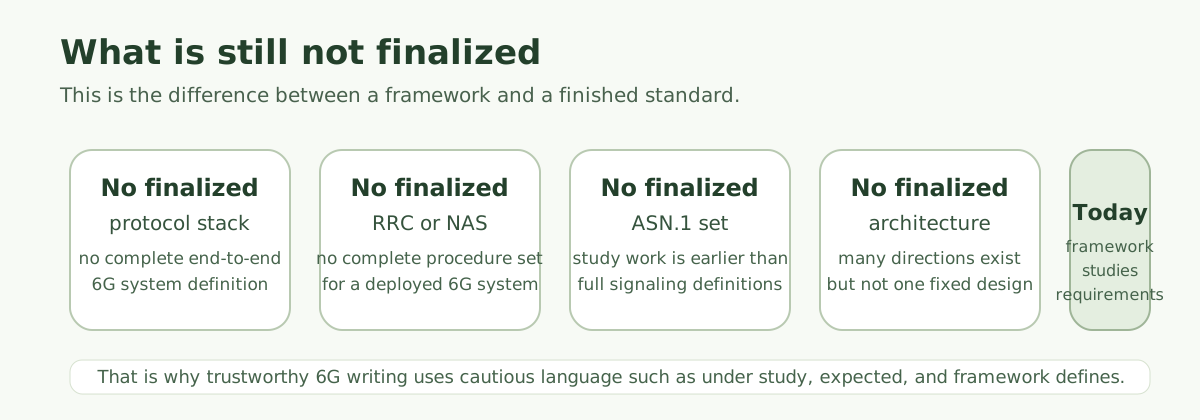
This is one of the most important sections on the page because it protects against overclaiming. As of today, there is no finalized end-to-end 6G standard. There is no fully defined 6G protocol stack in the way readers would expect from a mature deployed generation. There are no finished 6G RRC or NAS procedure sets, no finalized ASN.1 structures, and no completed commercial call-flow catalog that can honestly be presented as the standard reference.
The same caution applies to architecture. There are many strong ideas under study: AI-native control, distributed intelligence, sensing integration, NTN support, digital twins, and high-frequency operation. But a study direction is not the same thing as a finalized architecture. Real standardization still needs to settle tradeoffs, interfaces, procedures, and implementation boundaries.
This does not mean 6G work is vague or empty. It means the process is at the stage where official sources talk about framework, requirements, evaluation, and studies rather than a finished protocol database. That is exactly what a credible status page should say.
Key challenges in standardization
Standardization is hard because 6G still has several open questions at once. Some are purely technical. Some are economic. Some are political and regulatory. All of them affect timing.
| Challenge | What it means | Why it slows or shapes standardization |
|---|---|---|
| Technical uncertainty | Many candidate technologies are promising, but not all are mature enough for large-scale standardization. | Standards groups need enough evidence to know which directions are realistic, scalable, and worth specifying. |
| Spectrum decisions | Future bands, including higher-frequency options, still need practical and globally aligned policy decisions. | Without workable spectrum, even a strong technical design may remain difficult to deploy at scale. |
| Global alignment | Different regions and stakeholders may prioritize different use cases, bands, and deployment models. | Global mobile standards work best when enough common ground exists to support interoperability and ecosystem scale. |
| Cost and ecosystem readiness | Vendors, operators, device makers, and test-tool providers all need a viable business case. | A standard can progress faster on paper than the commercial ecosystem can support in practice. |
| AI trust and control | AI-native network ideas raise questions around data, reliability, governance, and explainability. | These issues influence how far automation can move from concept into formal specification. |
What to track next
Watchlist
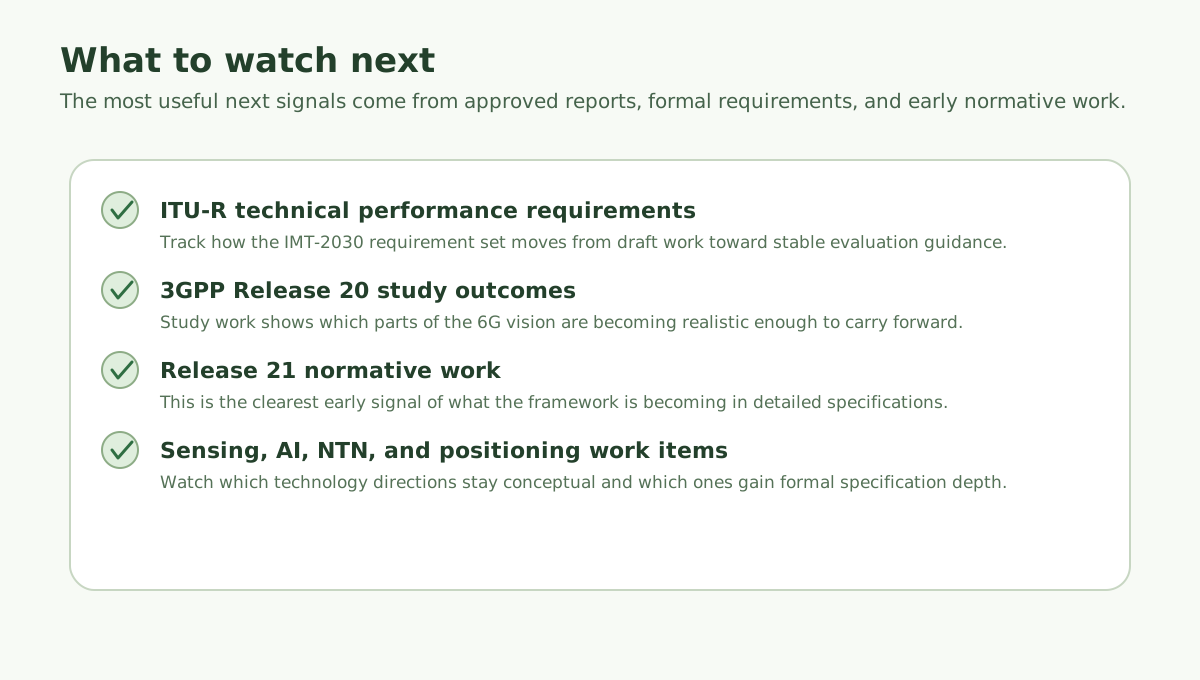
- Updates to the ITU-R IMT-2030 technical performance requirements and evaluation process.
- How 3GPP Release 20 study outputs narrow the list of realistic 6G design options.
- Whether Release 21 formalizes the first wave of normative 6G work as expected.
- How AI-native RAN, sensing, NTN, and higher-frequency studies move from concept toward specification text.
- Which spectrum bands gain real regulatory momentum rather than only research attention.
- How device, chipset, and test ecosystems prepare for the late-2020s standardization window.
If you only follow a few signals, follow the conservative ones: new ITU-R texts, approved requirements, public 3GPP release planning, and the first concrete normative work items. Those are the clearest indicators that 6G is moving from discussion to specification.
Key takeaways
- 6G is not standardized yet and is not a commercial generation today.
- The most accurate status description is research, framework, technical requirements, and early study work.
- IMT-2030 is the official global framework for the 6G era, but it is not a finished protocol standard.
- 3GPP Release 20 is the study phase for early 6G work; Release 21 is expected to begin normative 6G specification work.
- No finalized 6G RRC, NAS, ASN.1, or end-to-end architecture exists today.
- The most realistic deployment window is around 2030 and beyond, subject to standards, spectrum, devices, and cost.
- The best sources to follow are official ITU-R and 3GPP materials, not hype-driven performance claims.
FAQ
Is 6G standardized?
No. 6G is not standardized as a complete commercial mobile system today. Current work is still in the research, framework, technical requirements, and study phase.
Who defines 6G?
ITU-R defines the IMT-2030 framework and evaluation path, while 3GPP is expected to develop detailed specifications as 6G moves into normative standardization.
What is IMT-2030?
IMT-2030 is the global framework for the next phase of mobile systems around 2030 and beyond. It defines objectives, use cases, and capability direction rather than final protocol details.
When will 6G be ready?
Many roadmaps align 6G with the 2030 timeframe, but real readiness depends on standards completion, spectrum, hardware, devices, and business case.
What is 3GPP doing for 6G?
3GPP Release 20 includes early 6G studies, and Release 21 is widely expected to begin normative 6G work. That means 3GPP is still shaping the design space rather than publishing a finished 6G system.
References
- ITU-R IMT-2030 overview page
- Recommendation ITU-R M.2160: IMT-2030 framework and overall objectives
- ITU press release on IMT-2030 framework approval
- Recommendation ITU-R M.2083: IMT vision for 2020 and beyond
- 3GPP Release 20
- 3GPP Rel-20 planning and progress in TSG SA
- 3GPP releases portal
- 3GPP Highlights Issue 9 including SA1 road to 6G