5G-Advanced Release Reference
3GPP Release 19
3GPP Release 19 is the second release of 5G-Advanced and the latest frozen 3GPP release focused fully on 5G evolution. This page explains the main feature areas, release scope, protocol and architecture impact, and the best follow-up topics to study across RAN, core, signaling, and operations.
Quick facts
| Release | Rel-19 |
|---|---|
| Status | Frozen |
| Start date | 2021-06-18 |
| Freeze / end milestone | SA#110, 2025-12-12 |
| Position in 3GPP evolution | Second 5G-Advanced release |
| Editorial framing | Last release fully dedicated to 5G |
What is Release 19?
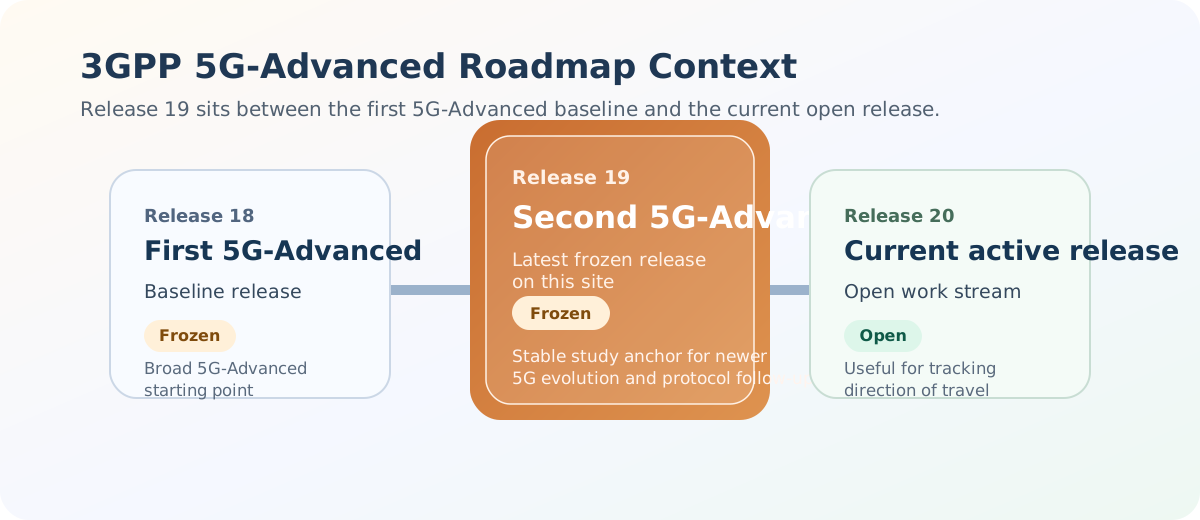
In the 3GPP roadmap, Release 19 follows Release 18 rather than replacing it. Release 18 established the first broad 5G-Advanced baseline, while Release 19 continues that line as the second 5G-Advanced release and pushes the work toward a more mature operational and commercial phase.
Official 3GPP release material describes Release 19 as building on Release 18 across RAN, Core Network, and Service and System Aspects. The 3GPP RAN chair article goes one step further and frames it as the last release fully dedicated to 5G, which is an important editorial signal for engineers deciding where 5G evolution peaks before later releases spend more time on 6G study direction.
Telecom engineers should care because Release 19 is both stable enough to study seriously and new enough to represent the most current frozen view of 5G-Advanced evolution. That makes it a strong reference point for implementation planning, interoperability reading, and protocol-level follow-up work.
Key Features in Release 19
5G-Advanced evolution
Release 19 continues the 5G-Advanced path established in Release 18 and shifts that baseline toward a more mature second wave.
RAN enhancement and optimization
The radio side keeps pushing performance, feature depth, and broader deployment relevance rather than standing still after Release 18.
Core network and service evolution
Release 19 extends the service and system side of 5G with continued core and procedure evolution beyond the first 5G-Advanced baseline.
Management and orchestration maturity
Rel-19 management work emphasizes more complete interoperability and multi-vendor operational capability across the 5G network.
AI and automation direction
AI/ML and automation appear more clearly as operational and radio-improvement themes rather than just background research topics.
Expanded deployment relevance
The release matters not only for standards readers but also for operators, planners, testers, and troubleshooters watching implementation impact.
Release 19 by technical domain
RAN and radio evolution
Release 19 continues radio-side enhancement and optimization rather than treating Release 18 as the end of the 5G-Advanced story. The 3GPP RAN chair summary points to balanced evolution across mobile broadband, vertical expansion, efficiency, and broader technical depth, while also calling out work that includes AI/ML for the NR air interface and continued band-related expansion.
For site navigation, this means Release 19 should point readers toward RAN mobility, measurements, radio bearers, and PHY or MAC topics whenever they want to convert release-level statements into protocol behavior or deployment consequences.
Core network and service evolution
Official Release 19 material describes significant enhancement across core and service-system aspects, not just the radio side. The right way to read this is as continued 5G system evolution beyond the first 5G-Advanced baseline rather than as a disconnected new generation.
For engineers, that means architecture and procedure questions still matter: how service continuity evolves, how network functions expose and coordinate capabilities, and how release changes influence the context in which NAS, NGAP, and 5GC procedures are interpreted.
Management and orchestration
This deserves its own section because SA5 frames Rel-19 around management and orchestration requirements, management stage 2 and procedures, plus stage 3 OpenAPI and YANG solution sets intended to provide complete management interoperability capabilities for the 5G network in a multi-vendor environment.
That makes Release 19 especially relevant for operators, automation teams, and anyone working at the intersection of network function lifecycle, cloud-native deployment, analytics, and cross-vendor operations. This is one of the clearest places where the release moves from feature talk into practical operations.
AI/ML and automation
AI/ML appears in both RAN and management-oriented Release 19 work. On the radio side, 3GPP points to NR air-interface AI/ML direction. On the management side, SA5 discusses AI/ML management, management data analytics, intent-driven management, and closed-loop automation themes.
The practical takeaway is that Release 19 should be read not only as a feature release but also as part of the broader automation path that shapes how 5G systems are operated, analyzed, and prepared for what comes next.
Deployment and commercial relevance
This part is partly an editorial inference from the official release material: when a release combines a frozen status, multi-vendor interoperability emphasis, continued RAN and core evolution, and more explicit automation work, it becomes highly relevant to commercial deployment planning and field engineering.
In practice, that means planners, implementers, and troubleshooters should watch Release 19 for what changes feature assumptions, performance expectations, configuration depth, management workflows, and the protocol areas most likely to need updated reading.
Protocol and signaling impact
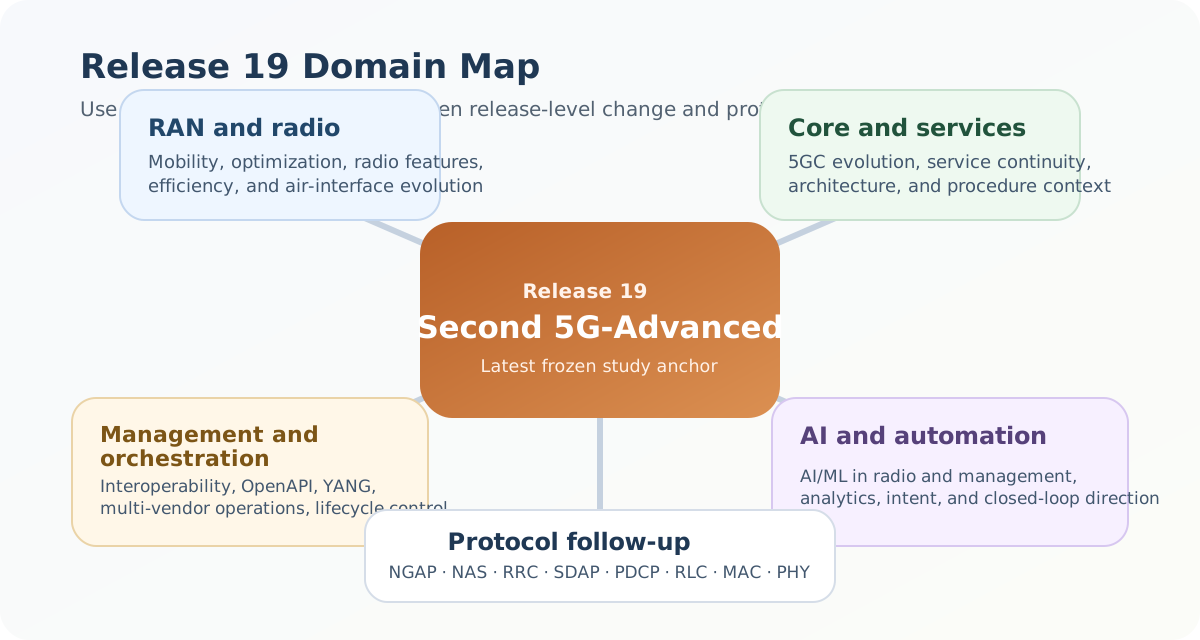
This section is a navigation map rather than a spec dump. Use it to jump from release framing into the protocol, message, and troubleshooting areas that are most likely to surface Release 19 impact in real engineering work.
NGAP
Release 19 may affect signaling expectations, information elements, and feature support around broader 5G-Advanced procedure evolution.
NAS
Watch NAS when Release 19 themes touch registration, mobility, session handling, service continuity, and identity-related behavior.
RRC
RRC is one of the first places to study when Rel-19 radio evolution changes configuration, mobility, measurements, or access behavior.
SDAP
SDAP becomes more relevant when release-level QoS evolution needs to be mapped into practical bearer and flow handling.
PDCP
Use PDCP pages when Rel-19 changes have downstream impact on duplication, delivery, recovery, or data-handling behavior.
RLC
RLC is part of the follow-up path when radio-side feature growth changes expectations around segmentation, reassembly, or reliability handling.
MAC
Study MAC when Release 19 work touches scheduling, control signaling, random access, efficiency, or radio-resource control below RRC.
PHY
PHY is relevant for Release 19 radio optimization, air-interface AI/ML direction, and practical coverage or efficiency implications.
Management APIs and service exposure
Rel-19 management work explicitly includes OpenAPI and YANG-oriented interoperability, making management interfaces part of the standards conversation.
What changed compared with Release 18?
| Area | Release 18 | Release 19 direction |
|---|---|---|
| Position in roadmap | First 5G-Advanced release | Second 5G-Advanced release |
| Maturity | Baseline expansion | Further refinement and commercial evolution |
| RAN | Broad enhancement base | Additional optimization and new work areas |
| Management | Strong evolution start | More complete interoperability focus |
What should you study in Release 19?
For beginners
- Read Release 18 first to understand the initial 5G-Advanced baseline.
- Review the main 5G protocol stack before trying to read Rel-19 through work-item language.
- Use the core network, NGAP, NAS, and RRC overview pages as your starting path.
For intermediate engineers
- Focus on RAN evolution, management and orchestration changes, and protocol impact areas.
- Use message pages and call-flow pages to convert release themes into procedure-level understanding.
- Study how Release 19 extends Release 18 rather than treating them as unrelated topics.
For advanced engineers
- Track work-item-level domains and connect them to implementation and troubleshooting implications.
- Use Release 19 as the stable reference point, then compare it with ongoing Release 20 direction.
- Pay special attention to management interoperability, AI/ML, and deployment-oriented implications.
Related specs and official references
Release 19 FAQs
What is 3GPP Release 19?
Release 19 is the second release of 5G-Advanced. It builds on Release 18 and represents the newest frozen release in this site’s current release coverage.
Is Release 19 part of 5G-Advanced?
Yes. 3GPP describes Release 19 as the second phase or second release of 5G-Advanced, building on the work of Release 18.
Is Release 19 complete or still active?
As checked on April 23, 2026, the 3GPP portal listed Release 19 as Frozen, which makes it more useful as a stable study anchor than an open release.
How is Release 19 different from Release 18?
Release 18 is the first broad 5G-Advanced baseline. Release 19 continues that baseline and pushes further into refinement, optimization, interoperability, and broader operational maturity.
What should engineers study first in Release 19?
A practical first path is RAN evolution, core-network changes, management and orchestration, and then the protocol hubs for NGAP, NAS, and RRC.
Does Release 19 affect signaling protocols like NGAP, NAS, and RRC?
Yes. Release pages do not replace protocol specifications, but they change the feature and procedure context in which protocols such as NGAP, NAS, and RRC are read, extended, and troubleshot.