PDU Session Resource Setup Request is the NGAP message the AMF sends to NG-RAN to request Uu and NG-U resources, DRBs, and QoS flow handling for one or more PDU sessions of an already identified UE.
AMF needs NG-RAN to establish one or more PDU session resources after initial registration, during later session addition, or when additional QoS-capable data resources must be activated for the UE.
Main purpose
Requests NG-RAN to allocate radio and transport resources for one or more PDU sessions, establish the corresponding data radio bearers, and apply the requested QoS flow handling for an existing UE context.
What is PDU Session Resource Setup Request in simple terms?
PDU Session Resource Setup Request is the NGAP message the AMF sends to NG-RAN to request Uu and NG-U resources, DRBs, and QoS flow handling for one or more PDU sessions of an already identified UE.
Requests NG-RAN to allocate radio and transport resources for one or more PDU sessions, establish the corresponding data radio bearers, and apply the requested QoS flow handling for an existing UE context.
Why this message matters
PDU Session Resource Setup Request is the AMF telling the gNB to create the actual radio and user-plane resources for one or more PDU sessions on an existing UE context.
Where this message appears in the call flow
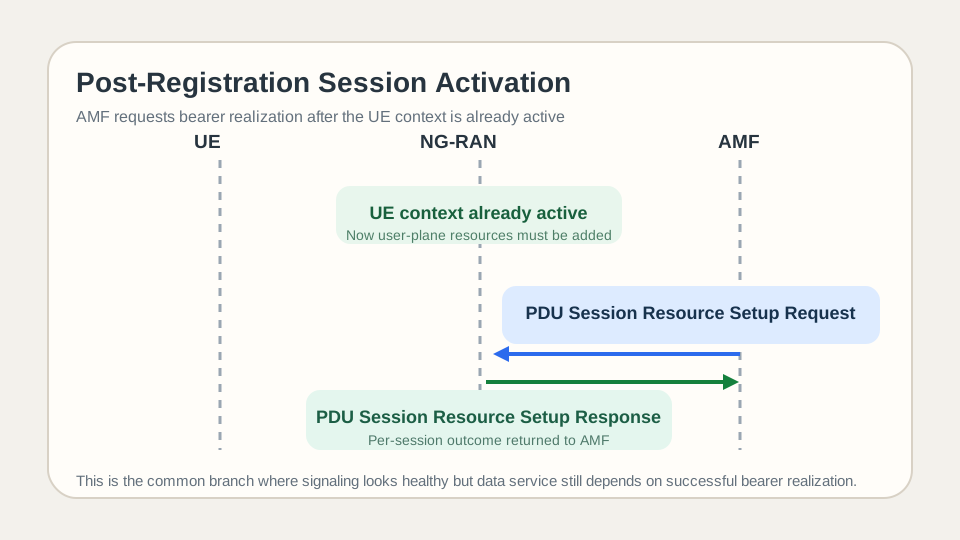
Post-registration PDU session activation
Post-registration branch: AMF activates data-session resources after the UE context is already established.
Call flow position: AMF requests dedicated PDU session resource setup after UE context is already active and service is moving from signaling-only state to data bearer availability.
Typical state: The UE context exists, but one or more PDU sessions still need radio and NG-U resource assignment.
Preconditions:
AMF UE NGAP ID and RAN UE NGAP ID mapping is valid.
Core-side session policy and transfer payloads are ready for the target PDU sessions.
Next likely message: PDU Session Resource Setup Response
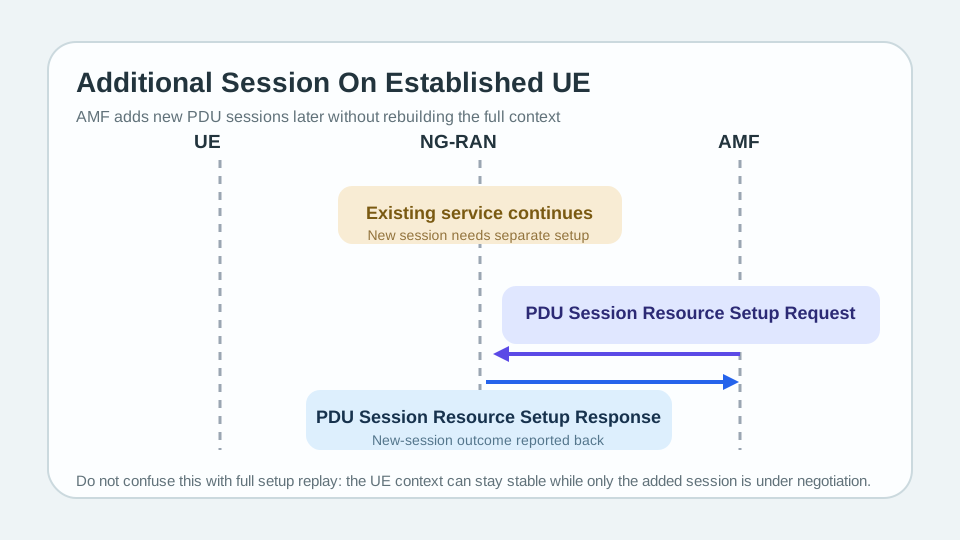
Additional session setup on established UE
Additional-session branch: new PDU sessions are added later without rebuilding the full UE context.
Call flow position: AMF adds new PDU sessions later in the UE lifecycle without rebuilding the full context.
Typical state: The UE is already service-capable, but new user-plane resources must be created for newly authorized sessions.
Preconditions:
A stable UE context already exists at NG-RAN.
At least one additional PDU session requires setup.
Next likely message: PDU Session Resource Setup Response
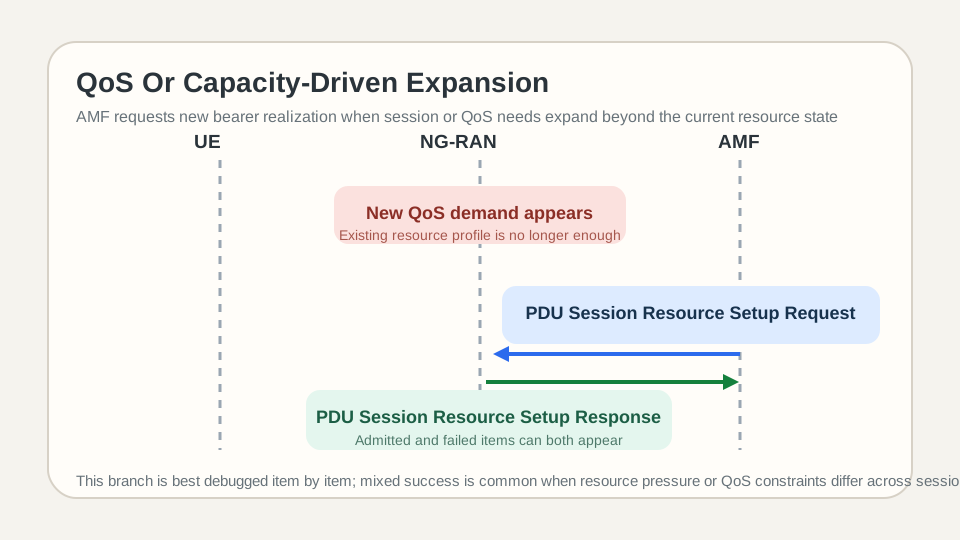
QoS or capacity-driven bearer expansion
QoS expansion branch: AMF requests additional bearer realization to satisfy new session or QoS needs.
Call flow position: AMF triggers setup for session resources when new QoS flow needs or policy changes require additional radio-side handling.
Typical state: Existing sessions or service policy require a new resource realization branch at NG-RAN.
Preconditions:
Requested transfer payloads reflect updated session or QoS requirements.
NG-RAN can attempt admission for the requested resources.
Next likely message: PDU Session Resource Setup Response or later cleanup if admission fails badly
Transport / encapsulation: NGAP over SCTP/IP between AMF and NG-RAN
Security context: The message assumes a valid UE context already exists; it adds or expands session resources on top of that context rather than creating the security baseline itself.
Message Structure Overview
PDU Session Resource Setup Request is an AMF-to-NG-RAN initiating message for dedicated session resource activation on an existing UE context.
AMF UE NGAP ID, RAN UE NGAP ID, and PDU Session Resource Setup List SUReq form the operational core.
The message differs from initial context setup because it focuses specifically on session resource realization rather than full UE context establishment.
ASN.1 for 5G NGAP - PDU Session Resource Setup Request
PDUSessionResourceSetupRequest ::= SEQUENCE {
  protocolIEs ProtocolIE-Container { {PDUSessionResourceSetupRequest-IEs} },
  ...
}

PDUSessionResourceSetupRequest-IEs NGAP-PROTOCOL-IES ::= {
  { ID id-AMF-UE-NGAP-ID                    CRITICALITY reject TYPE AMF-UE-NGAP-ID                    PRESENCE mandatory } |
  { ID id-RAN-UE-NGAP-ID                    CRITICALITY reject TYPE RAN-UE-NGAP-ID                    PRESENCE mandatory } |
  { ID id-RANPagingPriority                 CRITICALITY ignore TYPE RANPagingPriority                 PRESENCE optional  } |
  { ID id-NAS-PDU                           CRITICALITY reject TYPE NAS-PDU                           PRESENCE optional  } |
  { ID id-PDUSessionResourceSetupListSUReq  CRITICALITY reject TYPE PDUSessionResourceSetupListSUReq  PRESENCE mandatory },
  ...
}
How to read this ASN.1
Decode the UE identity pair first, then treat the PDU Session Resource Setup List SUReq as the real payload. Each item in that list represents a session-specific bearer and QoS realization request.
This message is usually dominated by the setup list; the transfer payloads are where most session-specific meaning lives.
Session setup can target one or multiple sessions at once, so always inspect list cardinality before assuming a single-bearer branch.
If NG-RAN later reports mixed success, compare outcomes item-by-item against this request list rather than treating the whole request as one unit.
Important Information Elements
IE
Presence
Description
AMF UE NGAP ID
Mandatory
Mandatory AMF-side UE identifier used to correlate the session resource setup command with the correct UE context.
RAN UE NGAP ID
Mandatory
Mandatory NG-RAN-side UE identifier used to bind the requested session resources to the correct radio-side UE context.
RAN Paging Priority
Optional
Optional priority-related context that can help NG-RAN handle the request with appropriate urgency.
NAS-PDU
Optional
Optional NAS payload that may accompany the session resource setup branch in procedure-specific scenarios.
PDU Session Resource Setup List SUReq
Mandatory
Mandatory list of one or more PDU session resource setup items containing the transfer data NG-RAN needs to create DRBs and NG-U handling.
Detailed field explanation
AMF UE NGAP ID
Mandatory AMF-side UE identifier used to correlate the session resource setup command with the correct UE context.
Presence: Mandatory
In practice: In practice, compare this field with the original request and with any later release-dependent optional fields so you can see whether the network accepted the same service model the UE asked for.
RAN UE NGAP ID
Mandatory NG-RAN-side UE identifier used to bind the requested session resources to the correct radio-side UE context.
Presence: Mandatory
In practice: In practice, compare this field with the original request and with any later release-dependent optional fields so you can see whether the network accepted the same service model the UE asked for.
RAN Paging Priority
Optional priority-related context that can help NG-RAN handle the request with appropriate urgency.
Presence: Optional
In practice: In practice, compare this field with the original request and with any later release-dependent optional fields so you can see whether the network accepted the same service model the UE asked for.
NAS-PDU
Optional NAS payload that may accompany the session resource setup branch in procedure-specific scenarios.
Presence: Optional
In practice: In practice, compare this field with the original request and with any later release-dependent optional fields so you can see whether the network accepted the same service model the UE asked for.
PDU Session Resource Setup List SUReq
Mandatory list of one or more PDU session resource setup items containing the transfer data NG-RAN needs to create DRBs and NG-U handling.
Presence: Mandatory
In practice: In practice, compare this field with the original request and with any later release-dependent optional fields so you can see whether the network accepted the same service model the UE asked for.
What to check in logs and traces
Match AMF UE NGAP ID and RAN UE NGAP ID to a valid established UE context before decoding session items.
List every requested PDU session ID in PDUSessionResourceSetupListSUReq.
Check whether a NAS-PDU was included and whether it explains the wider procedure branch around bearer setup.
Compare later response outcomes item-by-item against the request list and associated transfer expectations.
If admission fails, determine whether the issue is per-session resource shortage, QoS mismatch, or transfer-content inconsistency.
Common Issues and Troubleshooting
PDU Session Resource Setup Request is sent, but some sessions never carry user traffic.
Likely cause: NG-RAN may have accepted the overall branch while some session items were rejected, partially admitted, or mis-realized in transfer handling.
What to inspect: Compare the requested setup list with the later response success and failure lists item-by-item.
Next step: Fix the failed or incomplete session items directly instead of repeating the whole branch blindly.
The request fails after mobility or context changes.
Likely cause: The AMF may be targeting a stale UE context mapping or requesting session resources against a context that is no longer stable.
What to inspect: Re-check AMF UE NGAP ID and RAN UE NGAP ID continuity across mobility, release, and re-establishment events.
Next step: Repair context correlation first; otherwise session setup retries may continue to fail for the wrong target context.
Radio setup appears fine, but QoS behavior is wrong after bearer activation.
Likely cause: The session transfer payload or per-session QoS realization may be inconsistent even though the top-level request itself was valid.
What to inspect: Drill into each PDU session setup transfer and correlate with later DRB, QoS flow, and NG-U behavior.
Next step: Treat the issue as session-item realization trouble, not just a generic NGAP failure.
LTE / 5G / Variant Comparison
Compared with Initial Context Setup Request
Initial Context Setup Request can bootstrap session resources while creating the UE context. PDU Session Resource Setup Request adds or modifies session resources later on an already established context.
Compared with PDU Session Resource Setup Response
Request carries the AMF session-resource ask. Response reports which requested session items were actually established or failed at NG-RAN.
Compared with UE Context Modification Request
UE Context Modification Request tunes the existing context. PDU Session Resource Setup Request asks for concrete bearer and user-plane resource realization for sessions.
FAQ
What is PDU Session Resource Setup Request in 5G NGAP?
It is the AMF-to-NG-RAN message used to request radio and NG-U resources for one or more PDU sessions on an existing UE context.
What are the key mandatory fields in this message?
AMF UE NGAP ID, RAN UE NGAP ID, and PDU Session Resource Setup List SUReq are the operational core.
How is this different from Initial Context Setup Request?
Initial Context Setup Request creates the overall UE context baseline. PDU Session Resource Setup Request focuses specifically on session bearer and QoS resource realization afterward.
What should I inspect first when this request seems to fail?
First confirm the UE identity mapping, then inspect each requested PDU session item in the setup list and compare it with the later response outcome.
Decode this message with the 3GPP Decoder, inspect the related message database, or open the matching call flow to see where this signaling step fits in the full procedure.