Uplink RIM Information Transfer is the NGAP message sent by the NG-RAN node to the AMF to carry RAN Information Management information toward another RAN node through the core network.
NG-RAN has RIM information for another RAN node or target RAN-side entity and uses the AMF as the core-network control-plane path.
Main purpose
Transports RIM information from NG-RAN to AMF, supports indirect inter-RAN information exchange, carries routing and source or target context, allows AMF to forward RIM data to the correct destination, and separates RIM transfer from normal RAN Configuration Transfer.
Main specification
3GPP TS 38.413, Uplink RIM Information Transfer message
Release added
Release 15
Procedures where used
RIM Information Transfer, Inter-RAN information management, Indirect RAN-to-RAN information exchange, RAN coordination and management data transfer, RIM-related troubleshooting
What is Uplink RIM Information Transfer in simple terms?
Uplink RIM Information Transfer is the NGAP message sent by the NG-RAN node to the AMF to carry RAN Information Management information toward another RAN node through the core network.
Transports RIM information from NG-RAN to AMF, supports indirect inter-RAN information exchange, carries routing and source or target context, allows AMF to forward RIM data to the correct destination, and separates RIM transfer from normal RAN Configuration Transfer.
Why this message matters
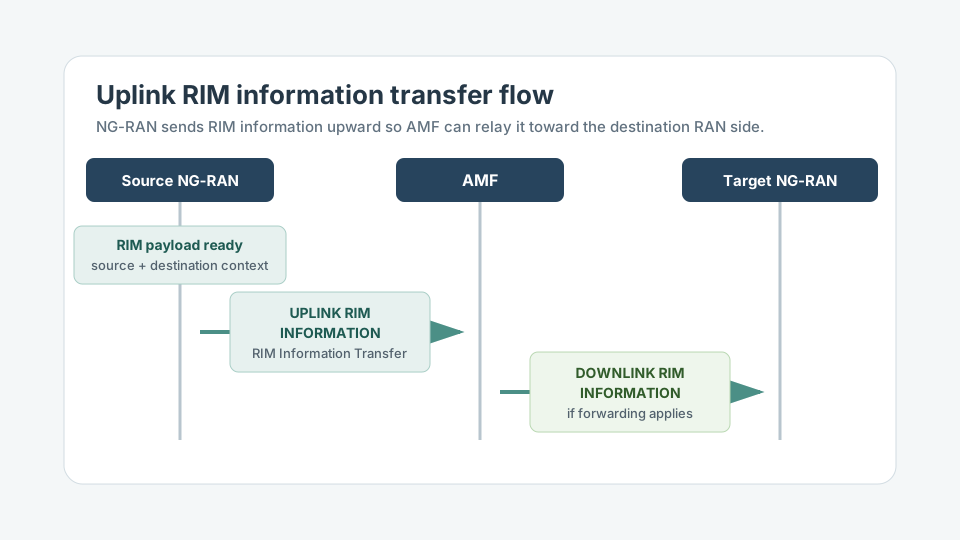
Uplink RIM Information Transfer is the NG-RAN sending RAN Information Management content up to the AMF so the core network can relay it toward the destination RAN side.
Where this message appears in the call flow
RIM Information Transfer
NG-RAN sends RIM information upward to AMF so it can be relayed toward the destination RAN node.
Call flow position: NG-RAN sends this non-UE-associated initiatingMessage when RIM content must be relayed toward another RAN node through the AMF.
Typical state: AMF receives the RIM Information Transfer payload and can forward it using Downlink RIM Information Transfer where applicable.
Preconditions:
The NG-RAN has RAN Information Management data to transfer.
The destination RAN node or RAN-side entity can be identified.
The exchange is intended to use the NGAP core-network path.
Next likely message: Downlink RIM Information Transfer
Indirect inter-RAN information exchange
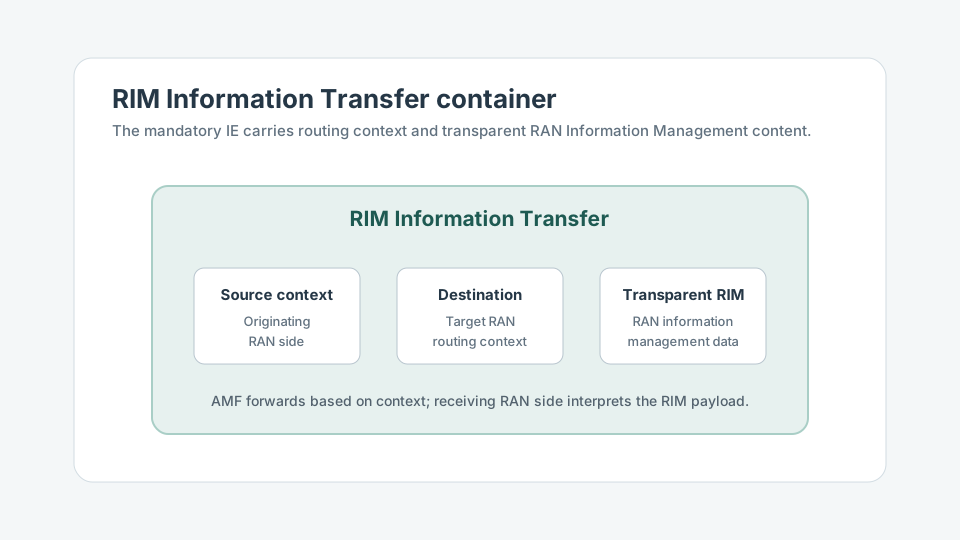
RIM Information Transfer is the mandatory container for routing context and transparent RAN Information Management content.
Call flow position: The message provides an AMF-relayed path for RIM content between RAN nodes.
Typical state: The AMF acts as the control-plane relay for the transfer payload.
Preconditions:
Source and destination RAN context is available.
The transparent RIM content is valid for the receiving RAN side.
Next likely message: Receiving RAN node processes the transparent RIM information
RIM versus RAN configuration transfer distinction
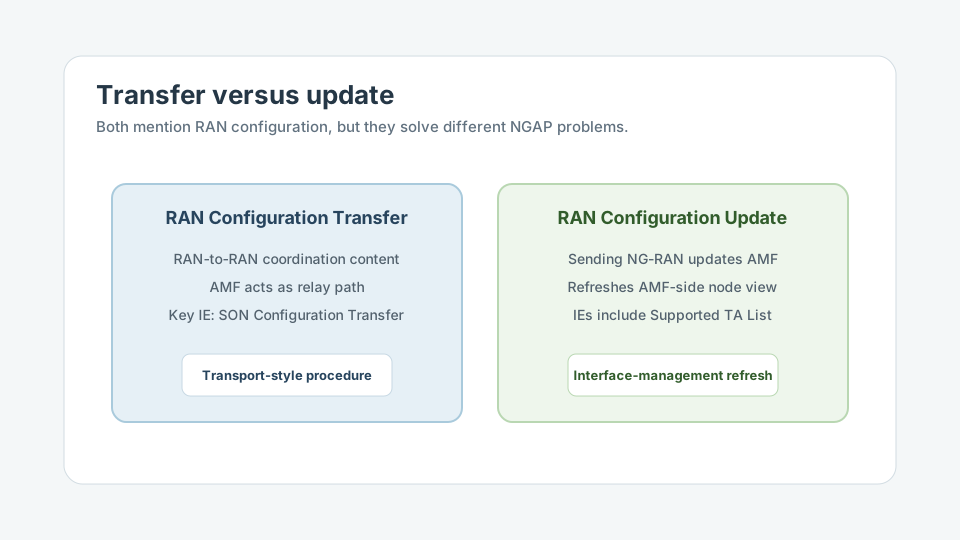
RIM transfer is another non-UE-associated transfer-style procedure; keep it separate from configuration update procedures.
Call flow position: Use this transfer-style procedure for RAN Information Management content, not for SON Configuration Transfer payloads.
Typical state: Trace analysis separates RIM Information Transfer from RAN Configuration Transfer.
Preconditions:
The payload belongs to a RIM information exchange context.
The message carries RIM Information Transfer rather than SON Configuration Transfer.
Next likely message: Correct RIM transfer interpretation
Transport / encapsulation: NGAP over SCTP/IP between NG-RAN and AMF
Security context: Uplink RIM Information Transfer is non-UE-associated and carries RAN information management content. Validate destination context, routing information, and transparent payload integrity before treating the transfer as successfully relayed.
Message Structure Overview
Uplink RIM Information Transfer is an NG-RAN-to-AMF non-UE-associated initiatingMessage.
RIM Information Transfer is the key mandatory container.
The container can carry RIM application information, source context, destination context, and transparent RIM information.
The AMF provides the core-network relay path and does not need to interpret every RAN-specific detail in the transparent content.
The paired downlink path is Downlink RIM Information Transfer.
Read this as a non-UE-associated NGAP envelope around a RIM Information Transfer container. NGAP carries the transfer and routing context, while the RIM payload remains RAN information management content.
Uplink RIM Information Transfer - Example Dump
NGAP-PDU
  initiatingMessage
    procedureCode: id-UplinkRIMInformationTransfer
    criticality: ignore
    value: UplinkRIMInformationTransfer
      protocolIEs:
        - id: id-RIMInformationTransfer
          value:
            sourceRANContext: <source RAN context>
            destinationRANContext: <destination RAN context>
            rimInformation: <transparent RIM information>
How to read this dump
Treat this as a teaching example based on the expected message structure, not as a captured network trace.
RIM Information Transfer is the main payload to inspect.
Do not confuse this transfer container with SON Configuration Transfer used by RAN Configuration Transfer.
Important Information Elements
IE
Presence
Description
Message Type
Mandatory
Identifies the NGAP PDU as UPLINK RIM INFORMATION TRANSFER.
RIM Information Transfer
Mandatory
Carries RIM routing, context, and transparent RAN Information Management content.
Detailed field explanation
Message Type
Identifies the NGAP PDU as UPLINK RIM INFORMATION TRANSFER.
Presence: Mandatory
In practice: In practice, compare this field with the original request and with any later release-dependent optional fields so you can see whether the network accepted the same service model the UE asked for.
RIM Information Transfer
Carries RIM routing, context, and transparent RAN Information Management content.
Presence: Mandatory
In practice: In practice, compare this field with the original request and with any later release-dependent optional fields so you can see whether the network accepted the same service model the UE asked for.
What to check in logs and traces
Confirm the direction is NG-RAN to AMF.
Confirm the message is non-UE-associated.
Check that RIM Information Transfer is present.
Validate source and destination context.
Confirm the transparent RIM content is not empty or malformed.
Look for Downlink RIM Information Transfer when AMF forwarding is expected.
Confirm the trace is not being interpreted as Uplink RAN Configuration Transfer.
Common Issues and Troubleshooting
The RIM transfer is sent but no receiving RAN-side action follows.
Likely cause: The destination RAN identity or routing context may be wrong, missing, or not routable through the AMF path.
What to inspect: Compare the destination context in RIM Information Transfer with the intended target and AMF forwarding configuration.
Next step: Correct the destination context or routing configuration, then confirm a matching downlink transfer is generated.
The AMF receives the uplink RIM transfer but no downlink transfer follows.
Likely cause: The AMF may not have a valid forwarding target, policy may block the relay, or the RIM payload may be malformed.
What to inspect: Check AMF handling logs, destination resolution, and RIM Information Transfer validation.
Next step: Separate AMF forwarding behavior from source NG-RAN encoding problems.
The transparent RIM content is shown as opaque bytes.
Likely cause: The analyzer may decode NGAP but not the embedded RIM application information.
What to inspect: Verify decoder support for RIM Information Transfer details and export the container when deeper RAN-side decoding is needed.
Next step: Use an analyzer or RAN-side tool that understands the transparent RIM content.
Engineers troubleshoot it as RAN Configuration Transfer.
Likely cause: Both procedures are non-UE-associated transfer messages, but they carry different containers.
What to inspect: Check whether the key IE is RIM Information Transfer or SON Configuration Transfer.
Next step: Use RIM analysis for RAN Information Management payloads and RAN Configuration Transfer analysis for SON or configuration transfer payloads.
LTE / 5G / Variant Comparison
Compared with Downlink RIM Information Transfer
Uplink RIM Information Transfer sends RIM content from NG-RAN to AMF. Downlink RIM Information Transfer delivers relayed RIM content from AMF to NG-RAN.
Compared with RAN Configuration Transfer
RAN Configuration Transfer carries SON or RAN configuration transfer content. RIM Information Transfer carries RAN Information Management content.
Compared with RAN Configuration Update
RAN Configuration Update refreshes AMF-side knowledge of the sending NG-RAN. Uplink RIM Information Transfer carries RIM content toward another RAN-side entity through AMF.
FAQ
What is Uplink RIM Information Transfer in NGAP?
It is the NG-RAN-to-AMF NGAP message used to transfer RAN Information Management data toward another RAN node through the core network.
Who sends Uplink RIM Information Transfer?
The NG-RAN node sends Uplink RIM Information Transfer to the AMF.
Is this message UE-associated?
No. Uplink RIM Information Transfer is a non-UE-associated NGAP message.
What does RIM Information Transfer contain?
RIM Information Transfer contains RIM application information plus routing, source, destination, and transparent payload context needed to deliver it.
What is the paired downlink message?
The paired downlink message is Downlink RIM Information Transfer, sent by the AMF toward NG-RAN.
How is RIM Information Transfer different from RAN Configuration Transfer?
RIM Information Transfer carries RAN Information Management content. RAN Configuration Transfer carries SON or RAN configuration transfer content.
Does AMF interpret the full RIM payload?
The AMF uses NGAP to transport and route the RIM container. It does not need to interpret every RAN-specific detail inside the transparent RIM payload.
How do you troubleshoot RIM transfer issues?
Confirm NG-RAN-to-AMF direction, verify RIM Information Transfer presence, validate source and destination context, check the transparent payload, and look for the matching Downlink RIM Information Transfer when forwarding is expected.
Decode this message with the 3GPP Decoder, inspect the related message database, or open the matching call flow to see where this signaling step fits in the full procedure.