5G Paging Procedure Explained
Introduction
In 5G networks, the Paging Procedure is used by the network to locate a User Equipment (UE) when the device is in RRC Idle or RRC Inactive state.
When the network needs to deliver data or signaling messages to the UE, it sends a paging message to the base stations in the UE’s Tracking Area.
This ensures the UE can re-establish a connection and receive incoming services.
The paging procedure is defined by the 3rd Generation Partnership Project in:
- 3GPP TS 23.502 - 5G System Procedures
- 3GPP TS 38.300 - NR Architecture
- 3GPP TS 38.331 - RRC Protocol
Why Paging Is Needed
When a UE is idle or inactive, it does not maintain an active connection with the base station.
To deliver incoming traffic or signaling, the network must notify the UE through paging.
Typical scenarios include:
| Scenario | Description |
|---|---|
| Incoming data | Network has downlink data for UE |
| Mobile terminated call | Incoming voice call |
| Network signaling | Registration or session updates |
| Emergency notifications | Network alerts |
Network Elements Involved
UE (User Equipment)
Monitors paging messages periodically when in RRC Idle or RRC Inactive state.
gNB (Next Generation NodeB)
Broadcasts the paging message over the radio interface.
AMF (Access and Mobility Management Function)
Initiates the paging procedure when the network needs to contact the UE.
Interfaces Used
| Interface | Description |
|---|---|
| NR-Uu | Radio interface between UE and gNB |
| N2 | Interface between gNB and AMF |
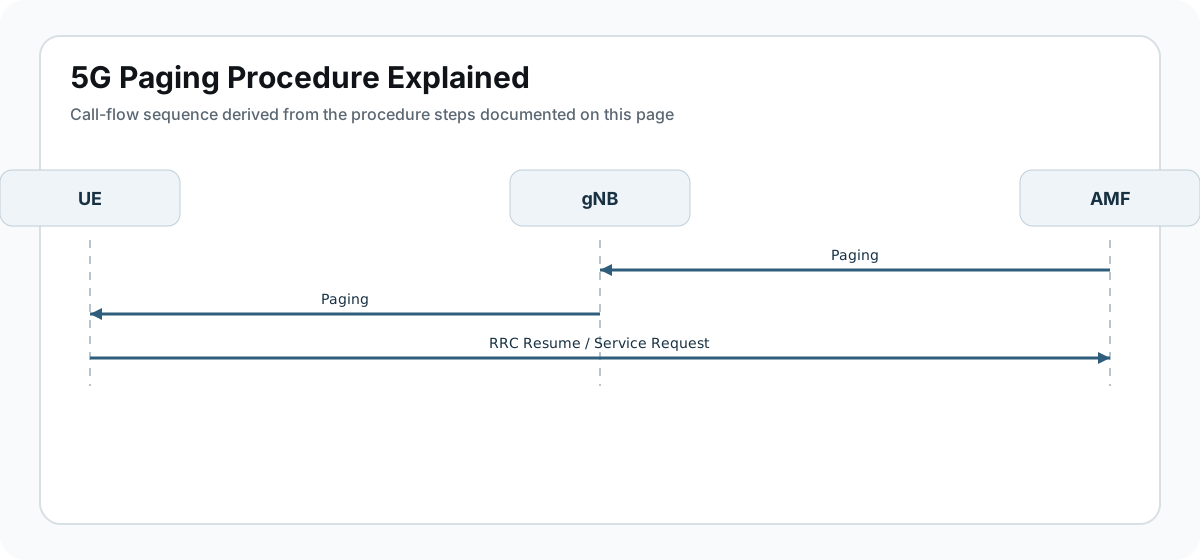
Paging Procedure Call Flow
Below is the simplified signaling sequence.
UE            gNB            AMF
 |             |              |
 |             |<--Paging-----|
 |<--Paging----|              |
 |             |              |
 |--RRC Resume / Service Request-->|
After receiving the paging message, the UE initiates a connection resume or service request procedure, typically through RRC Resume or a service-restoration path related to PDU Session Establishment.
Step-by-Step Explanation
Step 1: Downlink Data Arrival
The core network receives data or signaling intended for the UE.
Since the UE is idle or inactive, the AMF initiates the paging procedure.
Important parameters to check
Engineers should verify:
- UE registration state
- UE tracking area list
- paging identity
Step 2: Paging Message Sent to gNB
The AMF sends a Paging message to all gNBs within the UE’s Tracking Area.
This message includes:
- UE paging identity
- paging cause
- tracking area information
Important parameters to check
Check:
- paging identity (5G-S-TMSI)
- paging cause
- tracking area configuration
Step 3: gNB Broadcasts Paging
Each gNB broadcasts the paging message over the radio interface.
The message is transmitted through the Paging Channel (PCH).
Important parameters to check
Verify:
- paging frame configuration
- DRX paging cycle
- paging occasions
Step 4: UE Detects Paging
The UE periodically wakes up according to its paging DRX cycle and monitors paging messages.
If the paging identity matches the UE, the device responds.
Important parameters to check
Check:
- UE paging cycle
- DRX configuration
- UE identity matching
Step 5: UE Responds to Paging
After detecting the paging message, the UE initiates one of the following procedures:
- RRC Resume (if in RRC Inactive state)
- Service Request (if in RRC Idle state)
Paging Channels in 5G
| Channel | Description |
|---|---|
| PCH (Paging Channel) | Used to transmit paging messages |
| PDCCH | Carries control information for paging |
| PDSCH | May carry paging content |
UE Paging Behavior
| UE State | Paging Response |
|---|---|
| RRC Idle | Initiates Service Request |
| RRC Inactive | Initiates RRC Resume |
| RRC Connected | Paging not required |
Troubleshooting Paging Issues
UE Not Responding to Paging
Possible causes:
- incorrect paging configuration
- UE not monitoring correct paging cycle
- radio coverage issues
Paging Delay
Possible reasons:
- large tracking area list
- high network load
- paging DRX cycle too long
Paging Message Not Received
Possible causes:
- incorrect cell configuration
- UE synchronization issues
- signaling errors
Key Messages in Paging Procedure
| Message | Purpose |
|---|---|
| Paging | Network notifies UE |
| RRC Resume | UE resumes connection |
| Service Request | UE reconnects to network |
Relevant 3GPP Specifications
The Paging Procedure is defined by the 3rd Generation Partnership Project in:
- 3GPP TS 23.502 - 5G System Procedures
- 3GPP TS 38.300 - NR Architecture
- 3GPP TS 38.331 - RRC Protocol
Summary
The 5G Paging Procedure enables the network to locate and notify a UE when it is in idle or inactive state.
The process includes:
- AMF initiating paging
- gNB broadcasting paging messages
- UE detecting the paging message
- UE re-establishing connection through RRC Resume or Service Request
Paging ensures that incoming data and signaling can reach devices efficiently while minimizing radio resource usage.