5G Identity Request Procedure Explained
Introduction
The Identity Request procedure in 5G networks is used by the network to request the identity of a User Equipment (UE) when the network cannot determine the subscriber identity from the initial signaling.
This procedure typically occurs during:
- Initial Registration
- Mobility Registration Update
- Service Request procedures
The identity procedure allows the network to obtain identifiers such as:
- SUCI (Subscription Concealed Identifier)
- SUPI (Subscription Permanent Identifier)
- 5G-GUTI (Globally Unique Temporary Identifier)
The procedure is defined by the 3rd Generation Partnership Project in TS 24.501 - NAS Protocol.
Why Identity Request Is Needed
In many scenarios the UE may not send its full identity during the first message exchange.
The network may request identity when:
- the UE identity is unknown
- the temporary identity is not recognized
- the UE context is lost
- the UE moves between network regions
This ensures that the network can properly authenticate and authorize the subscriber.
Network Elements Involved
UE (User Equipment)
Responds to the identity request and sends its identifier.
gNB (5G Base Station)
Provides radio connectivity and forwards NAS signaling.
AMF (Access and Mobility Management Function)
Initiates the identity request procedure when the UE identity must be verified.
Interfaces Used
| Interface | Description |
|---|---|
| NR-Uu | Radio interface between UE and gNB |
| N1 | NAS signaling between UE and AMF |
| N2 | Control plane between gNB and AMF |
Identity Request Call Flow
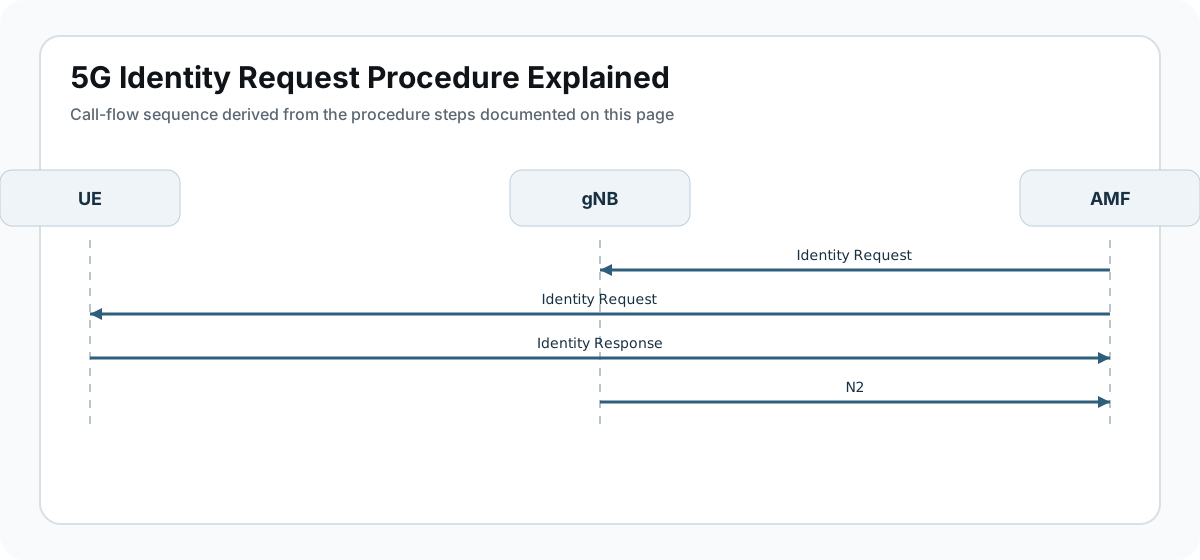
Below is the simplified message sequence for the Identity Request procedure.
UE                gNB                AMF
 |                 |                  |
 |                 |<--Identity Request
 |<--Identity Request---------------|
 |---Identity Response-------------->|
 |                 |----N2---------->|
The AMF requests the UE identity and the UE responds with the appropriate identifier.
Step-by-Step Explanation
Step 1: Network Detects Unknown UE Identity
During procedures such as Registration, the network may not recognize the UE’s identity.
Examples include:
- invalid 5G-GUTI
- UE context not available in AMF
- UE moved to a different AMF region
The AMF then triggers the Identity Request procedure.
Important parameters to check
Engineers should verify:
- received UE identity type
- GUTI validity
- AMF context lookup result
Step 2: Identity Request Message
The AMF sends an Identity Request NAS message to the UE.
This message specifies the identity type requested.
Possible identity types include:
| Identity Type | Description |
|---|---|
| SUCI | Concealed subscriber identity |
| SUPI | Permanent subscriber identity |
| 5G-GUTI | Temporary identity |
Important parameters to check
Check:
- identity type requested
- security context status
- NAS message integrity
Step 3: Identity Response
The UE sends an Identity Response message containing the requested identifier.
Examples include:
- SUCI generated by the USIM
- stored 5G-GUTI
This allows the network to correctly identify the subscriber.
Important parameters to check
Verify:
- identity value format
- SUCI encryption scheme
- identity consistency
Step 4: Identity Processing
After receiving the identity, the AMF performs:
- subscriber lookup in UDM
- authentication preparation
- context creation
The registration procedure can then continue normally.
Common Identity Types in 5G
| Identity | Purpose |
|---|---|
| SUPI | Permanent subscriber identity |
| SUCI | Encrypted SUPI used for privacy |
| 5G-GUTI | Temporary identifier assigned by the network |
One key improvement in 5G is the use of SUCI, which protects the permanent subscriber identity from being exposed over the air.
When Identity Request Happens
The Identity Request procedure commonly occurs during:
- Initial Registration
- Mobility Registration Update
- Service Request
- Network re-authentication
Troubleshooting Identity Request Issues
UE Does Not Respond to Identity Request
Possible causes:
- NAS message decoding failure
- UE software issue
- security context mismatch
Network Rejects Identity
Possible causes:
- unknown subscriber
- incorrect SUCI format
- roaming restrictions
Identity Request Repeated
Possible reasons:
- AMF context lost
- incorrect temporary identity
- network configuration errors
Key NAS Messages
| Message | Purpose |
|---|---|
| Identity Request | Network asks for UE identity |
| Identity Response | UE provides requested identity |
Relevant 3GPP Specifications
The identity procedure is defined in:
- TS 24.501 - NAS Protocol
- TS 23.502 - 5G System Procedures
- TS 33.501 - 5G Security Architecture
Published by the 3rd Generation Partnership Project.
Summary
The 5G Identity Request procedure allows the network to retrieve the correct identity of a UE when the identity cannot be determined from the initial signaling.
This ensures that the network can:
- authenticate the subscriber
- retrieve subscriber data
- continue registration or service procedures
The introduction of SUCI in 5G significantly improves subscriber privacy by preventing permanent identifiers from being transmitted in clear text.