LTE RRC States - RRC_IDLE and RRC_CONNECTED
LTE RRC states tell you whether the UE is camping and monitoring paging or is in an active dedicated control state. In trace reading, the state is usually the first thing to confirm before you drill into messages, measurements, mobility, or release behavior.
This page is the state hub for LTE RRC. Use it to map a live trace to the right state, then move into the procedure, message, paging, system-information, or mobility page that matches what the network is doing.
| Spec basis | 3GPP TS 36.331 state handling and transition behavior |
|---|---|
| Main states | RRC_IDLE and RRC_CONNECTED |
| Core use | Determine paging, setup, reconfiguration, release, and mobility behavior in a trace |
| Best paired pages | LTE RRC overview, system information, paging, handover, measurements, and message library |
Overview
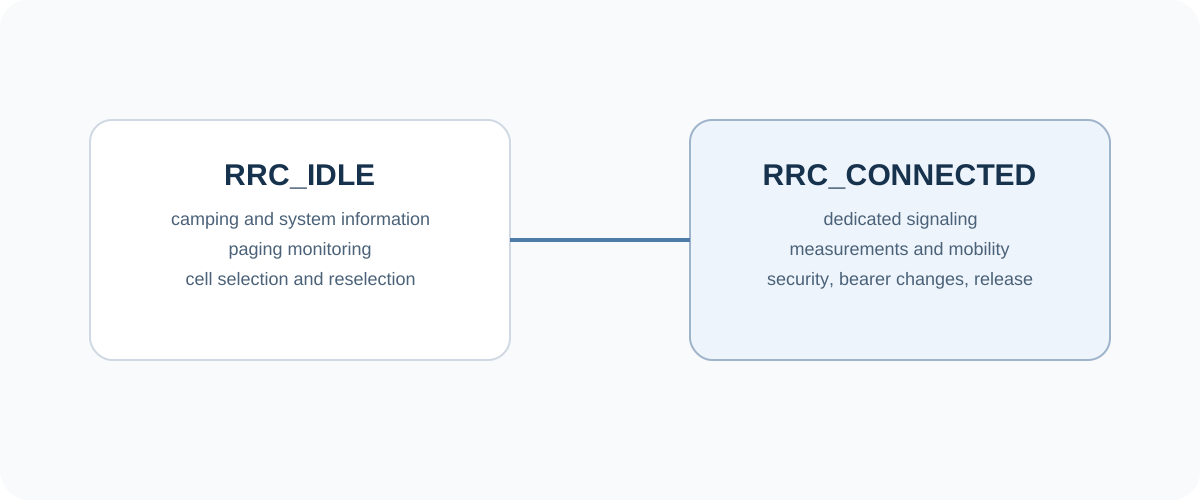
In LTE, the state model is direct and operationally useful. RRC_IDLE is the state where the UE relies on broadcast configuration, cell reselection, and paging. RRC_CONNECTED is the active control state for dedicated signaling, measurements, mobility, security activation, and release.
State model at a glance
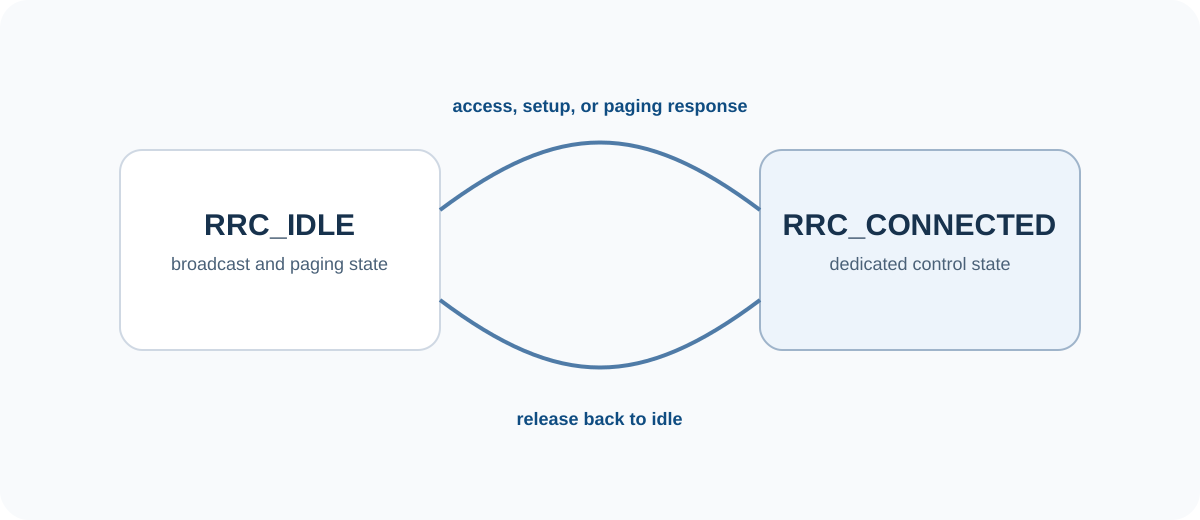
The useful mental model is straightforward: the state tells you what the UE can do, the procedure tells you what the network is trying to achieve, and the message tells you which exchange is carrying that step.
RRC_IDLE
  -> access or paging response path
  -> RRC_CONNECTED
  -> reconfiguration / measurements / mobility
  -> RRC release
-> RRC_IDLE| State | What it means | What the UE typically does |
|---|---|---|
| RRC_IDLE | UE is not in an active dedicated RRC connection. | Reads system information, performs cell reselection, camps on a cell, and monitors paging. |
| RRC_CONNECTED | UE has an active control connection with the eNodeB. | Uses dedicated signaling for measurements, mobility, security activation, bearer changes, and release handling. |
RRC_IDLE
RRC_IDLE is the broadcast-driven LTE state. The UE camps on a cell, reads system information, performs cell reselection, and monitors paging. This state is where access begins and where the UE returns after release.
| Area | What to read |
|---|---|
| Broadcast configuration | MIB, SIBs, cell access assumptions, idle mobility parameters, and paging-related broadcast context. |
| Reachability | Paging occasions, idle behavior, and what must happen before the UE returns to service. |
| Mobility in idle mode | Cell selection and reselection assumptions, measurement triggers, and neighbor behavior. |
RRC_CONNECTED
RRC_CONNECTED is the dedicated control state. Once the UE enters connected mode, the network can send reconfiguration, collect measurements, manage mobility, activate security, and eventually release the connection back to idle mode.
| Area | What to read |
|---|---|
| Connection control | Setup continuation, dedicated configuration, bearer updates, and release signaling. |
| Measurements | Measurement configuration and reporting used for mobility and quality-based control. |
| Mobility | Handover preparation and execution driven by measurement and reconfiguration logic. |
| Security | Access security activation and continuation after setup and before stable service handling. |
State transitions
| From | To | Typical trigger |
|---|---|---|
| RRC_IDLE | RRC_CONNECTED | Connection setup after access, paging response, or service-triggered signaling. |
| RRC_CONNECTED | RRC_IDLE | Connection release after activity ends or when the network no longer keeps dedicated context. |
| RRC_CONNECTED | RRC_CONNECTED | Reconfiguration, measurement updates, mobility, and bearer changes while the connection stays active. |
The main LTE state question is usually simple: did the UE ever make it out of idle, did it stay connected long enough for the intended procedure, and was the return to idle expected or premature?
Procedure map
| State | Main procedures | Reading notes |
|---|---|---|
| RRC_IDLE | System information acquisition, cell selection and reselection, paging monitoring, and access initiation. | Idle behavior is driven by broadcast configuration and reachability rather than by dedicated signaling. |
| RRC_CONNECTED | Connection setup continuation, security activation, reconfiguration, measurement reporting, handover, and release. | This is the active control state where the eNodeB can change UE configuration directly. |
Message cues
State reading becomes easier when you start from the message family that should be visible in that state. Use the message library when the trace already exposes the exact message or IE path.
| Category | Examples | Reference page |
|---|---|---|
| System information and idle context | MIB, SIB1, other SIBs, paging-related broadcast configuration | Open reference |
| Connection control | RRC connection setup, reconfiguration, and release messages | Open reference |
| Measurement and mobility | Measurement configuration, measurement reports, and handover-related RRC signaling | Open reference |
| Paging and return to service | Paging plus the access or setup signaling that follows it | Open reference |
Reading notes
| Symptom | State question to ask first | Why |
|---|---|---|
| Paging issue | Was the UE really in RRC_IDLE with valid broadcast and paging context? | Many paging problems are idle-mode context problems rather than message-only problems. |
| Access failure | Did the UE stay in idle because system information or access progression never completed? | The break may happen before dedicated connected-mode signaling fully starts. |
| Unexpected handover behavior | Was the UE stably in connected mode long enough for measurement and handover logic to act? | Mobility analysis only makes sense after the UE is clearly in RRC_CONNECTED. |
| Procedure ends too early | Did the connection release the UE back to idle sooner than expected? | Premature release often explains missing later messages or missing service continuation. |
FAQ
What are the LTE RRC states?
The main LTE RRC states are RRC_IDLE and RRC_CONNECTED.
Does LTE have an RRC_INACTIVE state?
No. LTE uses RRC_IDLE and RRC_CONNECTED. RRC_INACTIVE is an NR state, not an LTE RRC state.
What happens in RRC_IDLE?
In RRC_IDLE the UE camps on a cell, reads system information, performs reselection, and monitors paging.
What happens in RRC_CONNECTED?
In RRC_CONNECTED the UE uses dedicated signaling for measurements, mobility, security activation, reconfiguration, bearer changes, and release handling.