LTE System Information - MIB, SIB1, and the SIB Set
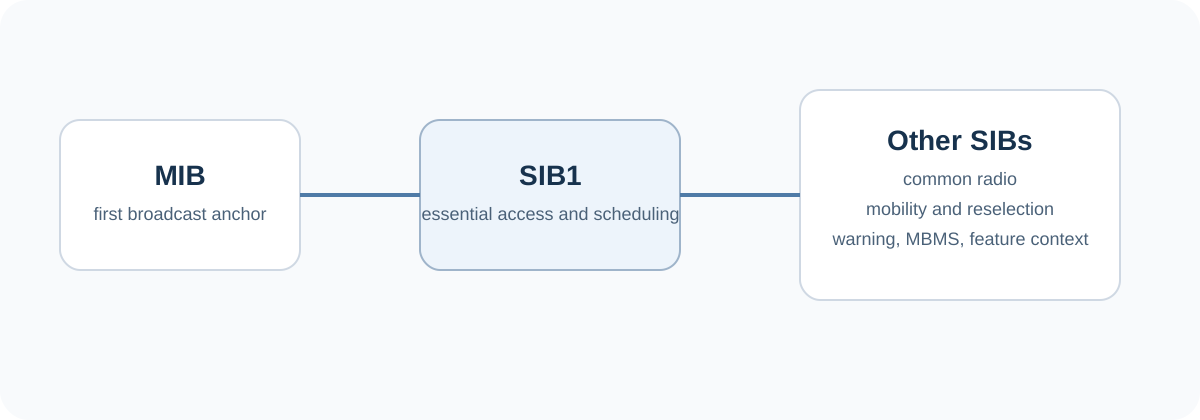
LTE system information is the broadcast RRC layer the UE reads before it can interpret access, idle behavior, paging, reselection, and common radio assumptions. In practical trace reading, the useful order is: MIB first, SIB1 next, then only the SIBs that match the problem you are investigating.
| Main spec | 3GPP TS 36.331 |
|---|---|
| Architecture context | 3GPP TS 36.300 |
| Idle-mode context | 3GPP TS 36.304 |
| Release | Release 18 |
| Primary role | Broadcast RRC reference for cell access, idle behavior, paging, reselection, and common radio configuration |
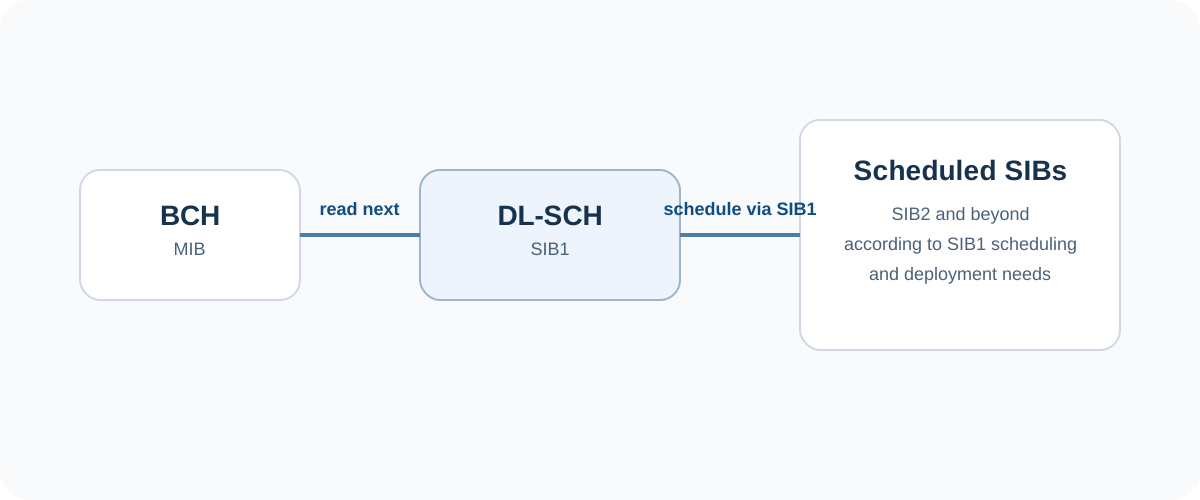
| First blocks | MIB on BCH, then SIB1 on DL-SCH |
| Follow-up blocks | Additional SIBs according to LTE feature support, deployment, and release |
| Best use | Check access, idle mobility, paging, measurements, warnings, MBMS, and common radio assumptions |
Overview
LTE system information is the broadcast RRC framework the UE uses to understand the cell before dedicated signaling begins. It carries the common context for access, paging, cell selection, cell reselection, common radio behavior, and a range of optional feature-specific areas.
Read system information together with initial access, paging, RRC_IDLE, and measurement and reselection interpretation. Broadcast context often explains why a UE behaves differently before any dedicated message is exchanged.
Reading order
The practical order is simple. First check whether the UE decoded the MIB. Then check SIB1. Only after that move to the wider SIB set that matches the procedure or symptom.
BCH / MIB
  -> SIB1
  -> scheduling for other SIBs
  -> common radio / mobility / warning / MBMS context
  -> access, paging, reselection, or feature-specific interpretation
MIB
MIB is the first minimal broadcast anchor in LTE. It gives the UE the basic context needed to continue toward SIB1 and build the early system-information view of the cell. If MIB is missing or misread, the access path will usually fail before the wider RRC behavior even becomes visible.
| Aspect | Reading value |
|---|---|
| Where it sits | BCH broadcast path |
| Main role | Provide the early downlink broadcast anchor and the context needed to continue toward SIB1. |
| Why it matters | If the UE cannot build the MIB view correctly, the later system-information and access path will be unreliable or absent. |
SIB1
SIB1 is the key broadcast block in LTE system-information reading. It carries essential access and identity information and tells the UE how to move into the rest of the system-information set. It is also the natural first place to look when paging, access, or cell selection looks wrong.
| Area | Why it matters |
|---|---|
| PLMN and cell identity | Defines which network and cell the UE believes it is camping on. |
| Access assumptions | Shapes whether the UE should attempt normal access and under which broad conditions. |
| Scheduling information | Tells the UE how to find the additional SIBs it may need next. |
| Idle and paging context | Often the first useful broadcast block when reachability or idle behavior looks wrong. |
Other SIBs
After SIB1, the useful next step depends on the problem. Many cells only need a subset of the wider SIB set, so do not assume every SIB is present in every deployment.
| SIB or block | Main use |
|---|---|
| MIB | Basic downlink system information, system bandwidth, PHICH-related context, and the information needed to continue toward SIB1. |
| SIB1 | PLMN identity, tracking area code, cell identity, access restrictions, cell selection information, and scheduling information for other SIBs. |
| SIB2 | Common radio resource configuration, RACH-related information, uplink power control, timers, and general common-channel behavior. |
| SIB3 | Intra-frequency cell reselection information for idle mobility on the serving LTE frequency. |
| SIB4 | Intra-frequency neighbor-cell information used with reselection and neighbor interpretation. |
| SIB5 | Inter-frequency reselection information for other LTE carrier frequencies. |
| SIB6 | UTRA reselection information for LTE to UMTS idle-mode mobility. |
| SIB7 | GERAN reselection information for LTE to GSM idle-mode mobility. |
| SIB8 | cdma2000 reselection information where that interworking path exists. |
| SIB9 | Home eNodeB or network naming information used in specific deployment cases. |
| SIB10 / SIB11 / SIB12 | Public warning and alert broadcast information including ETWS and CMAS-related content. |
| SIB13 | MBMS-related broadcast context where MBMS service is used. |
| Later release-specific SIBs | Additional feature-specific broadcast content that appears according to deployment and release support. |
Scheduling and validity
LTE system information is not just a list of blocks. It also has a scheduling model and a validity model. SIB1 gives the UE the scheduling context for the wider SIB set, and the network can signal when system information has changed. This matters in practice because a UE may appear to have coverage while still using stale or incomplete broadcast assumptions.
When a trace shows strange idle behavior, re-read the system-information path in order: MIB, SIB1, then the relevant scheduled SIBs, then any indication that the broadcast context changed.
Paging and idle use
LTE paging and idle-mode behavior are closely tied to broadcast context. That is why paging problems should be read together with RRC_IDLE, paging, and system-information scheduling rather than as a paging-message problem alone.
If a UE is camped but not behaving as expected, start with MIB and SIB1, then move into the additional SIBs that define common radio behavior, reselection, and idle-mode assumptions.
Reading notes
| Symptom | What to inspect first | Why |
|---|---|---|
| Access failure | MIB, SIB1, and the move into initial access | Many access failures begin before dedicated signaling starts. |
| Paging issue | SIB1 and idle-mode system information | Reachability often depends on correct broadcast assumptions, not only on the paging trigger. |
| Wrong cell reselection behavior | SIB3 to SIB8 depending on intra-frequency, inter-frequency, or inter-RAT path | Reselection logic is driven by broadcast mobility context. |
| Feature-specific mismatch | The SIB tied to that feature, not the whole catalog | Most deployments only use the subset of SIBs that matches the active feature set. |
References
- 3GPP TS 36.331 Release 18 - LTE RRC protocol specification, including system-information procedures and scheduling.
- 3GPP TS 36.300 Release 18 - LTE overall architecture context.
- 3GPP TS 36.304 Release 18 - UE idle-mode procedures, including cell selection, reselection, and related broadcast behavior.
FAQ
What is LTE system information?
LTE system information is the broadcast RRC information the UE uses to understand cell access, common radio configuration, paging context, idle mobility, and related feature-specific behavior.
What is the difference between MIB and SIB1?
MIB is the first minimal broadcast anchor. SIB1 carries the essential access, identity, and scheduling information the UE needs before it can use the wider SIB set.
Do all LTE cells broadcast every SIB?
No. The set of SIBs depends on the deployment, feature support, and release. Many cells only broadcast the subset they need.
Which SIBs should I check first in a trace?
Start with MIB and SIB1. Then move only to the SIBs that match the issue, such as SIB2 for common radio configuration, SIB3 to SIB5 for LTE mobility, or feature-specific SIBs for warning or MBMS context.