5G Network Slice Selection Procedure Explained
Introduction
The Network Slice Selection procedure in 5G networks determines which network slice or slices a UE is allowed to use after registration and during session setup.
In practical terms, this procedure decides whether the UE can access the expected S-NSSAI, whether the serving network accepts the requested slice, and whether later procedures such as PDU Session Establishment can continue on the correct slice.
This page is most useful when read together with 5G Initial Registration, Mobility Registration Update, and PDU Session Establishment.
The procedure is mainly defined in:
- 3GPP TS 23.501 - System Architecture for the 5G System
- 3GPP TS 23.502 - 5G System Procedures
- 3GPP TS 24.501 - NAS Protocol
What Network Slice Selection Does
Slice selection is the process that maps the UE and its service request to one or more allowed S-NSSAIs.
| Item | Why it matters |
|---|---|
| Requested NSSAI | Shows the slice or slices the UE wants to use in the current PLMN. |
| Allowed NSSAI | Shows what the serving network actually authorizes for the UE. |
| Configured NSSAI | Represents slice information already stored in the UE for a PLMN. |
| Rejected S-NSSAI | Helps explain why a requested slice was denied or replaced. |
| Mapped NSSAI | Becomes important in roaming cases where requested and serving values differ. |
Network Functions Involved
| Network Function | Role in slice selection |
|---|---|
| UE | Provides requested NSSAI and receives allowed or rejected slice information. |
| gNB | Forwards NAS signaling and may apply slice-aware access behavior later in the flow. |
| AMF | Main control-plane anchor for registration and the node that coordinates slice selection handling. |
| NSSF | Helps with slice and AMF selection decisions when deployed for that purpose. |
| UDM / UDR | Supplies subscription data that constrains which slices are allowed. |
| SMF | Uses the selected slice context when establishing PDU sessions. |
Interfaces Used
| Interface | Purpose |
|---|---|
| N1 | UE to AMF NAS signaling carrying requested and allowed NSSAI information. |
| N2 | gNB to AMF signaling during registration and later access procedures. |
| N22 | AMF to NSSF interaction where slice selection support is used. |
| N8 / Nudm | Subscription retrieval relevant to slice authorization. |
Network Slice Selection Call Flow Position
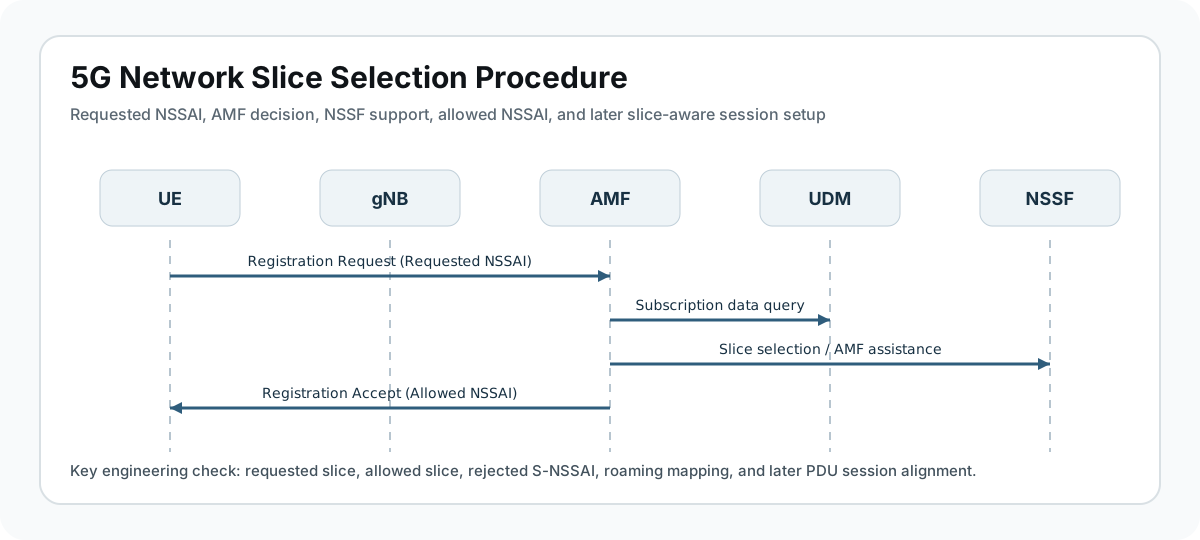
UE            gNB             AMF             UDM / NSSF
 |              |               |                  |
 |-- Registration Request ----->|                  |
 |   (Requested NSSAI)          |                  |
 |              |-------------->|                  |
 |              |               |-- subscription ->|
 |              |               |-- slice query -->|
 |              |               |<-- slice result -|
 |<-- Registration Accept ------|                  |
 |   (Allowed NSSAI)            |                  |
In many traces, slice selection becomes visible during registration, but its operational impact often appears later when a PDU Session Establishment Request is accepted, remapped, or rejected.
Step-by-Step Network Slice Selection Procedure
Step 1: UE Sends Registration Request with Requested NSSAI
The UE starts or updates registration and may include Requested NSSAI in the NAS signaling.
This is the network’s first strong indication of which slice or slices the UE wants to use in the current PLMN.
What to inspect
- Requested NSSAI content
- Serving PLMN
- Whether the UE is using configured or mapped slice data
Step 2: AMF Checks Subscription and Slice Policy
The AMF evaluates the request using subscriber data and, where relevant, interacts with other functions such as the NSSF.
This is where the network decides whether the requested slices are allowed, partially allowed, remapped, or rejected.
What to inspect
- AMF selection context
- Subscription profile
- NSSF decision or slice mapping logic
Step 3: Allowed NSSAI Is Returned to the UE
The network returns the result in the registration response, typically as Allowed NSSAI and, in some cases, Rejected NSSAI or related slice information.
This defines which slices the UE can actually use from that point onward.
What to inspect
- Allowed NSSAI list
- Rejected or unavailable S-NSSAI entries
- Whether the expected slice was replaced by another one
Step 4: Later Procedures Use the Selected Slice Context
The outcome becomes operationally important during procedures such as PDU Session Establishment.
If the chosen slice does not match subscriber policy, DNN configuration, or SMF expectations, failures often appear there instead of during registration.
What to inspect
- PDU session requested S-NSSAI
- DNN and slice combination
- SMF selection
- Session reject causes
Where Engineers Usually See Problems
| Problem area | Typical symptom |
|---|---|
| Requested slice not allowed | Registration succeeds but the expected slice is missing from Allowed NSSAI. |
| Wrong AMF or slice selection path | Unexpected AMF selection or inconsistent roaming behavior. |
| DNN and S-NSSAI mismatch | PDU session establishment fails even though registration completed. |
| Slice unavailable in the current area | Mobility-driven registration update changes or removes allowed slices. |
| Roaming mapping issue | Mapped NSSAI behavior differs from the home-network expectation. |
What to Check in Logs and Traces
- Requested NSSAI in the Registration Request.
- Allowed NSSAI and any rejected slice information in the Registration Accept.
- Whether the AMF changed after slice-related selection logic.
- Subscription data and roaming policy for the affected subscriber.
- The S-NSSAI used later in PDU Session Establishment Request.
- Whether the issue is really slice selection or a later SMF / DNN / policy failure.
Common Troubleshooting Scenarios
Requested Slice Missing from Allowed NSSAI
This usually points to a subscription restriction, roaming limitation, or serving-area policy mismatch.
PDU Session Reject After Successful Registration
Often the registration path succeeded, but the selected slice is not valid for the requested DNN, SMF, or service policy.
Slice Changes After Mobility
After a Mobility Registration Update, the available slices may change because the UE moved into a different tracking area or policy region.
Roaming Slice Mapping Confusion
In roaming deployments, the requested home-network slice and the visited-network slice mapping may not be one-to-one, which makes trace review harder.
Related Procedures
Recommended Reference Specifications
- 3GPP TS 23.501 - System Architecture for the 5G System
- 3GPP TS 23.502 - 5G System Procedures
- 3GPP TS 24.501 - NAS Protocol
- 3GPP TS 29.531 - NSSF Services and APIs