EPS Fallback Procedure | 5G to LTE Voice Fallback Call Flow
Introduction
EPS Fallback is the procedure used when a UE is attached to a 5G Standalone network but the voice call cannot stay on native VoNR.
Instead of continuing the call on NR, the network moves the UE to LTE/EPS so the voice session can be handled using VoLTE and IMS.
This page is most useful when read together with VoNR Registration, VoNR Mobile Originated Call, VoNR Mobile Terminated Call, and 5G Inter-RAT Handover.
The fallback behavior is defined across the 5G system procedures, NR RRC / NG-RAN mobility behavior, EPC interworking, and IMS voice handling specifications.
Engineers usually search this procedure to answer questions such as:
- why did a 5G voice call move to LTE?
- was fallback triggered by missing VoNR support or by policy?
- did the redirection/handover complete before SIP call setup?
- where should I look in NR, LTE, and IMS traces?
Key Specifications for EPS Fallback
EPS fallback is not described by a single message-level spec. In practice, engineers need to correlate the following 3GPP references together.
| Specification | Why it matters for EPS fallback |
|---|---|
| 3GPP TS 23.502 | Primary 5G system procedures reference for voice fallback handling, mobility coordination, and EPS fallback behavior. |
| 3GPP TS 23.501 | Overall 5G system architecture and service framework, including how voice service is supported across 5GS and interworking cases. |
| 3GPP TS 38.300 | NG-RAN overall description and the radio-side context for NR to E-UTRA mobility and fallback behavior. |
| 3GPP TS 38.331 | NR RRC messages and release / redirection behavior that often appear at the point where the UE leaves NR. |
| 3GPP TS 36.331 | LTE RRC behavior after fallback, including access, setup, and mobility signaling on the E-UTRA side. |
| 3GPP TS 23.401 | EPS / EPC procedures that remain relevant once the UE moves to LTE for voice continuity. |
| 3GPP TS 24.229 | IMS / SIP signaling reference for the VoLTE call setup that continues after fallback. |
When EPS Fallback Is Used
EPS fallback is normally used when VoNR is not available or not allowed, but the subscriber still needs voice service.
| Scenario | Why fallback is triggered |
|---|---|
| UE not VoNR capable | Device does not support native IMS voice over NR |
| VoNR not deployed | Operator provides 5G SA data but keeps voice anchored on LTE |
| Policy based fallback | Subscriber, roaming, or service policy prefers LTE voice |
| Coverage or radio condition | NR voice continuity is not reliable enough for the call |
| Emergency or interworking condition | Special handling requires LTE/EPS voice path |
Network Elements Involved
| Network Element | Role in EPS fallback |
|---|---|
| UE | Requests or receives voice service while camped on NR |
| gNB | Serves NR radio access before fallback is triggered |
| AMF | Handles 5G access and fallback-related mobility coordination |
| eNB | Takes over radio access after fallback to LTE |
| MME / EPC | Supports LTE/EPS mobility and bearer continuity where applicable |
| IMS Core | Handles SIP registration and voice call control |
EPS Fallback Call Flow Position
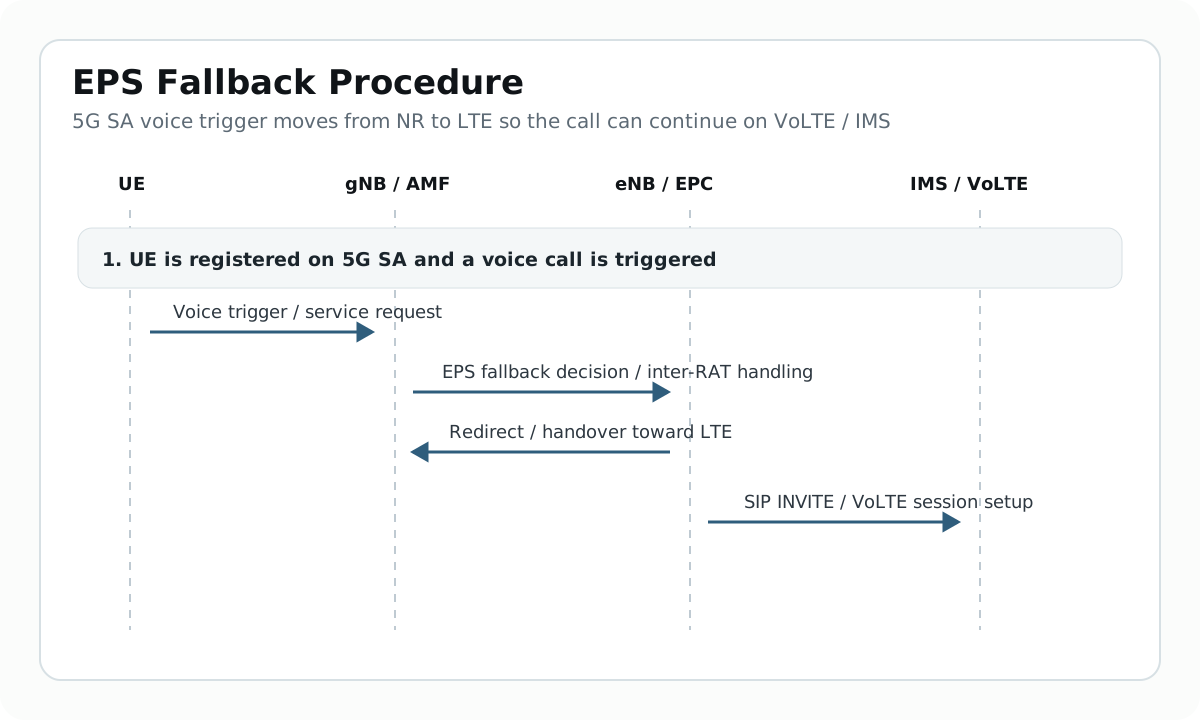
UE          gNB/AMF           eNB/MME/EPC           IMS
 |              |                  |                 |
 |-- Voice trigger on NR --------->|                 |
 |              |-- Fallback decision -------------> |
 |<-- Redirect / HO to LTE ------- |                 |
 |============= LTE access / continuity ============>|
 |---------------- SIP INVITE / VoLTE ------------->|
 |<--------------- 100 Trying / 180 / 200 ----------|
In most practical traces, the engineer must correlate the last NR-side control messages, the inter-RAT mobility step, and the first VoLTE-side IMS signaling.
Step-by-Step EPS Fallback Procedure
Step 1: UE Is Attached on 5G SA
The UE is already registered on the 5G network, often after completing 5G Initial Registration.
Depending on deployment, the UE may also have completed VoNR / IMS registration checks, or the network may know upfront that voice must use EPS fallback.
Step 2: Voice Trigger Arrives
A voice event occurs, usually either:
- a mobile originated call attempt
- a mobile terminated paging / incoming call
- an emergency call trigger
At this point the network decides whether the call can stay on NR or should move to LTE for VoLTE handling.
Step 3: Network Triggers Fallback
The AMF / NG-RAN applies the fallback decision based on policy, device capability, network support, or coverage state.
The UE is then redirected or handed over toward LTE.
| What to inspect | Why it matters |
|---|---|
| UE capability and subscription | Confirms whether native VoNR was allowed in the first place |
| Fallback trigger timing | Shows whether fallback happened before or during call setup |
| NR release / redirection context | Explains how the UE was moved away from NR |
Step 4: UE Moves to LTE
The UE leaves NR and acquires LTE, either through redirection or inter-RAT handover behavior that is deployment-specific.
This is the part that should be compared with 5G Inter-RAT Handover and, if needed, the LTE access procedure set.
Step 5: VoLTE / IMS Voice Setup Continues
Once LTE access is available, the voice call continues using the LTE/EPS path and standard IMS signaling. For the LTE-side voice sequence, compare this with the live VoLTE call flow and procedures reference.
Typical IMS procedures that become relevant next are:
- mobile originated call setup for comparison with native VoNR
- mobile terminated call setup for incoming-call behavior
- call release and session cleanup
Key Signals and Interfaces to Correlate
| Layer / domain | What engineers usually correlate |
|---|---|
| NR RRC / NGAP / NAS | Fallback trigger, release, mobility handling, paging context |
| LTE access side | Cell acquisition, attach/service continuity, LTE radio readiness |
| IMS / SIP | INVITE, provisional responses, final acceptance or rejection |
| Voice bearer / QoS | Whether the VoLTE media path was established correctly after fallback |
What to Check in Logs and Traces
- Whether the UE was VoNR capable and VoNR allowed by policy.
- Whether the trigger was an MO call, MT call, or emergency scenario.
- The exact NR message or decision point that started fallback.
- Whether LTE acquisition or inter-RAT movement completed successfully.
- Whether IMS signaling resumed correctly on the LTE side.
- Whether the call failed before fallback, during mobility, or after LTE access.
Common EPS Fallback Failure Points
Fallback Triggered Too Late
If the decision happens late, the user may see long call setup time or call setup failure.
NR to LTE Mobility Failure
If the UE cannot complete the move to LTE, the call usually fails before IMS can establish the VoLTE session.
IMS / VoLTE Not Ready After LTE Move
The radio fallback may succeed, but the voice call can still fail if the IMS path, LTE bearer setup, or subscriber profile is not aligned.
Capability or Policy Mismatch
The network may attempt a voice path that does not match the UE capability, roaming case, or configured service policy.
SEO and Engineering Search Terms This Page Should Capture
| Primary intent | Useful search phrases |
|---|---|
| Core topic | EPS fallback procedure, EPS fallback call flow, 5G to LTE fallback |
| VoNR relation | VoNR EPS fallback, voice fallback 5G SA, VoNR unavailable fallback |
| Troubleshooting | EPS fallback failure, why call moved from 5G to LTE, fallback to VoLTE issue |
| Mobility relation | NR to LTE voice handover, inter-RAT fallback for voice |
Summary
EPS Fallback is the practical bridge between 5G SA data service and LTE-based voice service when native VoNR is not available.
In real troubleshooting, the key is to correlate three domains together:
- the NR-side trigger
- the NR to LTE movement
- the VoLTE / IMS call setup after fallback
For deeper analysis, continue with VoNR Call Flow Procedures, 5G Inter-RAT Handover, 5G RRC Messages, and the 3GPP Decoder.
Recommended Reference Specifications
- 3GPP TS 23.502 - 5G System Procedures
- 3GPP TS 23.501 - System Architecture for the 5G System
- 3GPP TS 38.300 - NR and NG-RAN Overall Description
- 3GPP TS 38.331 - NR RRC Protocol
- 3GPP TS 36.331 - E-UTRA RRC Protocol
- 3GPP TS 23.401 - GPRS Enhancements for E-UTRAN Access
- 3GPP TS 24.229 - IMS SIP Signalling