5G Xn Handover Procedure Explained
Introduction
In 5G networks, Xn Handover is a mobility procedure that allows a User Equipment (UE) to move from one gNB to another using the Xn interface between the base stations.
The key advantage of Xn handover is that the handover is handled directly between gNBs without heavy involvement from the core network.
This results in:
- faster mobility handling
- reduced signaling load on the core network
- lower handover latency
The procedure is defined by the 3rd Generation Partnership Project in:
- 3GPP TS 23.502 - 5G System Procedures
- 3GPP TS 38.300 - NR Architecture
- 3GPP TS 38.331 - RRC Protocol
When Xn Handover Happens
Xn handover occurs when:
- the UE moves to a neighboring gNB
- both gNBs have an Xn interface connection
- the target cell provides better radio conditions
Typical triggers include:
- decreasing RSRP
- measurement event A3
- network load balancing
Network Elements Involved
UE (User Equipment)
Measures radio signals from neighboring cells and reports measurements.
Source gNB
The base station currently serving the UE.
Target gNB
The neighboring base station that will take over the UE connection.
AMF
In Xn handover, the AMF involvement is minimal, since the gNBs communicate directly.
Interfaces Used
| Interface | Description |
|---|---|
| NR-Uu | Radio interface between UE and gNB |
| Xn | Interface between neighboring gNBs |
| N2 | Interface between gNB and AMF |
| N3 | User plane interface between gNB and UPF |
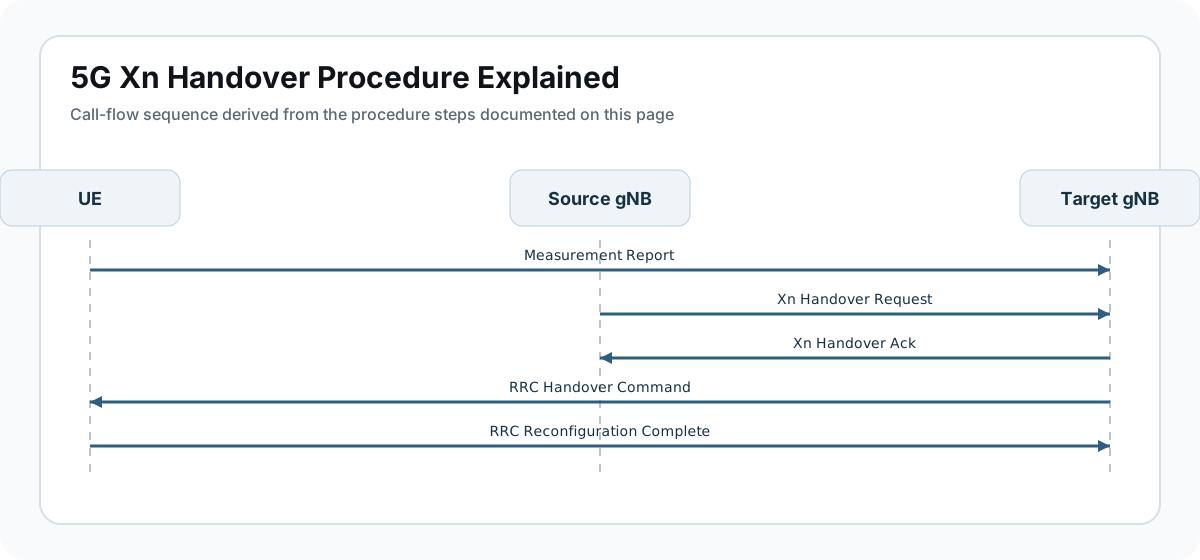
Xn Handover Call Flow
Below is the simplified signaling sequence.
UE          Source gNB        Target gNB
 |               |                 |
 |--Measurement Report----------->|
 |               |                 |
 |               |--Xn Handover Request-->|
 |               |                 |
 |               |<--Xn Handover Ack-----|
 |<--RRC Handover Command----------|
 |                                 |
 |====== UE synchronizes to target gNB ======|
 |                                 |
 |----RRC Reconfiguration Complete---------->|
During this procedure, the UE transitions from the source gNB to the target gNB.
Step-by-Step Explanation
Step 1: Measurement Reporting
The UE continuously measures the signal quality of neighboring cells.
Measurements include:
- RSRP
- RSRQ
- SINR
The UE sends a Measurement Report to the source gNB.
Important parameters to check
Engineers should verify:
- measurement event (A3, A5)
- measurement thresholds
- neighbor cell signal strength
Step 2: Handover Decision
The source gNB analyzes the measurement report.
If a neighboring cell offers better performance, the source gNB decides to initiate handover.
Important parameters to check
Check:
- handover offset values
- cell load conditions
- neighbor relations
Step 3: Handover Preparation
The source gNB sends an Xn Handover Request to the target gNB.
The target gNB:
- allocates radio resources
- prepares UE context
- confirms readiness
Important parameters to check
Verify:
- target cell capacity
- UE context transfer
- security key forwarding
Step 4: Handover Command
The source gNB sends an RRC Reconfiguration message (Handover Command) to the UE.
This message includes:
- target cell identity
- radio configuration
- synchronization parameters
Important parameters to check
Check:
- target cell ID
- mobility control information
- RRC configuration parameters
Step 5: Handover Execution
The UE disconnects from the source gNB and synchronizes with the target gNB.
The UE then sends RRC Reconfiguration Complete.
Step 6: Path Update
After the UE connects to the target gNB, the user plane path is updated.
Data traffic now flows through the target gNB.
Data Path After Handover
After handover completion, the data path becomes:
UE -> Target gNB -> UPF -> Data NetworkUser applications continue running without interruption.
Xn Handover vs N2 Handover
| Feature | Xn Handover | N2 Handover |
|---|---|---|
| Signaling path | gNB-to-gNB | via AMF |
| Latency | Lower | Higher |
| Core network involvement | Minimal | Higher |
| Interface used | Xn | N2 |
Troubleshooting Xn Handover
Handover Failure
Possible causes:
- Xn interface connectivity issue
- insufficient resources in target cell
- neighbor configuration errors
Radio Link Failure
Possible reasons:
- UE cannot synchronize with target cell
- handover command lost
- poor radio conditions
Ping-Pong Handover
Possible causes:
- aggressive handover thresholds
- overlapping coverage
- mobility parameter misconfiguration
Key Messages in Xn Handover
| Message | Purpose |
|---|---|
| Measurement Report | UE reports signal measurements |
| Xn Handover Request | Source gNB requests target resources |
| Xn Handover Acknowledge | Target gNB confirms readiness |
| RRC Handover Command | UE instructed to switch cells |
| RRC Reconfiguration Complete | UE confirms handover |
Relevant 3GPP Specifications
The Xn Handover procedure is defined by the 3rd Generation Partnership Project in:
- 3GPP TS 23.502 - 5G System Procedures
- 3GPP TS 38.300 - NR Architecture
- 3GPP TS 38.331 - RRC Protocol
Summary
The Xn Handover procedure allows a UE to move between base stations using the direct Xn interface between gNBs.
The process includes:
- measurement reporting by the UE
- handover decision by the source gNB
- resource preparation at the target gNB
- UE synchronization with the target cell
This approach reduces handover latency and signaling overhead, making it an efficient mobility mechanism in 5G NR networks.