5G RRC Release Procedure Explained
Introduction
In 5G networks, the RRC Release procedure is used to terminate the active Radio Resource Control (RRC) connection between the User Equipment (UE) and the gNB.
Once the connection is released, the UE transitions from RRC Connected state to RRC Idle or RRC Inactive state.
The procedure helps the network free radio resources when the UE is no longer actively transmitting or receiving data.
The procedure is defined by the 3rd Generation Partnership Project in:
- 3GPP TS 38.331 - NR RRC Protocol
- 3GPP TS 38.300 - NR Architecture
Why RRC Release Is Needed
Maintaining an active RRC connection consumes radio resources and signaling overhead.
If the UE is inactive for some time, the network releases the connection to optimize resource usage.
Typical triggers include:
| Scenario | Description |
|---|---|
| Data inactivity | UE stops transmitting data |
| Session completion | Data transfer finished |
| Mobility optimization | UE transitions to idle mode |
| Network resource management | Free up radio resources |
Network Elements Involved
UE (User Equipment)
Receives the release message and transitions to idle or inactive state.
gNB (Next Generation NodeB)
The 5G base station responsible for managing radio resources and initiating the release.
Interfaces Used
| Interface | Description |
|---|---|
| NR-Uu | Radio interface between UE and gNB |
RRC Release Call Flow
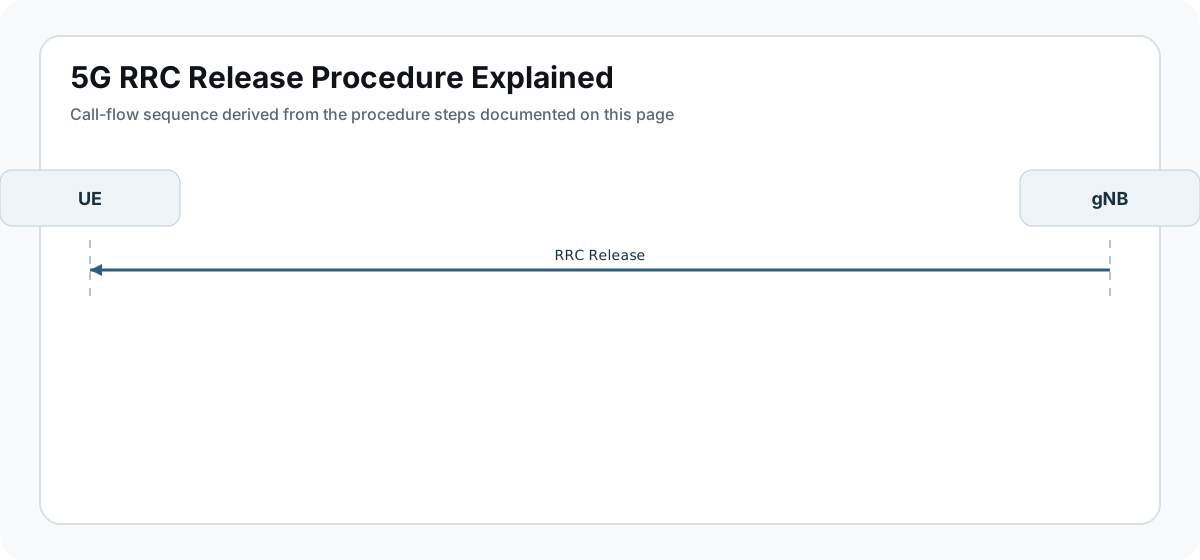
Below is the simplified signaling sequence.
UE                     gNB
 |                      |
 |<-----RRC Release-----|
 |                      |
 |==== UE enters RRC Idle / Inactive state ====|
After this step, the radio connection between the UE and the gNB is terminated.
Step-by-Step Explanation
Step 1: Release Decision
The gNB determines that the RRC connection is no longer needed.
This may happen due to:
- inactivity timers expiring
- session termination
- mobility optimization
Important parameters to check
Engineers should verify:
- inactivity timer values
- network resource utilization
- UE traffic status
Step 2: RRC Release Message
The gNB sends an RRC Release message to the UE.
This message instructs the UE to release the radio connection.
The message may include:
- release cause
- redirection information
- next state (Idle or Inactive)
Important parameters to check
Check:
- release cause value
- redirection parameters
- UE state transition configuration
Step 3: UE State Transition
After receiving the RRC Release message, the UE transitions to:
- RRC Idle, or
- RRC Inactive
The UE then stops maintaining the active radio connection.
Important parameters to check
Verify:
- UE state transition
- paging monitoring behavior
- tracking area information
RRC States in 5G
| State | Description |
|---|---|
| RRC Idle | UE not connected to gNB |
| RRC Connected | Active connection maintained |
| RRC Inactive | Intermediate state enabling fast reconnection |
Troubleshooting RRC Release
Unexpected Connection Release
Possible causes:
- inactivity timer configured too aggressively
- network optimization policies
- radio resource limitations
UE Reconnection Failure
Possible reasons:
- poor radio conditions
- incorrect cell selection parameters
- random access failures
Frequent RRC Releases
Possible causes:
- unstable radio environment
- incorrect inactivity timers
- high mobility conditions
Key Messages in RRC Release
| Message | Purpose |
|---|---|
| RRC Release | gNB instructs UE to release connection |
Relevant 3GPP Specifications
The RRC Release procedure is defined by the 3rd Generation Partnership Project in:
- 3GPP TS 38.331 - NR RRC Protocol
- 3GPP TS 38.300 - NR Architecture
Summary
The RRC Release procedure terminates the active radio connection between the UE and the 5G base station.
The process includes:
- gNB deciding to release the connection
- gNB sending the RRC Release message
- UE transitioning to RRC Idle or RRC Inactive state
This mechanism helps optimize radio resource usage and improve overall network efficiency.