5G PDU Session Release Procedure Explained
Introduction
The PDU Session Release procedure in 5G networks is used to terminate an existing PDU session between the User Equipment (UE) and the Data Network (DN).
When a PDU session is released:
- the IP connectivity is removed
- user plane tunnels are deleted
- QoS flows are released
- network resources are freed
This procedure is defined by the 3rd Generation Partnership Project in:
- 3GPP TS 23.502 - 5G System Procedures
- 3GPP TS 24.501 - NAS Protocol
When PDU Session Release Happens
A PDU session may be released for several reasons.
UE Initiated
The UE releases the session when:
- an application disconnects
- the device disables data
- the UE powers off
Network Initiated
The network may release the session due to:
- policy enforcement
- network congestion
- subscription limitations
- mobility events
Network Functions Involved
The procedure involves several 5G Core Network Functions.
UE (User Equipment)
Initiates or responds to the release procedure.
gNB
Handles radio signaling and forwards control-plane messages.
AMF (Access and Mobility Management Function)
Acts as the signaling anchor between UE and SMF.
SMF (Session Management Function)
Controls the lifecycle of the PDU session and coordinates session release.
UPF (User Plane Function)
Handles the removal of user plane forwarding rules.
Interfaces Used
| Interface | Description |
|---|---|
| NR-Uu | Radio interface between UE and gNB |
| N1 | NAS signaling between UE and AMF |
| N2 | Control plane signaling between gNB and AMF |
| N11 | Session control between AMF and SMF |
| N4 | Control signaling between SMF and UPF |
| N3 | User plane tunnel between gNB and UPF |
PDU Session Release Call Flow
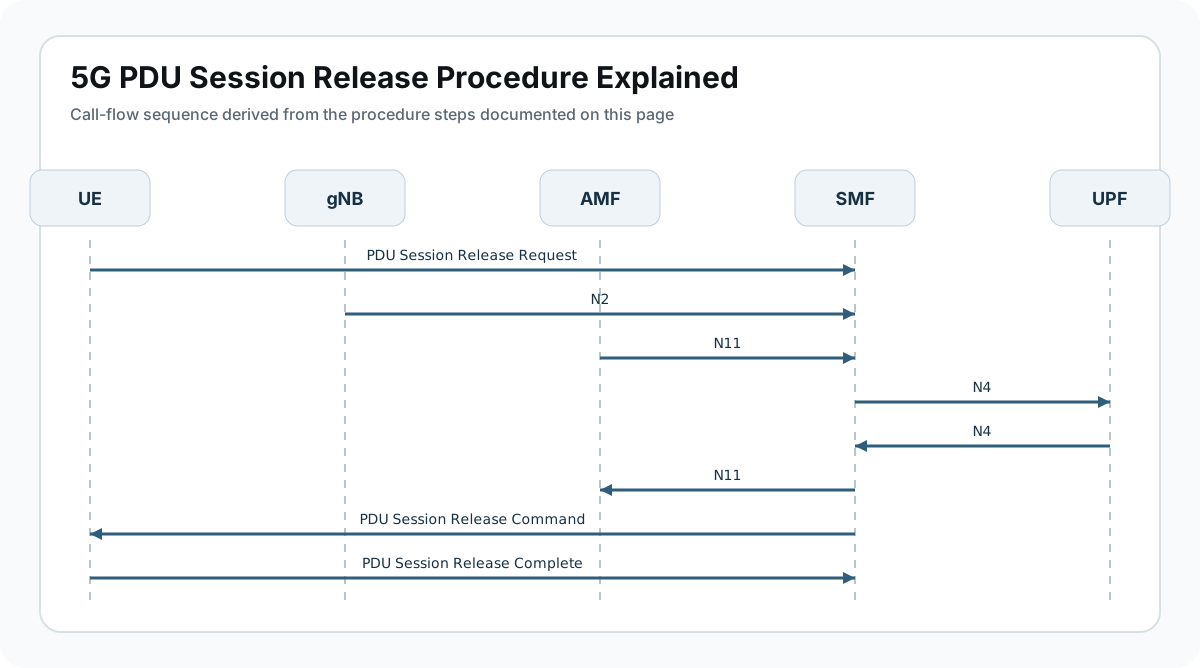
Below is the simplified signaling sequence.
UE           gNB           AMF            SMF            UPF
 |            |             |              |              |
 |--PDU Session Release Request---------->|
 |            |----N2-------------------->|
 |            |             |----N11----->|
 |            |             |              |----N4----->|
 |            |             |              |<---N4-----|
 |            |             |<---N11------|
 |<--PDU Session Release Command---------|
 |--PDU Session Release Complete-------->|
After this procedure finishes, the PDU session context is removed from the network.
Step-by-Step Explanation
Step 1: PDU Session Release Request
The UE sends a PDU Session Release Request NAS message to the network.
The message contains:
- PDU Session ID
- release cause
Important parameters to check
Engineers should verify:
- PDU Session ID
- release cause
- UE state
Step 2: Session Management Processing
The AMF forwards the request to the SMF.
The SMF:
- identifies the session context
- prepares the session release
- instructs the UPF to delete forwarding rules
Important parameters to check
Check:
- SMF session context
- policy rules
- subscriber data
Step 3: UPF Resource Release
The SMF updates the UPF via the N4 interface.
The UPF removes:
- packet detection rules (PDR)
- forwarding action rules (FAR)
- QoS enforcement rules (QER)
This effectively stops the user plane traffic.
Important parameters to check
Verify:
- UPF rule deletion
- tunnel removal
- resource cleanup
Step 4: PDU Session Release Command
The network sends a PDU Session Release Command to the UE.
This message informs the UE that the session is being terminated.
Important parameters to check
Look for:
- session ID
- release cause
- NAS security protection
Step 5: Release Complete
The UE confirms the procedure by sending PDU Session Release Complete.
After this step:
- the session is fully removed
- the UE no longer has IP connectivity for that session
Common Release Causes
| Cause | Description |
|---|---|
| UE Request | User terminates data session |
| Network Policy | Operator policy enforcement |
| Mobility Event | UE moves to unsupported area |
| Session Timeout | Idle session timeout |
Troubleshooting PDU Session Release
Session Release Fails
Possible causes:
- incorrect session ID
- SMF context mismatch
- NAS signaling errors
User Plane Not Released
Possible reasons:
- UPF rule deletion failure
- N4 signaling problem
- tunnel cleanup issue
Session Reappears Automatically
Possible causes:
- application reconnect
- UE auto-connect feature
- policy-based session re-establishment
Key NAS Messages
| Message | Purpose |
|---|---|
| PDU Session Release Request | UE requests session termination |
| PDU Session Release Command | Network initiates release |
| PDU Session Release Complete | UE confirms release |
Relevant 3GPP Specifications
The procedure is defined in the specifications from the 3rd Generation Partnership Project.
Important documents include:
- 3GPP TS 23.502 - 5G System Procedures
- 3GPP TS 24.501 - NAS Protocol
- 3GPP TS 38.300 - NR Overall Description
Summary
The PDU Session Release procedure terminates the data session between the UE and the network.
It ensures that:
- user plane tunnels are removed
- QoS flows are released
- network resources are freed
This procedure plays an important role in efficient resource management in 5G networks.