5G Inter-RAT Handover Procedure Explained
Introduction
In 5G networks, Inter-RAT (Radio Access Technology) Handover occurs when a User Equipment (UE) moves from a 5G NR network to another radio technology such as LTE or vice versa.
This procedure ensures that the UE maintains connectivity even when 5G coverage is not available or when mobility requires switching between technologies.
Typical transitions include:
- 5G NR -> LTE
- LTE -> 5G NR
- 5G NR -> 3G (legacy networks in some deployments)
The procedure is defined by the 3rd Generation Partnership Project in:
- 3GPP TS 23.502 - 5G System Procedures
- 3GPP TS 36.300 - LTE Architecture
- 3GPP TS 38.300 - NR Architecture
Why Inter-RAT Handover Is Needed
Although 5G networks are expanding rapidly, many deployments still rely on multi-technology coverage.
Inter-RAT mobility ensures:
- continuous service outside 5G coverage
- seamless fallback to LTE
- compatibility with legacy networks
Common use cases include:
| Scenario | Description |
|---|---|
| Coverage fallback | UE moves out of 5G coverage |
| Voice fallback | VoNR unavailable -> fallback to LTE |
| Network optimization | Load balancing across RATs |
Network Elements Involved
UE (User Equipment)
Measures neighboring cells belonging to different radio technologies.
Source gNB
The 5G base station currently serving the UE.
Target eNB
The LTE base station that will serve the UE after handover.
AMF / MME
Depending on the handover direction, mobility coordination may involve:
- AMF for 5G core
- MME for LTE core
Interfaces Used
| Interface | Description |
|---|---|
| NR-Uu | Radio interface between UE and gNB |
| LTE-Uu | Radio interface between UE and eNB |
| N2 | Interface between gNB and AMF |
| S1-MME | Interface between eNB and MME |
| Xn / S1 | Mobility coordination interfaces |
Inter-RAT Handover Call Flow
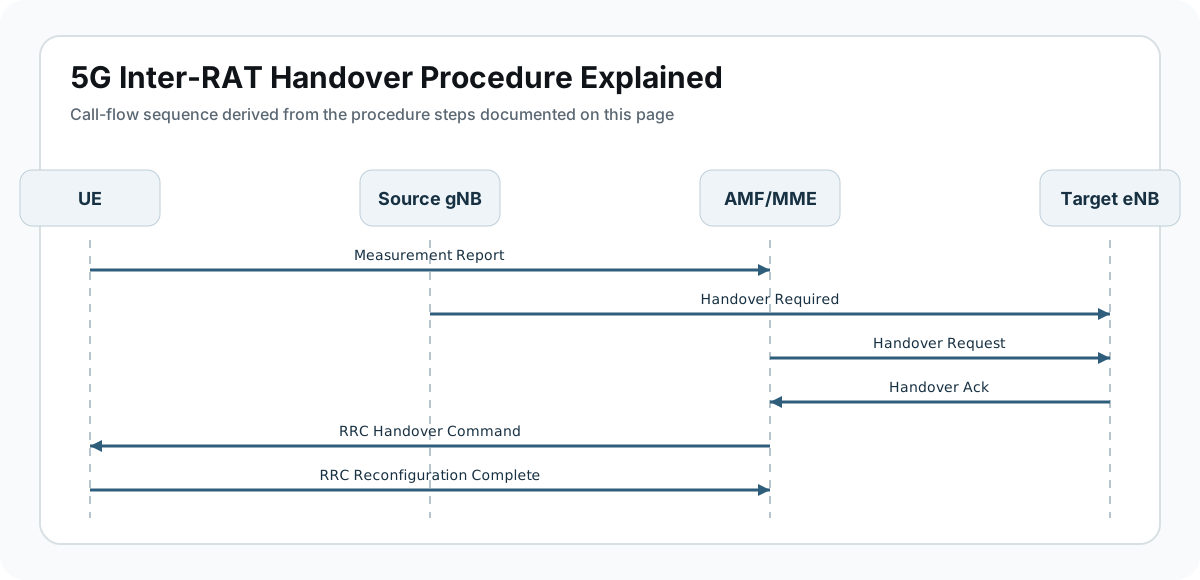
Below is the simplified signaling sequence for 5G -> LTE handover.
UE        Source gNB        AMF/MME        Target eNB
 |             |                |              |
 |--Measurement Report-------->|
 |             |                |              |
 |             |--Handover Required---------->|
 |             |                |--Handover Request-->|
 |             |                |              |
 |             |                |<--Handover Ack------|
 |<--RRC Handover Command------|
 |                              |
 |====== UE switches to LTE cell ======|
 |                              |
 |---RRC Reconfiguration Complete----->|
During this process, the UE transitions from NR radio access to LTE radio access.
Step-by-Step Explanation
Step 1: Measurement Reporting
The UE measures neighboring LTE cells while connected to the 5G gNB.
Measurements include:
- RSRP
- RSRQ
- Signal quality of LTE cells
The UE sends a Measurement Report to the source gNB.
Important parameters to check
Engineers should verify:
- inter-RAT measurement configuration
- LTE neighbor cell list
- measurement event thresholds
Step 2: Handover Decision
The source gNB determines that LTE provides better coverage or service availability.
The gNB initiates the Inter-RAT handover procedure.
Important parameters to check
Check:
- inter-RAT thresholds
- LTE neighbor configuration
- load balancing policies
Step 3: Handover Preparation
The core network coordinates the handover between the NR and LTE systems.
The target eNB allocates resources for the UE.
Important parameters to check
Verify:
- target LTE cell availability
- bearer context transfer
- security context transfer
Step 4: Handover Command
The source gNB sends an RRC Reconfiguration message containing the handover command.
This message instructs the UE to connect to the LTE target cell.
Important parameters to check
Look for:
- LTE cell identity
- frequency parameters
- mobility control information
Step 5: Handover Execution
The UE disconnects from the 5G NR cell and synchronizes with the LTE eNB.
The UE sends RRC Reconfiguration Complete to confirm the handover.
Data Path After Inter-RAT Handover
Once the handover completes, the data path becomes:
UE -> LTE eNB -> Core Network -> Data NetworkUser sessions continue without interruption.
Common Inter-RAT Handover Types
| Type | Description |
|---|---|
| NR -> LTE | Fallback when leaving 5G coverage |
| LTE -> NR | Upgrade to 5G coverage |
| NR -> 3G | Rare legacy fallback scenario |
Troubleshooting Inter-RAT Handover
Handover Failure
Possible causes:
- incorrect LTE neighbor configuration
- missing inter-RAT measurement setup
- target cell resource shortage
Radio Link Failure
Possible reasons:
- UE cannot synchronize with LTE cell
- handover command lost
- signal quality issues
Session Interruption
Possible causes:
- bearer context transfer failure
- core network signaling issues
- routing configuration errors
Key Messages in Inter-RAT Handover
| Message | Purpose |
|---|---|
| Measurement Report | UE reports LTE neighbor measurements |
| Handover Required | Source gNB initiates handover |
| Handover Request | Core network requests resources |
| Handover Command | UE instructed to move to LTE |
| RRC Reconfiguration Complete | UE confirms handover |
Relevant 3GPP Specifications
The Inter-RAT Handover procedure is defined by the 3rd Generation Partnership Project in:
- 3GPP TS 23.502 - 5G System Procedures
- 3GPP TS 36.300 - LTE Architecture
- 3GPP TS 38.300 - NR Architecture
Summary
The Inter-RAT Handover procedure enables seamless mobility between 5G NR and other radio technologies such as LTE.
The process includes:
- measurement reporting by the UE
- handover decision by the network
- preparation of the target RAT resources
- UE synchronization with the new radio technology
This mechanism ensures continuous connectivity across heterogeneous mobile networks.