5G NR RRC Overview
5G NR RRC is the radio resource control protocol between the UE and the gNB. It is the main control-plane protocol for access, connection control, measurements, mobility, security activation, release, resume, and radio configuration in NR.
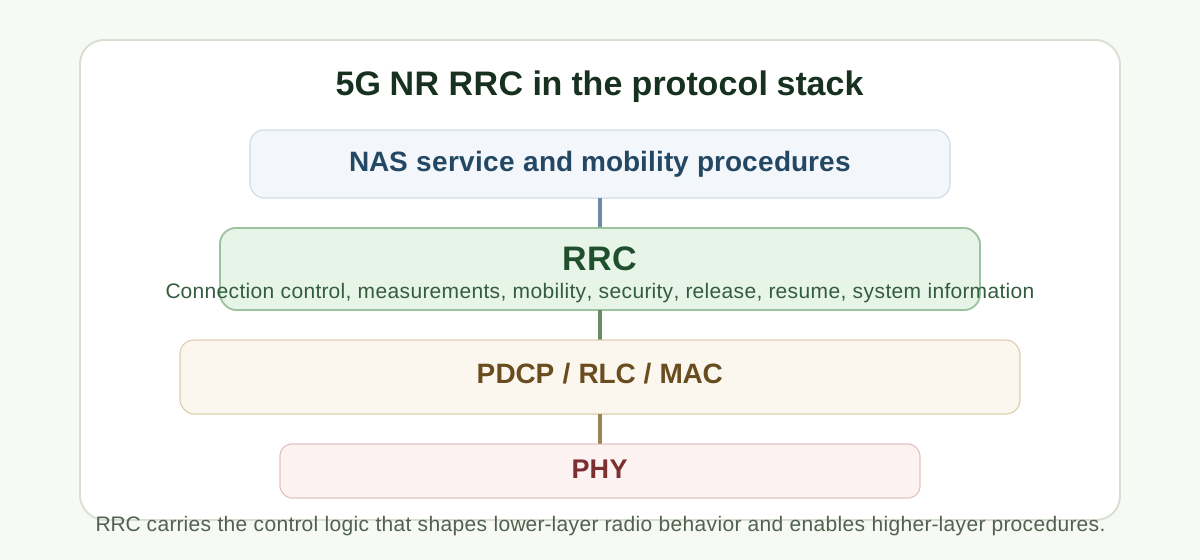
RRC sits above PDCP, RLC, MAC, and PHY, and below broader NAS service procedures. It matters because many live behaviors visible in setup, paging, handover, measurement reporting, inactivity handling, and recovery are ultimately controlled through RRC messages and IEs.
Quick facts
| Technology | 5G NR |
|---|---|
| Protocol | RRC |
| Main spec | 3GPP TS 38.331 |
| Architecture context | 3GPP TS 38.300 |
| Release | Release 18 |
| Above RRC | NAS service and mobility procedures |
| Below RRC | PDCP, RLC, MAC, and PHY |
| Core topics | States, setup, resume, reconfiguration, release, re-establishment, measurements, mobility, security, system information, message structure, IEs |
RRC topics
RRC States | RRC Messages | System Information | RRCSetup | RRCReconfiguration | Measurement Report | SecurityModeCommand | Paging | 5G NR Call Flows | RRC Troubleshooting
Contents
Overview
RRC is the layer where the network tells the UE how to behave on the radio side. It carries broadcast information, establishes and modifies dedicated radio configuration, controls measurements and mobility, activates security context through SecurityModeCommand, and determines whether the UE stays connected, becomes inactive, or is fully released.
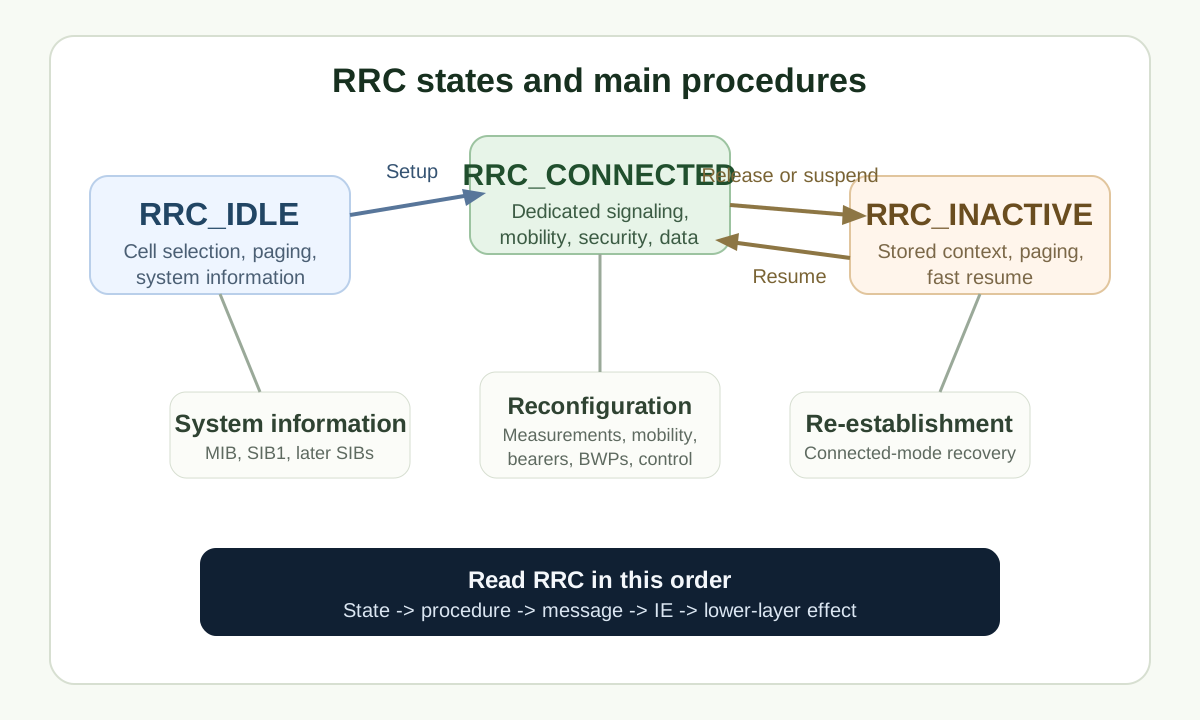
Read RRC as a protocol hub, not as a single procedure. The useful path is: identify the state, identify the active procedure, inspect the messages, then inspect the IEs that carried the actual configuration and how they changed MAC and PHY behavior.
Position in the stack
RRC sits below NAS service and mobility signaling and above the lower radio layers. It does not carry user data itself. Instead, it configures how the radio connection is created, maintained, optimized, or recovered.
| Layer or area | Relation to RRC |
|---|---|
| NAS | Uses the radio connection provided through RRC procedures such as setup and resume. |
| RRC | Controls broadcast information, dedicated radio configuration, measurements, mobility, and state handling. |
| PDCP / RLC / MAC | Receive configuration and behavior changes carried in RRC messages such as RRCReconfiguration. |
| PHY | Executes the radio behavior configured through RRC, including BWPs, search spaces, measurements, and access context. |
Main functions
| Function | Meaning | Why it matters |
|---|---|---|
| Connection control | Setup, resume, release, reject, and re-establishment handling. | Determines whether signaling and service procedures can proceed. |
| Broadcast system information | Delivers MIB, SIB1, and the broader system-information branch. | Controls access, cell selection, paging context, and feature-specific common behavior. |
| Radio configuration | Configures serving-cell behavior, bearers, BWPs, measurements, and lower-layer objects. | Many MAC and PHY behaviors are explained only by the RRC configuration. |
| Measurements and mobility | Defines measurement objects, reporting rules, and mobility-triggering behavior through IEs such as measurement configuration. | Handover and mobility debugging often start with RRC measurement setup. |
| Security activation | Activates AS security through the security mode procedure. | Connection progression often stops here when integrity or configuration mismatches appear. |
| State management | Controls IDLE, CONNECTED, and INACTIVE behavior and the transitions between them. | State context changes what messages and procedures are possible next. |
RRC states
The three main NR RRC states are RRC_IDLE, RRC_CONNECTED, and RRC_INACTIVE. The state is the first checkpoint in any trace because it explains which procedure family can happen next, whether that is setup, resume, reconfiguration, or recovery.
| State | Main behavior | Common next procedures |
|---|---|---|
| RRC_IDLE | Broadcast acquisition, paging monitoring, cell selection and reselection. | Initial access, setup, SI acquisition, paging-triggered return. |
| RRC_CONNECTED | Dedicated signaling, measurement reporting, bearer control, mobility, security, and reconfiguration. | Reconfiguration, handover, release, re-establishment, failure handling. |
| RRC_INACTIVE | Stored AS context, paging-based reachability, fast return through resume. | Resume, paging-triggered resume, transition back to connected or idle behavior. |
Open the dedicated RRC States page for the full state and transition view.
Main procedures
The most-used RRC procedures in Release 18 reading are setup, resume, reconfiguration, release, re-establishment, security mode, measurement reporting, and system-information acquisition.
| Procedure | Purpose | Reference path |
|---|---|---|
| RRC setup | Establish the radio control connection after access. | RRC connection setup |
| RRC resume | Return from inactive context without full setup. | RRC resume |
| RRC reconfiguration | Change measurements, radio bearers, mobility, BWPs, search spaces, or other radio behavior. | RRC Reconfiguration |
| RRC release | End the dedicated connection or move toward inactive handling. | RRC release |
| RRC re-establishment | Recover after radio link failure or connected-mode loss. | RRC re-establishment |
| Measurement reporting | Provide measurement results for mobility or radio decisions. | Measurement reporting |
| System-information acquisition | Read MIB, SIB1, and later SIB content needed for access and common behavior. | System information |
Messages and IEs
RRC messages are the signaling containers exchanged between UE and gNB. IEs are the actual configuration or control objects inside those messages. The message tells you what happened. The IE content tells you how it was configured, often with direct effect on MAC and PHY.
| Area | Main examples | Reference page |
|---|---|---|
| Connection messages | RRCSetup, RRCSetupComplete, RRCRelease, RRCReject | 5G NR RRC Message Library |
| Reconfiguration and mobility | RRCReconfiguration, MeasurementReport | RRC Reconfiguration |
| Security | SecurityModeCommand, SecurityModeComplete | SecurityModeCommand |
| Recovery | RRCReestablishmentRequest, RRCReestablishment | RRC re-establishment |
| Common IEs | CellGroupConfig, MeasConfig, RadioBearerConfig, ServingCellConfigCommon | RRC message and IE context |
System information
System information is part of the RRC message space. It starts with MIB on PBCH, continues with SIB1, and then expands into the SystemInformation container and the wider SIB catalog.
This branch is important because it controls cell access, selection and reselection behavior, paging context, and several feature-specific common settings such as sidelink, MBS, NTN, and positioning-related broadcast information.
Open the full System Information page for the complete MIB, SIB1, and SIB catalog view.
Cross-layer interaction
| Layer or procedure area | How it connects to RRC |
|---|---|
| NAS | Registration, service request, and session procedures usually depend on a usable RRC connection. |
| PDCP / RLC / MAC | Bearer setup, SRB and DRB behavior, logical channels, and MAC operation are configured through RRC messages. |
| PHY | Search spaces, BWPs, measurement sources, SSB-related behavior, and many radio parameters are controlled through RRC configuration. |
| Call flows | RRC is the bridge between lower-layer access behavior and higher-layer service procedures. |
Good trace reading usually moves across these boundaries instead of staying inside one message family.
RRC in call flows
| Procedure area | Why RRC matters |
|---|---|
| Initial access and registration | Setup opens the radio path used before NAS registration can proceed. |
| Paging and resume | Paging, inactive state, and resume behavior are all centered on RRC state and message handling. |
| Mobility and handover | Measurements and reconfiguration drive handover preparation and execution. |
| Recovery | Re-establishment and failure handling show whether the UE can recover without a full restart. |
| Broadcast and common behavior | System information defines the common cell behavior before dedicated signaling begins. |
Release 18 scope
Release 18 RRC is broader than a basic setup and reconfiguration view. It still centers on states, dedicated configuration, measurements, mobility, and system information, but it also carries wider support for sidelink, multicast and broadcast service, NTN, positioning, inactive-mode behavior, and feature-specific measurement and reporting context.
| Traditional RRC focus | Release 18 reading scope |
|---|---|
| Setup, reconfiguration, release, and security | Those core procedures plus broader inactive-state, recovery, and feature-specific procedure handling |
| MIB, SIB1, and basic mobility configuration | Expanded system-information branches for sidelink, MBS, NTN, positioning, and other specialized areas |
| Simple connected-mode mobility view | Richer measurement and reporting context tied to modern beam, service, and deployment scenarios |
Troubleshooting
| Symptom | RRC area to inspect | Why |
|---|---|---|
| Setup does not complete | RRCSetupRequest, RRCSetup, RRCSetupComplete, SIB1, security progression | Early access problems are often visible as missing or abnormal first RRC exchanges. |
| Resume fails or loops | Paging context, inactive-state handling, ResumeRequest, resume acceptance or fallback | State mismatch or missing stored context is often exposed in the resume path. |
| Handover behaves unexpectedly | Measurement configuration, MeasurementReport, RRCReconfiguration, completion message | Mobility decisions depend on the configured measurement and reconfiguration path. |
| Lower-layer behavior changes suddenly | Recent RRCReconfiguration and IE changes | MAC and PHY often changed because RRC changed the configuration, not because the lower layer changed on its own. |
| Broadcast or paging behavior looks wrong | MIB, SIB1, paging-related system information, state context | Common behavior usually starts with system information and state, not with dedicated signaling. |
Use the dedicated RRC failure causes page when you want a cause-led troubleshooting path.
References
FAQ
What is RRC in 5G NR?
RRC is the radio resource control protocol between the UE and gNB. It manages access, connection control, measurements, mobility, security activation, release, resume, and radio configuration in NR.
Which spec defines 5G NR RRC?
The main RRC specification is 3GPP TS 38.331. Architectural context comes from 3GPP TS 38.300.
What are the main RRC states?
The main NR RRC states are RRC_IDLE, RRC_CONNECTED, and RRC_INACTIVE.
What is the difference between a message and an IE?
A message is the signaling container exchanged between UE and gNB. An IE is the actual field or object inside that message.
What should I open next after this page?
Open RRC States, the RRC Message Library, and the System Information page first.