5G NR PUCCH - Physical Uplink Control Channel
The 5G NR PUCCH, or Physical Uplink Control Channel, is the uplink control channel used by the UE to send UCI back to the gNB. Instead of carrying user-plane payload, it carries compact control information such as HARQ-ACK, Scheduling Request, and CSI-related reporting.
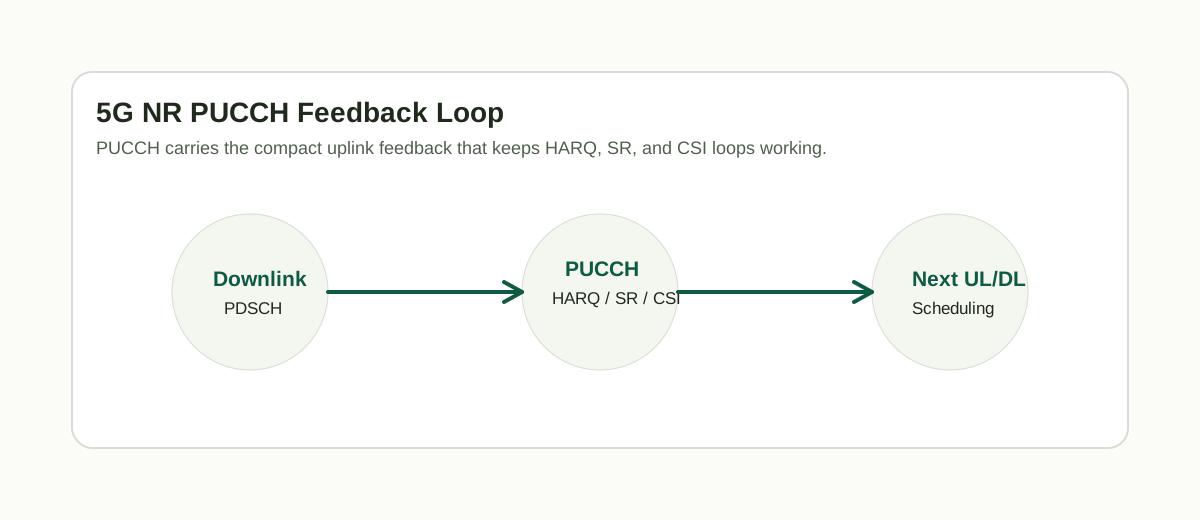
Read PUCCH as the uplink feedback path that keeps NR control loops stable. It links downlink decoding to HARQ response, uplink demand to Scheduling Request, and channel reporting to later scheduler decisions. Format choice, timing, resource mapping, and uplink coverage all matter.
| Technology | 5G NR |
|---|---|
| Full name | Physical Uplink Control Channel |
| Carries | UCI including HARQ-ACK, Scheduling Request, and CSI-related reporting |
| Main specs | 3GPP TS 38.211, 38.213, 38.214 |
| Release | Release 18 |
| Main concepts | UCI, HARQ-ACK, SR, CSI, PUCCH Formats 0-4, timing, resource mapping |
| Why it matters | PUCCH carries the uplink control feedback that keeps scheduling, retransmission, and reporting loops working correctly |
Contents
Overview
PUCCH is the main physical uplink control channel in NR. It carries UCI from the UE to the gNB on dedicated uplink control resources rather than on the main uplink shared-data path.
- PUCCH carries UCI rather than UL-SCH payload.
- Its most common UCI types are HARQ-ACK, Scheduling Request, and CSI-related feedback.
- Its format depends on payload size, duration, and reporting context.
- PUCCH behavior is central to HARQ timing, uplink-resource requests, and reporting reliability.
Quick interpretation
| Role | Uplink control feedback channel |
|---|---|
| Carries | UCI including HARQ-ACK, SR, and CSI-related reporting |
| Main format set | PUCCH Formats 0, 1, 2, 3, and 4 |
| Main reading points | UCI size, format selection, timing, PRB and symbol mapping, and uplink reliability |
| Main impact | HARQ loop stability, Scheduling Request success, reporting continuity, and scheduler confidence |
How the PUCCH model works
Read PUCCH as a UCI delivery path. The network expects the UE to place the right control payload on the right resources, in the right format, at the right time. If that path is weak, later scheduling and retransmission behavior often looks unstable even when the data channels themselves seem normal.
UCI types
PUCCH carries the compact uplink control information grouped under UCI. The main cases are HARQ-ACK, Scheduling Request, and CSI-related reporting. Which UCI is present strongly influences the chosen PUCCH format and resource usage.
HARQ-ACK path
After a UE receives a downlink transmission on PDSCH, it may need to send ACK or NACK information back to the gNB. That makes PUCCH one of the key channels in the HARQ feedback loop.
Scheduling Request path
The UE may use PUCCH to signal that it needs uplink resources. That means missing or weak PUCCH can affect later PUSCH activity even though PUCCH is not a data channel.
CSI-related reporting
PUCCH can also carry channel-state-related feedback when configured to do so. That makes it part of the larger loop between channel measurement, adaptation, and later scheduling choices.
Resource mapping and timing
PUCCH is mapped on uplink resources in the active uplink BWP. Its symbol timing and slot placement must be read in the context of frame structure and numerology. Timing errors often look like missing feedback rather than explicit channel failure.
Format choice
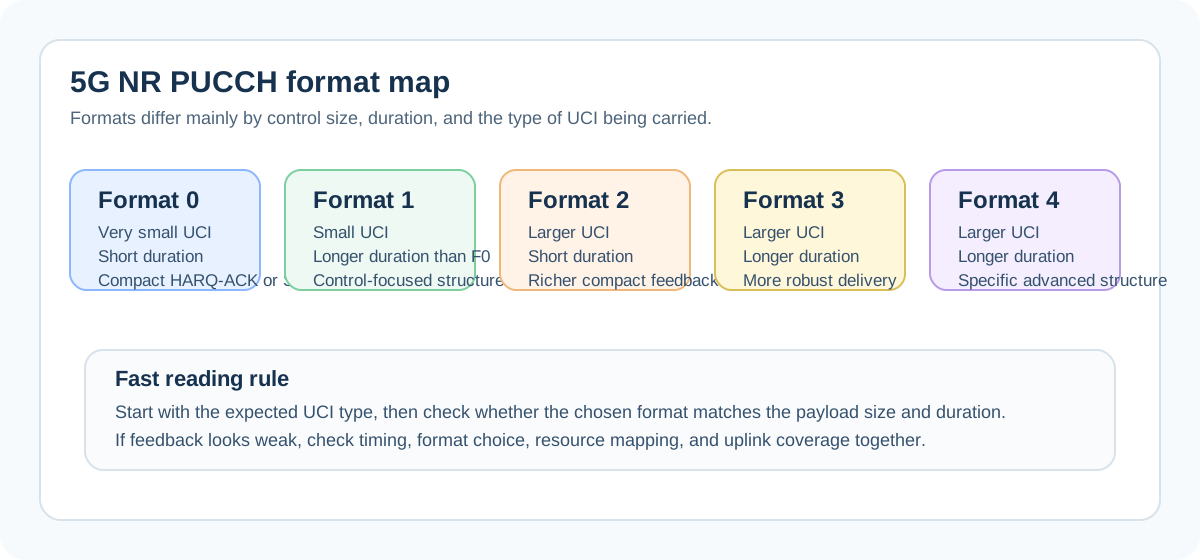
The five PUCCH formats exist because not all UCI cases look the same. Small HARQ-ACK or SR cases can use very compact resources, while larger or longer UCI cases need longer-duration or richer control structures.
| Element | Meaning in PUCCH reading |
|---|---|
| UCI type | Whether the UE is sending HARQ-ACK, SR, CSI-related feedback, or a combination of them |
| Format selection | Which PUCCH format is used to carry the expected control payload |
| Timing | When the UCI must appear relative to the triggering event and uplink slot structure |
| Resource mapping | Which PRBs and OFDM symbols carry the control transmission in the active BWP |
| Reliability | Whether radio quality and uplink coverage are strong enough for the gNB to decode the control correctly |
PUCCH formats
PUCCH is one of the few NR physical channels where numbered formats are central to day-to-day reading. The formats differ mainly by control size, duration, and structure.
| Format | Reading notes |
|---|---|
| Format 0 | Very small control payload on short duration, commonly used for compact HARQ-ACK or SR cases |
| Format 1 | Small control payload with longer-duration structure than Format 0 |
| Format 2 | Larger uplink control payload on short-duration resources |
| Format 3 | Larger control payload across longer duration for more robust UCI delivery |
| Format 4 | Longer-duration uplink control structure used for richer or more specific UCI needs |
Where PUCCH appears in real procedures
Downlink HARQ feedback path
PDCCH / PDSCH reception -> UE decode result -> PUCCH HARQ-ACK -> gNB retransmission decisionThis is one of the most important PUCCH workflows. Feedback timing and decode reliability directly affect how cleanly the retransmission loop works.
Uplink request path
UE needs uplink resources -> Scheduling Request on PUCCH -> uplink grant -> later PUSCH transmissionMissing uplink traffic is not always a PUSCH problem. Sometimes the control request path on PUCCH is the actual starting point of the issue.
Reporting and adaptation path
CSI-related reporting on PUCCH can affect later scheduling and adaptation decisions. If reporting is weak or inconsistent, the scheduler may appear unstable even though the visible symptom shows up elsewhere.
Troubleshooting
Start with the expected UCI type, then check the selected format, timing, and resource mapping. Many apparent data-channel issues are actually weak or missing control feedback on PUCCH.
- Check whether the expected HARQ-ACK, SR, or CSI-related UCI was transmitted on time.
- Check whether the PUCCH format matches the expected UCI size and reporting case.
- Check timing between the triggering downlink or uplink event and the PUCCH response.
- Check PRB and symbol mapping inside the active uplink BWP.
- Check uplink radio quality, coverage, and power limitations when PUCCH looks weak or unstable.
- Check whether missing PUCCH explains later retransmission or grant anomalies on other channels.
| Symptom | What to inspect first |
|---|---|
| Unexpected retransmissions | Whether HARQ-ACK on PUCCH was present, timely, and decoded correctly |
| Missing uplink data opportunities | Whether Scheduling Request was sent and received as expected |
| Control instability in uplink | Format choice, timing, resource mapping, and uplink coverage conditions |
| Odd adaptation behavior | Whether CSI-related reporting is flowing correctly and on the expected control path |
Common mistakes
- treating PUCCH like a small data channel instead of a feedback path
- ignoring timing alignment between the triggering event and uplink feedback
- assuming one PUCCH format fits every UCI case
- checking PUSCH first when the real issue is a missing Scheduling Request on PUCCH
- forgetting that uplink coverage issues can disrupt control before they obviously disrupt data
References
- 3GPP TS 38.211 Release 18 - physical channels, modulation, and PUCCH resource mapping
- 3GPP TS 38.213 Release 18 - physical-layer control procedures including UCI timing and PUCCH behavior
- 3GPP TS 38.214 Release 18 - physical-layer procedures for data and related scheduling context that leads to later PUCCH feedback
FAQ
What does PUCCH do in 5G NR?
PUCCH carries uplink control information such as HARQ acknowledgements, Scheduling Request, and CSI-related feedback from the UE to the gNB.
How is PUCCH different from PUSCH?
PUCCH is for control feedback, while PUSCH is the main uplink data channel used for UL-SCH payload delivery.
Why is PUCCH important for HARQ?
Because HARQ acknowledgements are often carried on PUCCH, and those acknowledgements help the network decide whether retransmission is needed.
Can PUCCH affect uplink data scheduling?
Yes. A Scheduling Request on PUCCH can influence whether the network later grants uplink resources for PUSCH.
What should I inspect first when HARQ behavior looks odd?
Start by checking whether the expected PUCCH feedback was present, timely, and mapped with the correct format and timing assumptions.
Why can PUCCH problems be hard to notice?
Because they may first appear as retransmission instability, missing grants, or inconsistent adaptation rather than as an obvious physical-channel failure.