5G NR PRACH - Physical Random Access Channel
The 5G NR PRACH, or Physical Random Access Channel, is the channel the UE uses to begin random access through a random-access preamble. It is the physical entry path used before the network can move the UE into the later control and data stages of the procedure.
Read PRACH as the physical start of the access path. SSB detection, beam association, PRACH occasion timing, preamble format, coverage, and detection outcome all matter before the random-access procedure can move toward timing alignment and later signaling.
| Technology | 5G NR |
|---|---|
| Full name | Physical Random Access Channel |
| Role | Physical access channel for random-access preamble transmission |
| Main specs | 3GPP TS 38.211, 38.213, 38.321, 38.331 |
| Release | Release 18 |
| Main concepts | Preamble, PRACH occasion, beam association, timing alignment, 4-step RA, 2-step RA |
| Why it matters | PRACH is the radio entry path that lets the UE begin initial access, request uplink entry, and move toward timing alignment and later signaling |
Contents
Overview
PRACH is the physical random-access channel used when the UE needs to begin or re-begin access to the cell. It does not carry normal user data. Instead, it carries the random-access preamble that lets the network detect the access attempt and continue the procedure.
- PRACH is used for random access, not for regular payload transport.
- The UE transmits a preamble in a configured PRACH occasion.
- The network must detect the preamble and continue the procedure correctly.
- PRACH behavior is central to initial access, timing alignment, and access recovery.
Quick interpretation
| Role | Random-access entry channel for initial or requested uplink access |
|---|---|
| Main unit | Random-access preamble sent in a configured PRACH occasion |
| Main reading points | SSB and beam context, PRACH occasion timing, preamble format, detection success, and response continuity |
| Main outputs | Preamble detection, access-response opportunity, timing progress, and entry into later signaling |
| Main impact | Access success, registration progress, re-entry behavior, and the start of later control and data procedures |
How the PRACH model works
Read PRACH as a radio access attempt. The UE first identifies the cell and relevant beam context, then sends a preamble in a valid PRACH occasion, and the network tries to detect it so the random-access procedure can move forward.
Cell and beam context
PRACH does not happen in isolation. It is linked to earlier discovery steps such as SSB detection and broadcast readiness through PBCH. In beam-based deployments, beam association can strongly affect whether the random-access attempt succeeds.
Random-access preamble
The preamble is the initial access signal sent by the UE. It is a structured access transmission, not a regular payload channel. The selected preamble style depends on the configured random-access design and deployment conditions.
PRACH occasion
The UE cannot transmit the preamble at any arbitrary time. It must use configured PRACH occasions. That is why access timing, format configuration, and occasion planning matter so much when PRACH is weak or missing.
Preamble detection and timing progress
The network must detect the preamble correctly and continue the procedure. Coverage, beam mismatch, timing, and uplink radio margin directly affect whether that detection succeeds. If detection fails, the rest of the access path never gets a chance to become visible.
Contention and response path
After the preamble, the procedure continues through the random-access response path defined by the overall access structure. Open 5G Random Access for the full MAC-side procedure across 4-step and 2-step operation.
| Element | Meaning in PRACH reading |
|---|---|
| SSB and beam context | The discovery and beam path that exists before the UE transmits the preamble |
| Preamble | The structured access signal sent by the UE to begin random access |
| PRACH occasion | The configured time and frequency opportunity where the preamble may be transmitted |
| Preamble detection | The network-side ability to receive and recognize the access attempt |
| Timing progress | The transition from initial access attempt toward usable uplink timing and later procedure stages |
PRACH formats and access variants
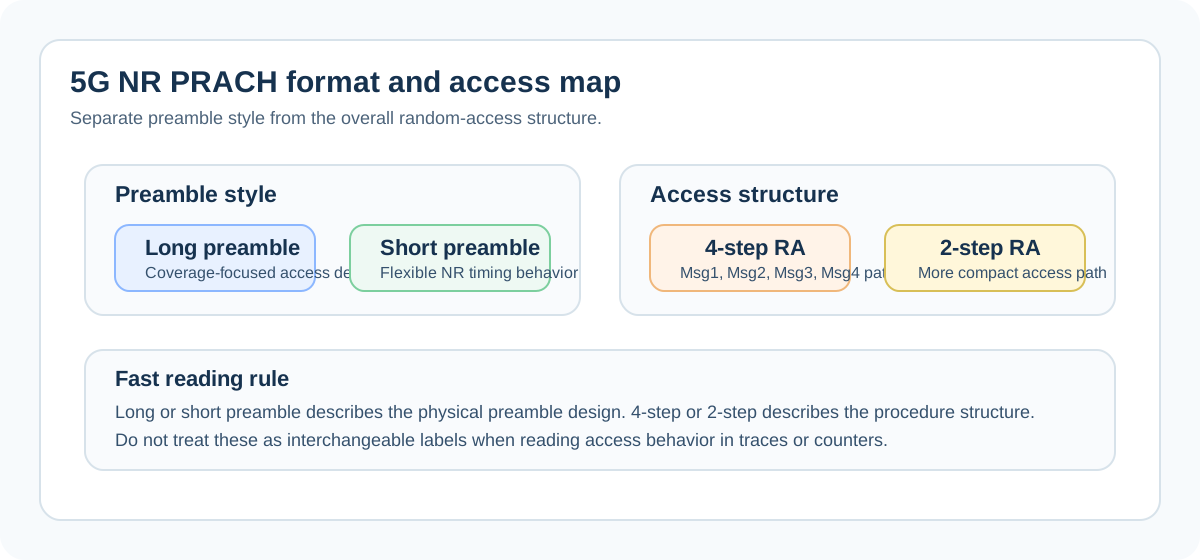
PRACH is easiest to misread when preamble style and procedure structure are mixed together. Keep these two questions separate: what kind of preamble is configured, and what kind of random-access structure is used.
| Variant | Reading notes |
|---|---|
| Long-preamble formats | Used where larger coverage or delay-spread tolerance is needed in the random-access design |
| Short-preamble formats | Used with more flexible NR timing behavior and common modern deployment patterns |
| 4-step random access | The staged random-access structure built around the familiar Msg1, Msg2, Msg3, and Msg4 path |
| 2-step random access | A more compact random-access structure that reduces procedure length when deployment conditions support it |
| Contention-based access | The UE competes for access resources, so collision and retry behavior must be considered |
| Contention-free access | The network steers the UE into a more controlled access path with less ambiguity in preamble use |
Where PRACH appears in real procedures
Initial access path
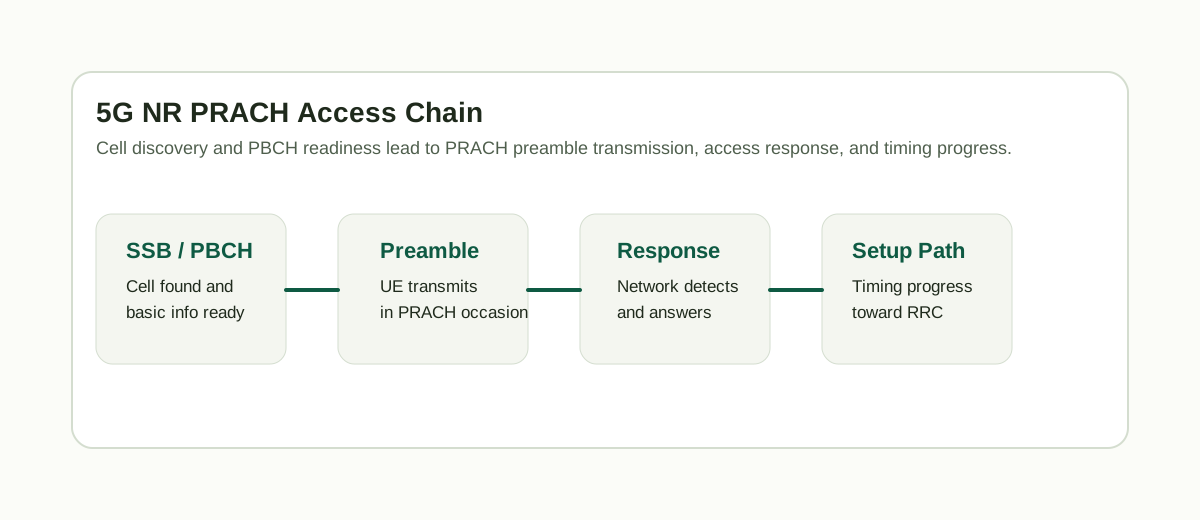
Cell discovery -> PRACH preamble -> access response -> timing progress -> RRC setup pathThis is the core PRACH workflow. The UE first finds the cell and beam context, sends the random-access preamble, and if the network detects it correctly, the procedure moves into later setup stages.
Access recovery and re-entry
Loss of usable access context -> new PRACH attempt -> renewed entry toward setupPRACH is not only for the first cell entry. It also appears when the UE needs to rebuild a usable access path after losing previous context.
Beam-sensitive access conditions
In beam-based deployments, PRACH success can depend heavily on the beam path selected during discovery. That is why PRACH troubleshooting is tightly linked to SSB and early beam behavior.
Troubleshooting
Start with discovery and beam context, then move into preamble timing and detection. Many apparent higher-layer failures are actually access-side failures that started much earlier in the radio entry path.
- Check whether the UE found the expected cell and beam before the random-access attempt.
- Check PRACH occasion configuration and whether the attempt happened in the expected opportunity.
- Check preamble transmission and preamble detection success.
- Check coverage, uplink margin, and beam conditions affecting access reliability.
- Check whether the expected next response after PRACH actually appeared.
- Check repeated-attempt patterns, including backoff, retry, and contention effects.
| Symptom | What to inspect first |
|---|---|
| UE sees the cell but cannot register | Whether PRACH attempts are present and whether the preamble is being detected |
| Repeated access attempts | Preamble detection success, response continuity, and coverage or beam conditions |
| Access failure near the cell edge | Uplink access margin, beam visibility, and PRACH reliability |
| Later setup instability | Whether the early PRACH and timing-progress path was already unstable |
Common mistakes
- assuming cell detection automatically means random access will also succeed
- jumping directly to NAS or RRC analysis without checking the access path first
- ignoring beam and uplink coverage conditions during access troubleshooting
- treating every random-access deployment like the same fixed step structure
- forgetting that early access timing problems can distort later-layer behavior
References
- 3GPP TS 38.211 Release 18 - PRACH preamble structure and physical mapping
- 3GPP TS 38.213 Release 18 - physical-layer control procedures related to random access and PRACH occasions
- 3GPP TS 38.321 Release 18 - MAC random-access procedure context
- 3GPP TS 38.331 Release 18 - RRC configuration and access-related signaling context
FAQ
What does PRACH do in 5G NR?
PRACH carries the random-access preamble that lets the UE begin the radio access process with the network.
Is PRACH a data channel?
No. PRACH is an access channel used to initiate random access, not a regular user-data channel.
Why is PRACH important for initial access?
Because it is the step that lets the UE request entry, begin timing progress, and move toward the later access-response and setup procedure.
What should I inspect first when PRACH fails?
Start with cell and beam detection context, PRACH occasion timing, preamble detection success, and whether the expected response appears after the access attempt.
Why can a UE detect the cell but still fail to access it?
Because discovery and random access are not the same thing. The UE may see synchronization and broadcast information but still fail the preamble transmission or response path.
How is PRACH related to RRC setup?
PRACH is part of the radio entry path that precedes later control and signaling steps such as RRC Setup.