5G NR PBCH - Physical Broadcast Channel
The 5G NR PBCH, or Physical Broadcast Channel, is the physical broadcast path that carries the early system information the UE needs after detecting the cell. In practical terms, it helps the UE move from cell detection to a usable early-access context.
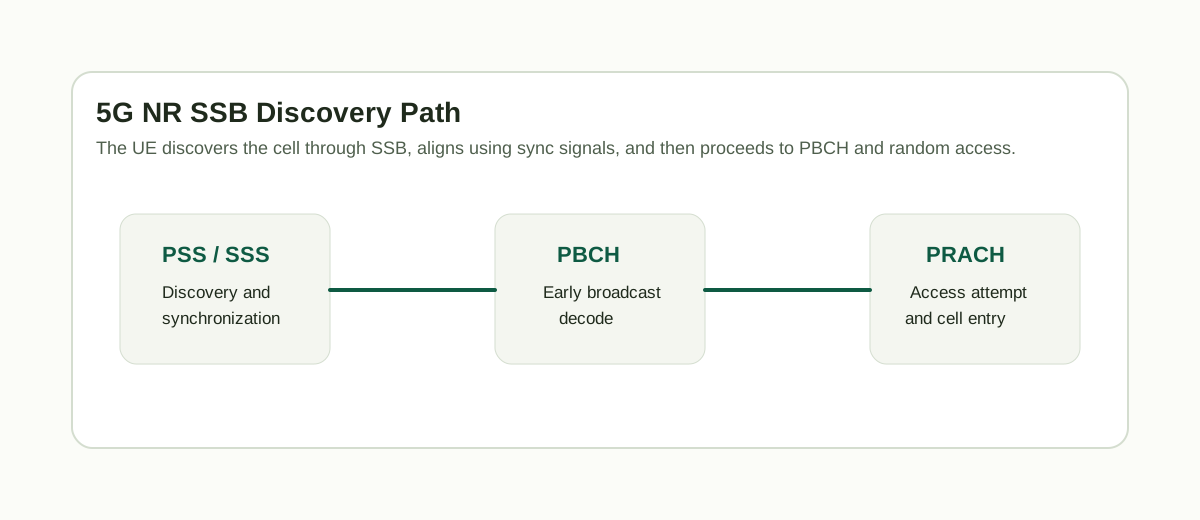
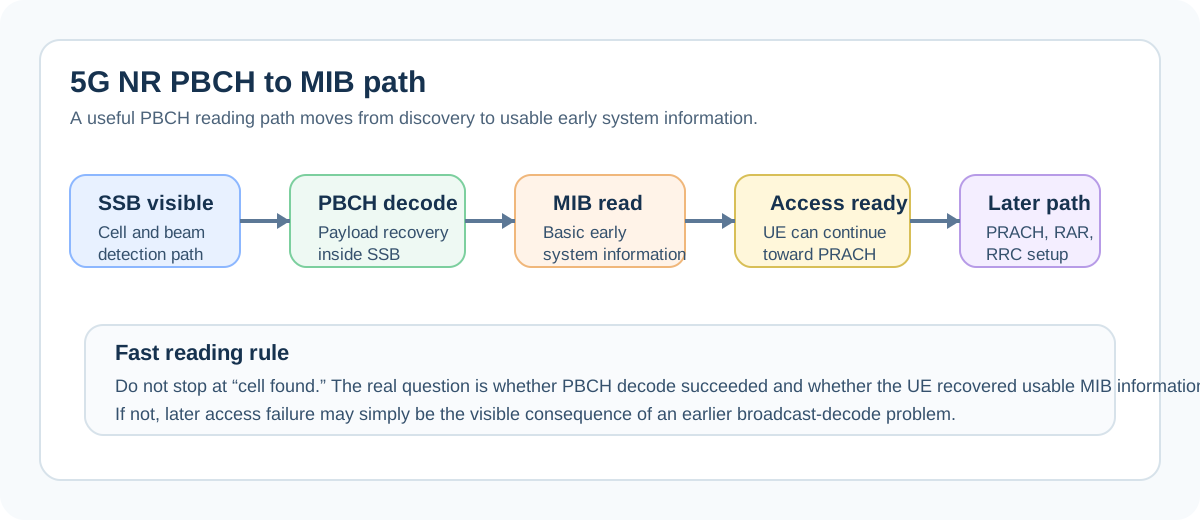
Read PBCH as the broadcast decode step inside the SSB path. The UE must see the right beam, decode the PBCH payload, recover the MIB, and build the early information context needed before the access path can move toward PRACH.
| Technology | 5G NR |
|---|---|
| Full name | Physical Broadcast Channel |
| Main payload | Master Information Block carried in the SSB path |
| Main specs | 3GPP TS 38.211, 38.212, 38.213, 38.331 |
| Release | Release 18 |
| Main concepts | PBCH, MIB, SSB, broadcast decoding, beam visibility, initial access |
| Why it matters | PBCH delivers the basic broadcast information the UE needs before it can continue through PRACH and later access stages |
Contents
Overview
PBCH is the physical broadcast channel used during the earliest stage of cell access. It does not carry user data and it is not a later scheduled control channel. It is the early broadcast step that gives the UE the basic information needed to continue the access path.
- PBCH carries the MIB and related PBCH payload.
- It is part of the wider SSB context rather than an isolated channel.
- The UE needs PBCH before it can move cleanly into random access.
- PBCH behavior is central to early discovery, beam-based visibility, and access preparation.
Quick interpretation
| Role | Broadcast delivery of early system information |
|---|---|
| Main payload | MIB inside the PBCH payload carried with the SSB path |
| Main reading points | SSB visibility, beam context, PBCH decode success, radio quality, and early timing assumptions |
| Main outputs | Successful MIB acquisition, usable early cell information, and progress toward random access |
| Main impact | Access readiness, beam-aware discovery, and the start of later PRACH and setup behavior |
How the PBCH model works
Read PBCH as an early broadcast decode chain. The UE first discovers the cell through the synchronization path, then decodes the PBCH payload inside the SSB structure, and finally recovers the MIB so the later access path can continue.
PBCH and the SSB path
In NR, PBCH should almost never be read alone. It sits inside the Synchronization Signal Block, so PBCH decoding depends on the wider discovery path, including synchronization success, beam visibility, and early radio quality.
MIB delivery
PBCH carries the Master Information Block, which gives the UE the most basic early information needed to move forward. If PBCH decode fails, later access behavior may be blocked or misdirected even if the cell itself is visible.
Payload and decoding
PBCH has its own physical mapping and coding path. From a practical reading point of view, the important question is whether the UE can recover a usable PBCH payload and extract the required early information from it with enough reliability to continue.
Beam visibility and decode margin
In beam-based deployments, PBCH reliability can vary strongly by beam. The UE may see one beam well enough for detection but still not have enough margin to decode the PBCH payload reliably in every condition.
| Element | Meaning in PBCH reading |
|---|---|
| PBCH | The physical broadcast channel carrying key early access information |
| MIB | The basic system-information payload the UE needs at the start of access |
| SSB context | The broader synchronization and broadcast structure in which PBCH appears |
| Decode reliability | The UE's ability to recover the PBCH payload and the needed early system information |
| Beam visibility | The practical condition that shapes how well the UE sees and decodes the broadcast path |
Operational view
PBCH does not use numbered formats like PUCCH. In practice, PBCH is compared through broadcast and deployment behavior rather than by user-facing format names.
| Variant | Reading notes |
|---|---|
| SSB-linked PBCH view | PBCH must be interpreted inside the full discovery and synchronization context of the SSB path |
| Beam-dependent broadcast view | PBCH reliability can vary by beam visibility and beam quality in directional deployments |
| FR1 operating context | Broadcast visibility is often read against wider-area coverage conditions |
| FR2 operating context | Broadcast reliability is often more tightly tied to directional beam visibility and beam management |
| Stable PBCH decode case | The UE reliably acquires the MIB and moves cleanly toward PRACH |
| Marginal PBCH decode case | The UE sees the cell but early-information reliability is weak enough to block later access |
Where PBCH appears in real procedures
Early discovery and access preparation
Cell search -> SSB detection -> PBCH decode -> MIB available -> PRACH pathThis is the main PBCH workflow. The UE first discovers the cell, decodes PBCH to obtain early information, and then moves toward the random-access stage.
Beam-sensitive discovery conditions
Beam visibility -> SSB and PBCH reliability -> usable access preparation -> later entry into PRACHIn beam-based deployments, PBCH quality can vary with beam conditions. That is why early-access troubleshooting should stay connected to beam and SSB behavior rather than only asking whether the cell was detected.
Blocked initial access progression
If PBCH is not decoded correctly, later random access and setup stages may never start correctly even though the UE appears to have found the cell.
Troubleshooting
Start with the SSB and beam path, then move into PBCH decoding and MIB recovery. Many apparent later access problems are actually rooted in weak early broadcast decoding.
- Check whether the UE sees the expected synchronization and broadcast context.
- Check whether PBCH decode success appears after cell detection.
- Check beam conditions and radio quality affecting SSB and PBCH reliability.
- Check whether the UE obtains the expected early system information.
- Check whether PRACH or later access steps fail because PBCH decode never completed correctly.
- Check whether repeated access attempts are actually rooted in early broadcast instability.
| Symptom | What to inspect first |
|---|---|
| UE sees the cell but does not continue access | Whether PBCH decode succeeds after the synchronization stage |
| Unstable early access behavior | SSB and PBCH reliability across beams and coverage conditions |
| Repeated failed entry attempts | Whether early broadcast information was obtained correctly before PRACH |
| Later setup failure with unclear root cause | Whether the early PBCH stage was already unstable or incomplete |
Common mistakes
- assuming cell detection automatically means PBCH decode also succeeded
- jumping directly to PRACH troubleshooting without checking the earlier broadcast stage
- ignoring beam effects during early broadcast analysis
- treating PBCH as an isolated topic instead of part of the wider SSB and access path
- overlooking that later access issues can start from a weak early-information stage
References
- 3GPP TS 38.211 Release 18 - PBCH physical mapping inside the SSB path
- 3GPP TS 38.212 Release 18 - PBCH coding and payload processing
- 3GPP TS 38.213 Release 18 - control procedures and early-access timing context related to SSB and PBCH reading
- 3GPP TS 38.331 Release 18 - MIB and early RRC system-information context
FAQ
What does PBCH do in 5G NR?
PBCH carries the MIB and provides the UE with the early broadcast information needed to continue the access path.
Is PBCH the same as SSB?
No. PBCH is part of the broader SSB context, but the two terms are not identical. PBCH should be analyzed inside the larger synchronization and broadcast structure.
Why is PBCH important before PRACH?
Because the UE needs the early broadcast information from PBCH before it can continue cleanly into the random access path.
What should I inspect first when PBCH decode looks weak?
Start with discovery quality, SSB visibility, beam conditions, and whether the UE successfully obtains the expected early system information.
Can a UE see a cell but still fail PBCH?
Yes. Cell visibility and successful PBCH decode are related but not identical outcomes.
How is PBCH related to RRC setup?
PBCH is part of the earliest access chain that prepares the UE for later random access and then eventually RRC Setup.